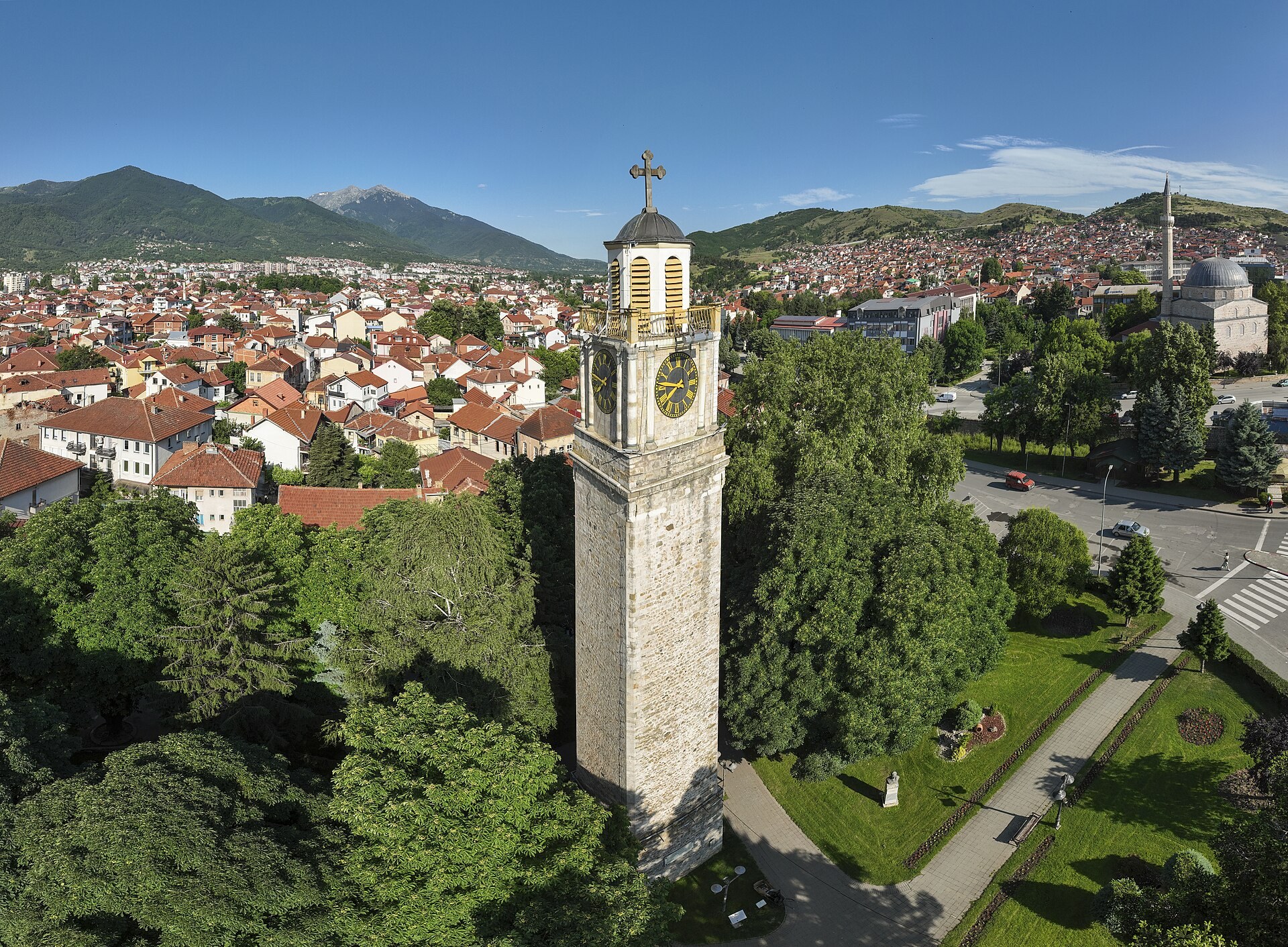
Facts about North Macedonia
Explore North Macedonia from Skopje’s bazaar and the Vardar valley to Ohrid’s lakeside churches, the Šar Mountains and the vineyards of Tikveš. Learn eight statistical regions, place sixteen cities and towns, explore rivers and lakes, discover sixteen sights, read ten illustrated topics and begin Macedonian or Albanian.
- Population, 2021 census
- 1,836,713 residents
- Area
- 25,713 km²
- Capital
- Skopje
- Currency
- Macedonian denar (MKD)
- Official languages
- Macedonian; Albanian under language law
- Independence referendum
- 8 September 1991
North Macedonia · 0 of 20 rounds passed
Two timed rounds per topic, 20 seconds a question
North Macedonia is a landlocked country in southeastern Europe. Mountain ranges enclose the Skopje basin, the Pelagonia plain and the eastern valleys, while the Vardar provides a route south towards Greece. Skopje is the capital; Bitola, Tetovo, Kumanovo, Prilep and Štip are important regional centres. Ohrid and Struga face a lake shared with Albania, and the Prespa basin reaches towards both Albania and Greece.
The maps show eight statistical regions, settlement locations and selected rivers and lakes. City groups are separate from municipal boundaries. The reading connects ancient sites and Ottoman towns with independence, contemporary institutions and everyday life. Macedonian and Albanian lessons introduce two widely used languages; they do not represent every community in the country.
Mountain basins, three border lakes and the Vardar
North Macedonia borders Albania, Kosovo, Serbia, Bulgaria and Greece. It has no coastline. The Vardar runs through Skopje and the central valley before entering Greece, where it is called the Axios and reaches the Aegean Sea. Its valley links a series of basins rather than forming a single broad plain. Pelagonia around Bitola and Prilep is another important agricultural and settlement area.
- Where is North Macedonia?
- In southeastern Europe, bordered by Albania, Kosovo, Serbia, Bulgaria and Greece. It is landlocked.
- Which countries share its major lakes?
- Ohrid is shared with Albania, Great Prespa with Albania and Greece, and Dojran with Greece.
- Where does the Vardar flow?
- Through Skopje and the central valley into Greece, where it is called the Axios and enters the Aegean Sea.
More about North Macedonia: geography
North Macedonia borders Albania, Kosovo, Serbia, Bulgaria and Greece. It has no coastline. The Vardar runs through Skopje and the central valley before entering Greece, where it is called the Axios and reaches the Aegean Sea. Its valley links a series of basins rather than forming a single broad plain. Pelagonia around Bitola and Prilep is another important agricultural and settlement area.
Lake Ohrid is shared with Albania; Great Prespa is shared with Albania and Greece; Lake Dojran is shared with Greece. These are different lake systems. The Šar Mountains rise along the Kosovo frontier, while Korab, the highest summit at about 2,764 metres, lies on the Albanian border. Short distances on a map can involve long journeys around mountains and lakes.
Ancient cities, Slavic learning and a modern republic
Heraclea Lyncestis near Bitola and Stobi near the Vardar preserve layers of ancient urban life, including Roman buildings and early Christian mosaics. The medieval Ohrid literary tradition is associated with Clement and Naum, disciples of Cyril and Methodius. Glagolitic and Cyrillic are distinct scripts: their development and spread cannot be reduced to the claim that two saints invented both at Ohrid. Ottoman rule later shaped towns, trade routes and religious buildings over several centuries.
- When did North Macedonia become independent?
- The independence referendum took place on 8 September 1991, as Yugoslavia broke apart.
- When did the country adopt its current name?
- In 2019, following the Prespa Agreement signed with Greece in 2018.
- Why is Ohrid important to Slavic literacy?
- Clement and Naum, disciples of Cyril and Methodius, are associated with its medieval literary and religious tradition.
More about North Macedonia: history
Heraclea Lyncestis near Bitola and Stobi near the Vardar preserve layers of ancient urban life, including Roman buildings and early Christian mosaics. The medieval Ohrid literary tradition is associated with Clement and Naum, disciples of Cyril and Methodius. Glagolitic and Cyrillic are distinct scripts: their development and spread cannot be reduced to the claim that two saints invented both at Ohrid. Ottoman rule later shaped towns, trade routes and religious buildings over several centuries.
The territory of the modern republic became part of the South Slav state after the First World War and a republic of socialist Yugoslavia after the Second. An independence referendum took place on 8 September 1991. The 2001 conflict and Ohrid Framework Agreement were a later turning point in relations between communities. The Prespa Agreement with Greece was signed in 2018, and the constitutional name Republic of North Macedonia took effect in 2019. Ancient Macedonia, the wider geographic region and today’s state have different boundaries and meanings.
Macedonian Cyrillic and a multilingual public life
Macedonian is a South Slavic language written in a 31-letter Cyrillic alphabet. It is the official language throughout the country and in international relations. The constitution also gives official status, under specified rules, to a language spoken by at least twenty percent of the population; Albanian meets that threshold, and the language law expands its use in public institutions. Local official use also depends on community and municipal arrangements. Turkish, Romani, Serbian, Bosnian, Aromanian and other languages are part of the country’s linguistic life.
- Which languages have official status?
- Macedonian is official throughout the country and in international relations. Albanian has official use under the constitution’s twenty-percent provision and the language law; local arrangements also apply.
- Which alphabet does Macedonian use?
- A 31-letter Cyrillic alphabet, adopted in 1945.
- How do you say thank you in Macedonian?
- Blagodaram, or the informal fala.
More about North Macedonia: language
Macedonian is a South Slavic language written in a 31-letter Cyrillic alphabet. It is the official language throughout the country and in international relations. The constitution also gives official status, under specified rules, to a language spoken by at least twenty percent of the population; Albanian meets that threshold, and the language law expands its use in public institutions. Local official use also depends on community and municipal arrangements. Turkish, Romani, Serbian, Bosnian, Aromanian and other languages are part of the country’s linguistic life.
Macedonian was established as an official language in 1944, with its alphabet and orthographic norms adopted in 1945. Zdravo means hello, dobar den means good day, and blagodaram or the informal fala means thank you. Macedonian and Bulgarian share many grammatical features, but the standards have distinct identities. The linked lessons teach Macedonian and Albanian separately; Albanian is an Indo-European language on a different branch from the Slavic languages.
Poetry, shared dances and the heritage of Ohrid
Oro names a family of linked folk dances, often performed in a line or circle, with rhythms and steps that vary by place and occasion. The Galičnik wedding celebration in the western mountains presents local wedding customs through dress, music and ritual. Ottoman, Orthodox Christian, Muslim and other traditions shape cultural life, while Albanian, Turkish, Roma and other communities maintain their own artistic practices. No single costume or festival represents every household.
- What is oro?
- A family of linked folk dances, often danced in a line or circle, with regional variations.
- Where are the Struga Poetry Evenings held?
- In Struga, at the northern end of Lake Ohrid where the Black Drin leaves the lake.
- Does Ohrid really have 365 surviving churches?
- The church-for-every-day description is a tradition rather than a verified count of surviving buildings.
More about North Macedonia: culture
Oro names a family of linked folk dances, often performed in a line or circle, with rhythms and steps that vary by place and occasion. The Galičnik wedding celebration in the western mountains presents local wedding customs through dress, music and ritual. Ottoman, Orthodox Christian, Muslim and other traditions shape cultural life, while Albanian, Turkish, Roma and other communities maintain their own artistic practices. No single costume or festival represents every household.
Struga Poetry Evenings brings an international literary audience to the town where the Black Drin leaves Lake Ohrid. Ohrid’s summer performances use the historic lakeside setting, and Skopje supports theatre, jazz, contemporary art and film. Churches, mosques and modern cultural buildings belong to the same country’s story. The familiar description of Ohrid as having a church for every day of the year is a tradition, not an audited count of surviving churches.
The denar, industrial exports and Tikveš vineyards
North Macedonia uses the Macedonian denar, abbreviated MKD. Services form the largest broad part of the economy, alongside manufacturing and agriculture. Export industries include vehicle components, electrical equipment, metals, textiles and pharmaceuticals. Skopje concentrates many services and institutions, while industrial zones and regional centres connect production with European supply chains. The country joined the World Trade Organization in 2003.
- What currency does North Macedonia use?
- The Macedonian denar, with the international code MKD.
- What drives the economy?
- Services, manufacturing and agriculture, including industrial exports, pharmaceuticals, textiles, wine and other farm products.
- Where is the Tikveš wine region?
- In the south-central interior around Kavadarci and Negotino. Vranec is a prominent red grape variety.
More about North Macedonia: economy
North Macedonia uses the Macedonian denar, abbreviated MKD. Services form the largest broad part of the economy, alongside manufacturing and agriculture. Export industries include vehicle components, electrical equipment, metals, textiles and pharmaceuticals. Skopje concentrates many services and institutions, while industrial zones and regional centres connect production with European supply chains. The country joined the World Trade Organization in 2003.
The Tikveš area around Kavadarci and Negotino is a major wine-growing region; Vranec is a prominent red grape variety. Tobacco, vegetables, fruit and livestock also support rural livelihoods. Tourism draws visitors to Ohrid, Skopje and mountain areas, with strong seasonal and regional differences. Emigration, skills, transport links and energy costs affect economic choices. The denar is separate from the euro, and EU candidacy does not mean EU membership.
Parliament, the Ohrid agreement and Euro-Atlantic ties
North Macedonia is a parliamentary republic. The president is head of state, the prime minister leads the government, and the Assembly, or Sobranie, makes national laws. Skopje is the capital. The Ohrid Framework Agreement of 2001 provided a framework for ending the conflict and strengthening equitable representation, language rights and decentralisation. Its implementation is central to understanding institutions in a country with several communities.
- Who leads the government?
- The prime minister. The president is head of state, and the Assembly makes laws.
- When did North Macedonia join NATO?
- On 27 March 2020.
- Is North Macedonia a member of the EU?
- It is a candidate country. Candidate status dates to 2005; its first accession intergovernmental conference took place in 2022.
More about North Macedonia: politics
North Macedonia is a parliamentary republic. The president is head of state, the prime minister leads the government, and the Assembly, or Sobranie, makes national laws. Skopje is the capital. The Ohrid Framework Agreement of 2001 provided a framework for ending the conflict and strengthening equitable representation, language rights and decentralisation. Its implementation is central to understanding institutions in a country with several communities.
The Prespa Agreement resolved the name dispute with Greece and led to the state’s new constitutional name in 2019. North Macedonia joined NATO on 27 March 2020. It applied to join the European Union in 2004, received candidate status in 2005 and held its first accession intergovernmental conference in 2022. NATO and the EU are separate organisations. The maps distinguish statistical regions from settlement pins; they do not show municipality boundaries.
Ancient lake life and high mountain habitats
Lake Ohrid is an ancient freshwater ecosystem with many endemic species. Its natural heritage is recognised alongside the cultural heritage of the Ohrid region in a UNESCO property extending across North Macedonia and Albania. Galičica rises between Ohrid and Prespa; the lakes are linked through the karst underground, rather than by a visible surface river. The wider Prespa basin supports important wetland habitats and waterbirds across three countries.
- How many national parks are there?
- Four: Mavrovo, Pelister, Galičica and Šar Mountain.
- What makes Lake Ohrid special?
- Its ancient freshwater ecosystem supports many endemic species, recognised alongside the region’s cultural heritage by UNESCO.
- Does the Balkan lynx live only in North Macedonia?
- No. North Macedonia is important to its conservation, but it also occurs in neighbouring areas including Albania.
More about North Macedonia: nature & wildlife
Lake Ohrid is an ancient freshwater ecosystem with many endemic species. Its natural heritage is recognised alongside the cultural heritage of the Ohrid region in a UNESCO property extending across North Macedonia and Albania. Galičica rises between Ohrid and Prespa; the lakes are linked through the karst underground, rather than by a visible surface river. The wider Prespa basin supports important wetland habitats and waterbirds across three countries.
Mavrovo, Pelister, Galičica and Šar Mountain are the country’s four national parks. Pelister is associated with the five-needled Balkan pine, while Mavrovo and neighbouring mountain forests are important to conservation of the critically endangered Balkan lynx. The lynx also occurs outside North Macedonia, including Albania. Development, wastewater, declining lake levels and winter air pollution pose different environmental challenges. Mountain conditions and park access vary with the season.
Baked beans, roasted peppers and regional flatbreads
Tavče gravče is a baked bean dish commonly cooked and served in earthenware, with onions, peppers and seasoning. Ajvar centres on roasted red peppers; some recipes also include aubergine. Peppers appear sweet, roasted, dried or hot across the kitchen, so mild peppers alone do not describe the cuisine. Shopska salad combines vegetables and white cheese, while savoury pastries, soups and grilled dishes connect local tables with wider Balkan traditions.
- What is tavče gravče?
- Seasoned baked beans, often served in an earthenware dish.
- What is ajvar made from?
- Roasted red peppers, with aubergine included in some recipes.
- What is pastrmajlija?
- An elongated meat-topped flatbread associated especially with Štip. Meat and egg vary by recipe and locality.
More about North Macedonia: food & cuisine
Tavče gravče is a baked bean dish commonly cooked and served in earthenware, with onions, peppers and seasoning. Ajvar centres on roasted red peppers; some recipes also include aubergine. Peppers appear sweet, roasted, dried or hot across the kitchen, so mild peppers alone do not describe the cuisine. Shopska salad combines vegetables and white cheese, while savoury pastries, soups and grilled dishes connect local tables with wider Balkan traditions.
Pastrmajlija is an elongated flatbread topped with pieces of meat, with pork or other meats and the use of egg varying by locality and recipe. Štip is especially associated with it. Tulumba is fried dough soaked in sugar syrup. Wine and fruit-distilled rakija are familiar drinks, though neither alcohol nor pork is universal among communities or individuals. Lake fish have a culinary history, but protected species and fishing rules matter around Ohrid and Prespa.
Bazaar lanes, early mosaics and lakeside churches
Skopje’s Stone Bridge connects the central square with the approach to the Old Bazaar, where mosques, former inns and bathhouses recall the Ottoman trading town. Much of modern Skopje also reflects rebuilding after the 1963 earthquake. Tetovo’s Painted Mosque has richly decorated surfaces, and Kruševo’s Ilinden memorial, known as the Makedonium, presents a very different twentieth-century architectural language.
- What should I learn about in Skopje’s old centre?
- The Stone Bridge, Old Bazaar and nearby Ottoman monuments, alongside the city’s rebuilding after the 1963 earthquake.
- Where are the best-known ancient sites?
- Heraclea Lyncestis near Bitola and Stobi near the Vardar valley preserve significant ancient remains and mosaics.
- Is the UNESCO Ohrid site just one church?
- No. It is a wider natural and cultural region including the lake and heritage on both the North Macedonian and Albanian sides.
More about North Macedonia: landmarks
Skopje’s Stone Bridge connects the central square with the approach to the Old Bazaar, where mosques, former inns and bathhouses recall the Ottoman trading town. Much of modern Skopje also reflects rebuilding after the 1963 earthquake. Tetovo’s Painted Mosque has richly decorated surfaces, and Kruševo’s Ilinden memorial, known as the Makedonium, presents a very different twentieth-century architectural language.
In Ohrid, Saint Sophia, Saint John at Kaneo and the Plaošnik area reveal different layers of church and urban history. The UNESCO property includes the wider region and lake, not just one photogenic church. Heraclea Lyncestis and Stobi preserve archaeology farther inland; Matka Canyon and the Kokino archaeological landscape connect heritage with terrain. Sight pins identify places to learn about, rather than visitor entrances, permitted routes or current opening hours.
A dated census and several overlapping identities
The 2021 census counted 1,836,713 resident inhabitants. That figure is a dated resident count; the wider census also recorded non-residents, so totals with different scopes should not be interchanged. Ethnic Macedonians and Albanians are the largest communities, alongside Turks, Roma, Serbs, Bosniaks, Vlachs and others. The census recorded about 24.3 percent of residents as ethnic Albanian; ethnic identity and mother tongue are separate measures.
- What population did the 2021 census record?
- 1,836,713 residents. Non-residents recorded by the wider census belong to a different total.
- Which communities live in North Macedonia?
- Ethnic Macedonians and Albanians are the largest, alongside Turks, Roma, Serbs, Bosniaks, Vlachs and other communities.
- Was Mother Teresa born in Skopje?
- Yes, in 1910, when Skopje was in the Ottoman Empire. She was born to an Albanian family and later worked in India.
More about North Macedonia: people & society
The 2021 census counted 1,836,713 resident inhabitants. That figure is a dated resident count; the wider census also recorded non-residents, so totals with different scopes should not be interchanged. Ethnic Macedonians and Albanians are the largest communities, alongside Turks, Roma, Serbs, Bosniaks, Vlachs and others. The census recorded about 24.3 percent of residents as ethnic Albanian; ethnic identity and mother tongue are separate measures.
Skopje is the largest city, but a university student in Tetovo, a family in the Pelagonia plain and a seasonal worker in Ohrid may experience the country differently. Orthodox Christianity and Islam are major religious traditions, alongside other beliefs and non-religious lives. Mother Teresa was born in Ottoman-era Skopje in 1910 to an Albanian family; her later work centred on India. Diaspora connections, migration and an ageing population shape family life and public services.