The United Kingdom course
Facts about United Kingdom, for your next trip
Explore the United Kingdom through ten topics, from its four nations and island geography to the food, languages and traditions of everyday life. Each topic connects the facts with the places and people behind them.
Capital London · Europe · 10 topics · 20 rounds · 80 questions · 20 seconds each
The United Kingdom is a union of four nations, England, Scotland, Wales and Northern Ireland, sharing one parliament in London while keeping separate legal systems and, in three cases, their own devolved governments. It industrialised first, built the largest empire in history and still exerts outsized influence through its language, finance and universities.
The state covers the island of Great Britain plus the northeastern corner of Ireland, and nowhere in the country sits more than about 125 kilometers from the sea. The land tilts from the highlands of Scotland and Wales in the north and west toward the low, fertile ground of southeast England, and the Gulf Stream keeps the whole of it milder and damper than the latitude would suggest.
London holds around nine million people and functions as capital, financial center and cultural hub at once, on a scale nothing else in the country matches. Manchester, Birmingham, Leeds and Glasgow anchor their own regions, Edinburgh holds the Scottish parliament and the festival, Cardiff and Belfast the Welsh and Northern Irish administrations. Visitors mostly split between London, the historic university cities of Oxford, Cambridge, York and Bath, and the landscapes further out: the Scottish Highlands, the Lake District, Snowdonia and the Cornish coast.
- Population
- 68 million
- Area
- 242,495 km²
- Currency
- Pound sterling (£)
- Official language
- English, with Welsh official in Wales
- Nations
- England, Scotland, Wales, N. Ireland
- Highest point
- Ben Nevis, 1,345 m
United Kingdom · Geography
Geography of the United Kingdom
The UK includes Great Britain, Northern Ireland and many smaller islands. Follow the landscape from the Scottish Highlands to the lowlands of southern England, and learn how its rivers and coastlines connect the four nations.
Commonly asked
- Which four countries make up the UK?
- England, Scotland, Wales and Northern Ireland make up the United Kingdom. London is the UK capital; Edinburgh, Cardiff and Belfast are the capitals of Scotland, Wales and Northern Ireland.
- Is Great Britain the same as the United Kingdom?
- No. Great Britain is the island containing England, Scotland and Wales. The United Kingdom also includes Northern Ireland.
United Kingdom · History
History of the United Kingdom
Roman remains, Norman castles and former mill towns mark different chapters of the past. Explore the unions that formed the UK, the Industrial Revolution and the British Empire, including the histories of colonisation and decolonisation.
Commonly asked
- What happened in 1066?
- William of Normandy defeated Harold Godwinson at the Battle of Hastings. The Norman conquest transformed government, land ownership and the language of the ruling class in England.
- When did England and Scotland unite?
- They shared a monarch from 1603, but remained separate kingdoms until the Acts of Union took effect in 1707, creating the Kingdom of Great Britain with one parliament.
United Kingdom · Language
Languages of the United Kingdom
English connects the UK, but its accents and vocabulary vary across the country. Welsh, Scottish Gaelic, Scots, Irish and Cornish also belong to its linguistic history, alongside the languages of communities with roots around the world.
Commonly asked
- Are Welsh and Scottish Gaelic forms of English?
- No. They are Celtic languages, while English is a Germanic language. Welsh belongs to the Brittonic branch; Scottish Gaelic and Irish belong to the Goidelic branch.
- Why does English contain so many French words?
- After the Norman conquest, French was used by the ruling class in England. Centuries of contact brought French vocabulary into English, especially in law, government and food.
United Kingdom · Culture
Culture and traditions in the UK
Theatre, music and sport connect local traditions with a worldwide audience. Discover Shakespeare’s stage, Liverpool’s musical history and the different sporting identities of the four nations.
Commonly asked
- Where did the Beatles come from?
- The Beatles formed in Liverpool. The city’s port and music scene helped shape the band before its recordings reached audiences around the world.
- Which sports developed their modern rules in Britain?
- Association football, rugby and cricket all developed influential modern rules in Britain before spreading internationally. Their earlier forms and later development have their own distinct histories.
United Kingdom · Economy
The UK economy
Britain’s industrial history is visible in canals, railways and former factories. Explore that legacy alongside financial services, research and industries such as aerospace and pharmaceuticals.
Commonly asked
- What was the Industrial Revolution?
- It was a major shift towards mechanised production and factory work that began in Britain in the eighteenth century. Steam power, textiles and iron production changed work, transport and the growth of towns.
- What is the City of London?
- The City of London is the historic core of London and a major financial district. It is a small part of the wider capital, with its own local authority.
United Kingdom · Politics
How the United Kingdom is governed
Learn the difference between the monarch, Parliament and the government, and how devolution gives Scotland, Wales and Northern Ireland their own institutions. The UK’s constitutional arrangements developed through laws and conventions over centuries.
Commonly asked
- What are the two houses of the UK Parliament?
- The House of Commons and the House of Lords. Members of the Commons represent constituencies, while the Lords reviews legislation and scrutinises government.
- Does the UK have a written constitution?
- It has constitutional rules in written laws and other sources, but no single codified constitutional document. Conventions and court decisions also shape how its institutions work.
United Kingdom · Nature & Wildlife
Nature and wildlife of the UK
Woodlands, peatlands, uplands and coastal cliffs support different kinds of wildlife. Explore the habitats behind familiar landscapes, from red deer in Scotland to seabird colonies around the coast.
Commonly asked
- What is a loch?
- Loch is a Scottish Gaelic and Scots word used for a lake or an inlet of the sea. Loch Lomond is a freshwater lake, while a sea loch opens onto coastal waters.
- Why are peatlands important?
- Peatlands store carbon in layers of partly decomposed plant material. They also support specialised wildlife and help regulate water, making their protection and restoration valuable.
United Kingdom · Food & Cuisine
Food and cooking in the UK
Regional dishes sit alongside food shaped by migration and trade. Explore Welsh cakes, Scottish haggis, Northern Irish soda bread and English pies, as well as the many influences on contemporary British cooking.
Commonly asked
- What is haggis?
- Haggis is a savoury Scottish dish traditionally made with sheep’s offal, oatmeal, onion and spices. It is closely associated with Burns Night, which celebrates the poet Robert Burns.
- What are Welsh cakes?
- Welsh cakes are small, lightly spiced cakes often made with dried fruit and cooked on a griddle. They are usually served with a dusting of sugar.
United Kingdom · Landmarks
Landmarks of the United Kingdom
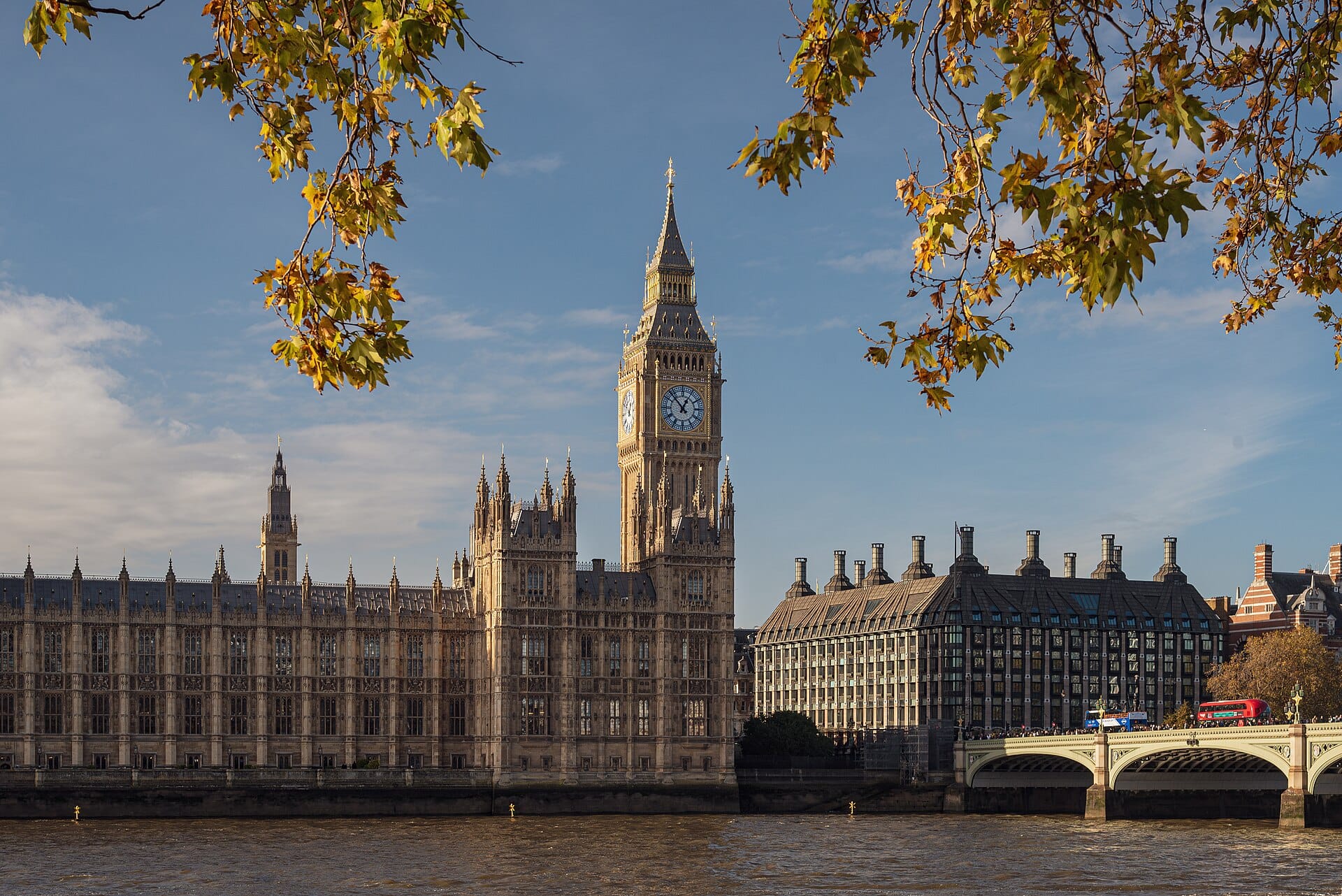
Stonehenge, Edinburgh Castle and the Palace of Westminster tell very different stories. Connect famous buildings with their original purposes and explore natural landmarks such as the Giant’s Causeway in Northern Ireland.
Commonly asked
- What is Stonehenge?
- Stonehenge is a prehistoric monument in Wiltshire, England, built in stages over many centuries. Its standing stones form part of a wider landscape of ceremonial and burial sites.
- How did the Giant’s Causeway form?
- Its basalt columns formed as lava cooled and contracted millions of years ago. The site lies on the north coast of Northern Ireland.
United Kingdom · People & Society
People and society in the UK
National and regional identities overlap across the UK. Explore how migration, industrial towns and local traditions shaped communities, and why British, English, Scottish, Welsh and Irish identities are not interchangeable.
Commonly asked
- Does British mean English?
- No. England is only one of the UK’s four countries. People may describe themselves through national, regional or combined identities, and individual preferences matter.
- How has migration shaped the UK?
- Successive migrations have influenced the country’s languages, food, religions and cities. Connections with Ireland, Europe, the Caribbean, South Asia and many other places form part of its social history.