Everything you need to know about Russia
Explore Russia from the Baltic and the Volga to the Caucasus, Siberia and the Pacific. Learn its federal subjects, cities and waters, find sixteen sights, and discover its histories, cultures and everyday life. Practise Russian; Tatar, Bashkir, Chechen, Buryat and many other languages also belong to the country’s communities.
Read it, then make it stick
Geography of Russia
Eleven time zones connect the Baltic coast, the Urals, Siberia and the Pacific.
Know the shape of the country
Start with 83 federal subjects, then place 32 cities and find six rivers and three lakes. Moscow and Saint Petersburg are separate federal cities; autonomous okrugs have their own answer areas. Zoom in for smaller western regions and Kaliningrad. Chukotka crosses the date line and is kept beside the rest of Russia. Boundaries and waters: Natural Earth, public domain, generalised for learning; small islands may be omitted. Rivers retain Russian stretches with a small border allowance. City coordinates are curated. Ukrainian territories claimed by Russia are excluded; the Kuril Islands are shown under Russian administration, with the southern islands disputed by Japan.
Russian sights and heritage
Essential · Square & Kremlin
Red Square
Saint Basil’s Cathedral stands on Red Square beside the Kremlin walls. The square and fortified Kremlin form a UNESCO World Heritage property; the cathedral is outside the walls.
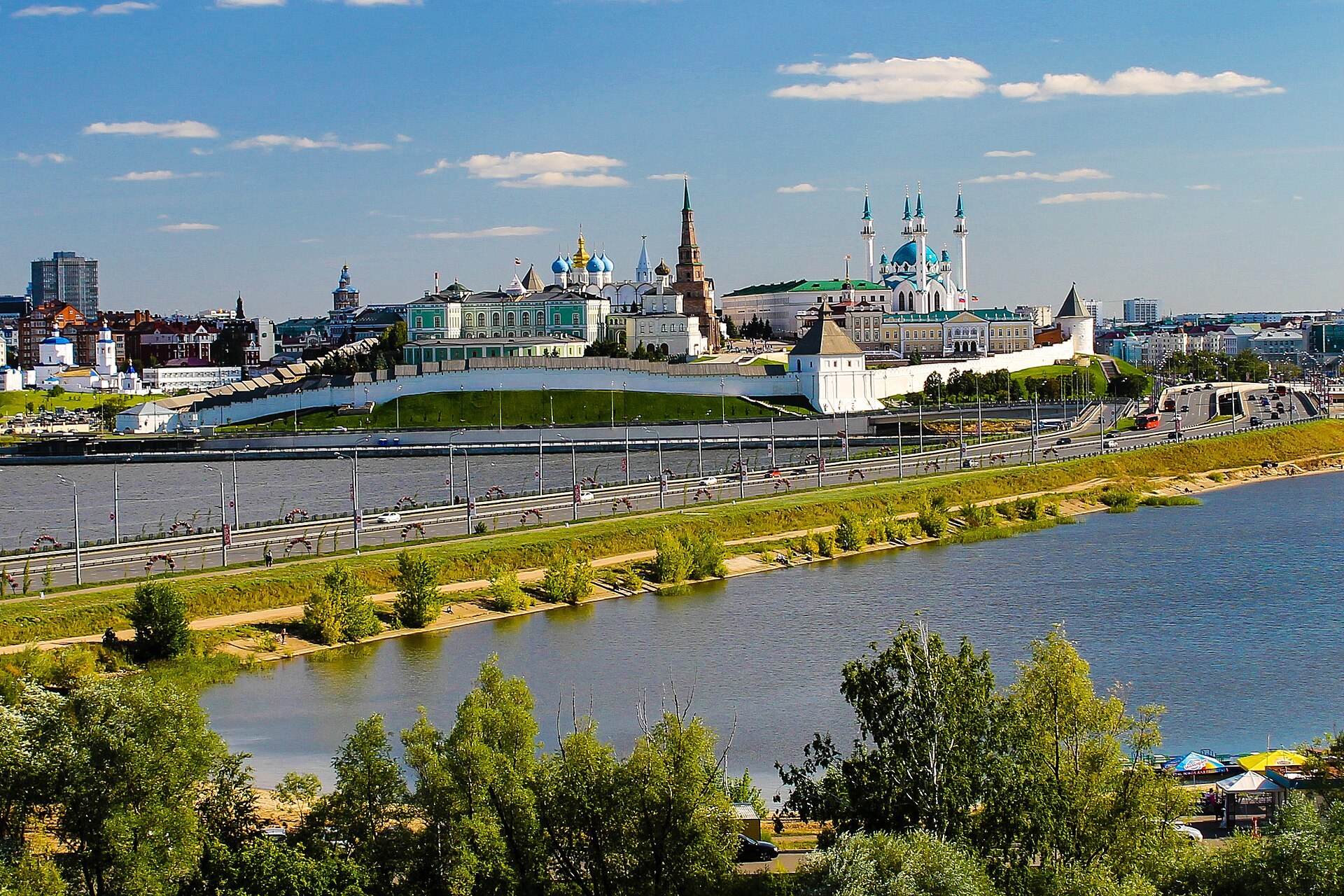
Find sixteen landmarks and natural places across Russia, from Red Square and the Hermitage to Kazan, Derbent, Lake Baikal and Kamchatka. These selections introduce geography and heritage; current access may be restricted. Essential highlights introduce major landmarks and landscapes; Worth a detour expands the regional picture. These are learning selections, not statements about present travel safety or access. Select a pin to read about a place, then play the map and find them all.
Take Russian with you
Greetings and politeness
Hello, please, thank you, sorry: the ten openers everything else builds on.
Keep going one country deeper
When you have had your fill of Russia, the countries marked guide have a page like this one, and every other has maps of its own.
AfghanistanGuide AlbaniaGuide AlgeriaGuide AndorraGuide AngolaGuide ArgentinaGuide ArmeniaGuide AustraliaGuide AustriaGuide AzerbaijanGuide BahamasGuide BahrainGuide BangladeshGuide BelarusGuide BelgiumGuide BhutanGuide BoliviaGuide Bosnia and HerzegovinaGuide BotswanaGuide BrazilGuide BruneiGuide BulgariaGuide CambodiaGuide CanadaGuide ChadGuide ChileGuide ChinaGuide ColombiaGuide Costa RicaGuide Côte d’IvoireGuide CroatiaGuide CubaGuide CyprusGuide CzechiaGuide Democratic Republic of the CongoGuide DenmarkGuide Dominican RepublicGuide EcuadorGuide EgyptGuide El SalvadorGuide EstoniaGuide EthiopiaGuide FijiGuide FinlandGuide FranceGuide GeorgiaGuide GermanyGuide GhanaGuide GreeceGuide GuatemalaGuide GuyanaGuide HaitiGuide HondurasGuide HungaryGuide IcelandGuide IndiaGuide IndonesiaGuide IranGuide IraqGuide IrelandGuide IsraelGuide ItalyGuide JamaicaGuide JapanGuide JordanGuide KazakhstanGuide KenyaGuide KosovoGuide KuwaitGuide KyrgyzstanGuide LaosGuide LatviaGuide LebanonGuide LibyaGuide LiechtensteinGuide LithuaniaGuide LuxembourgGuide MadagascarGuide MalaysiaGuide MaldivesGuide MaliGuide MaltaGuide MauritaniaGuide MexicoGuide MoldovaGuide MonacoGuide MongoliaGuide MontenegroGuide MoroccoGuide MozambiqueGuide MyanmarGuide NamibiaGuide NepalGuide NetherlandsGuide New ZealandGuide NicaraguaGuide NigerGuide NigeriaGuide North KoreaGuide North MacedoniaGuide Northern CyprusGuide NorwayGuide OmanGuide PakistanGuide PalestineGuide PanamaGuide Papua New GuineaGuide ParaguayGuide PeruGuide PhilippinesGuide PolandGuide PortugalGuide QatarGuide RomaniaGuide San MarinoGuide Saudi ArabiaGuide SenegalGuide SerbiaGuide SingaporeGuide SlovakiaGuide SloveniaGuide SomaliaGuide South AfricaGuide South KoreaGuide SpainGuide Sri LankaGuide SudanGuide SurinameGuide SwedenGuide SwitzerlandGuide SyriaGuide TaiwanGuide TajikistanGuide TanzaniaGuide ThailandGuide Timor-LesteGuide TunisiaGuide TürkiyeGuide TurkmenistanGuide UkraineGuide United Arab EmiratesGuide United KingdomGuide United StatesGuide UruguayGuide UzbekistanGuide Vatican CityGuide VenezuelaGuide VietnamGuide YemenGuide ZambiaGuide ZimbabweGuide