Facts about Northern Cyprus
Explore Northern Cyprus from North Nicosia’s courtyards to Kyrenia’s harbour, Famagusta’s walls and the Karpas Peninsula. Explore the north’s districts and waters, then discover mountain castles, ancient Salamis, Turkish Cypriot cooking and the communities of the island’s north through ten illustrated topics.
- Geographic setting
- Northern part of Cyprus
- Capital
- North Nicosia / Lefkoşa
- Official language of the administration
- Turkish
- Main currency
- Turkish lira (TRY)
- Statehood declared
- 15 November 1983
- Diplomatic recognition
- Türkiye only
Northern Cyprus · 0 of 20 rounds passed
Two timed rounds per topic, 20 seconds a question
Northern Cyprus occupies the northern part of the island of Cyprus in the eastern Mediterranean, south of Türkiye. The Kyrenia range separates a narrow coastal strip from the Mesaoria plain, while the long Karpas Peninsula reaches northeast. North Nicosia is the administrative centre; Kyrenia, also called Girne, and Famagusta, also called Gazimağusa, are major coastal towns. Güzelyurt, also known as Morphou, lies near the western citrus-growing plain.
This guide focuses on the Turkish Cypriot-administered north. The self-declared Turkish Republic of Northern Cyprus is recognised as a state only by Türkiye. The Republic of Cyprus is internationally recognised but does not exercise effective control in the north. A UN buffer zone separates the sides, including within Nicosia. Worldly’s separate Cyprus guide explores the whole island and its shared geography.
Geography of Northern Cyprus
The northern coast of Cyprus faces Türkiye across the eastern Mediterranean. Behind Kyrenia, the narrow Kyrenia range is also called Beşparmak in Turkish and Pentadaktylos in Greek, names associated with its five-fingered silhouette. Limestone ridges, wooded slopes and castle sites rise sharply above the coastal strip. South of the range, the Mesaoria plain stretches towards Nicosia and Famagusta; its name is associated with its position between the island’s two main mountain ranges.
- Is Northern Cyprus a separate island?
- No. It is the northern part of the same island of Cyprus.
More about Northern Cyprus: geography
North Nicosia is the northern part of a divided city, rather than a separate settlement far from the Republic’s capital. Kyrenia/Girne faces the northern sea, while Famagusta/Gazimağusa stands on the east coast. To the west, Güzelyurt/Morphou is associated with orchards. Farther east, the Karpas, or Karpaz, Peninsula narrows towards Cape Apostolos Andreas, beyond the village of Rizokarpaso/Dipkarpaz. Several names may identify the same place.
Summers are generally hot and dry, with most rain falling in the cooler months. Water availability shapes farming and settlement, and a pipeline from Türkiye supplements local supplies. The UN buffer zone, local administrative districts and the island’s physical coastline describe different things. Crossing points are regulated locations; a place name or map pin does not establish a right of entry or a usable route.
History of Northern Cyprus
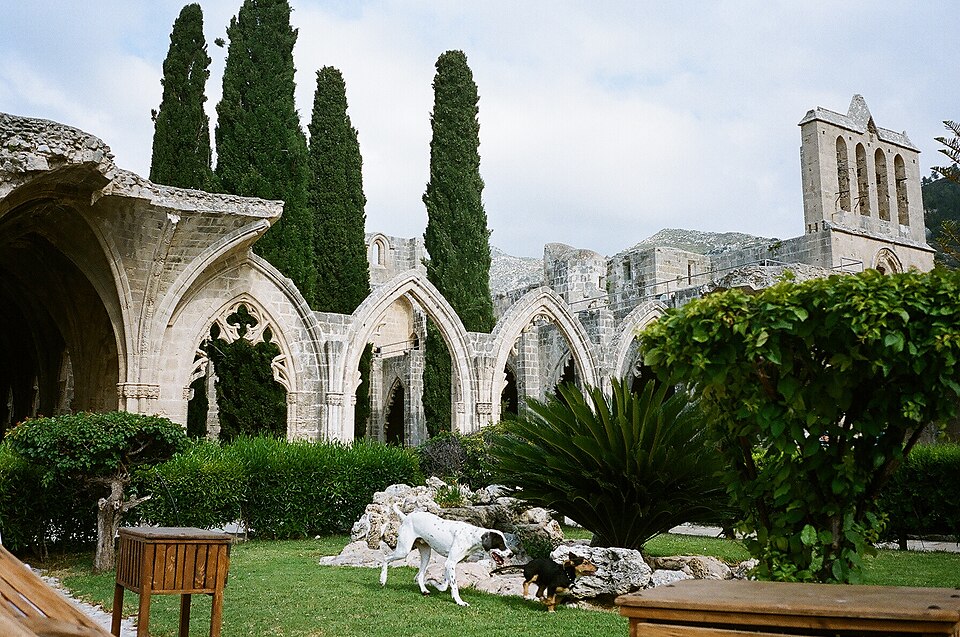
The north shares the island’s long history of trade, migration and changing rule. Salamis developed as an ancient city on the east coast, and its extensive Roman remains include a theatre and gymnasium. Byzantine Christianity left churches and monasteries. During the Lusignan kingdom, Gothic architecture transformed places such as Bellapais and Famagusta. Venice took control of Cyprus in 1489, strengthening fortifications before the Ottoman conquest of 1570–1571.
More about Northern Cyprus: history
Ottoman rule brought Muslim settlers and institutions into an island with an established Greek-speaking Christian population. Britain began administering Cyprus in 1878, annexed it in 1914 and made it a Crown colony in 1925. Independence in 1960 established the Republic of Cyprus with Greek Cypriot and Turkish Cypriot power-sharing arrangements. Constitutional breakdown and intercommunal violence followed; the UN peacekeeping mission began in 1964.
In July 1974, a coup backed by Greece’s military junta sought union with Greece. Türkiye invaded, and the conflict and displacement consolidated the island’s division. Greek Cypriots were displaced mainly southward and Turkish Cypriots mainly northward, although individual histories vary. The northern declaration of statehood on 15 November 1983 was a later event. UN Security Council Resolution 541 rejected the declaration’s legal validity and called on states not to recognise a Cypriot state other than the Republic of Cyprus.
Language of Northern Cyprus
Turkish is the official language of the northern administration and the main language of public life. Cypriot Turkish has distinctive pronunciation, grammar and vocabulary, shaped by the island’s history and contact with Greek and other languages. Standard Turkish is used in much formal writing and teaching. English is also used in tourism and higher education. Speaking Turkish does not, by itself, tell you someone’s citizenship, birthplace or sense of identity.
More about Northern Cyprus: language
Modern Turkish uses a Latin-based alphabet, with letters such as ç, ğ, ı, ö, ş and ü. Merhaba means hello, teşekkür ederim means thank you, and günaydın means good morning. Worldly’s linked Turkish lessons introduce the standard language rather than a dedicated Cypriot dialect course. Lefkoşa is Nicosia, Girne is Kyrenia and Gazimağusa is Famagusta; learning both forms makes historical accounts and modern signs easier to connect.
Greek remains part of the north’s linguistic history and the lives of Greek Cypriot residents, particularly in the Karpas area. Maronite communities have their own heritage, including Cypriot Maronite Arabic associated with Kormakitis/Koruçam. International students and other residents add further languages. The northern administration’s official language is a separate question from the Republic of Cyprus’s constitutional recognition of both Greek and Turkish.
Culture of Northern Cyprus
Turkish Cypriot culture combines island traditions with Ottoman, Turkish and wider Mediterranean influences. Coffee, hospitality, family gatherings and village celebrations are familiar parts of social life. Folk dances, embroidered textiles and woven baskets preserve skills passed between generations, while contemporary music, theatre and festivals offer other expressions of identity. Customs vary between households, and religious background does not determine an individual’s level of observance.
More about Northern Cyprus: culture
Büyük Han in North Nicosia makes several historical layers visible in one courtyard. Built as an Ottoman caravanserai in the sixteenth century, it now houses craft shops, studios and cafés. Nearby streets include Ottoman houses, former Gothic churches and older city walls. Bellapais’s medieval abbey also serves as a setting for cultural events. A building’s original purpose, later uses and present community meaning can each tell a different part of its story.
Cultural heritage also connects people across the island’s division. The bicommunal Technical Committee on Cultural Heritage works on monuments important to different communities. Greek Cypriot, Turkish Cypriot and other traditions overlap in food, music and daily habits, while retaining distinct histories. Shared practices are a way to learn about those connections without assuming that all Cypriots describe their identity in the same terms.
Economy of Northern Cyprus
Services are central to the northern economy. Tourism brings visitors to coastal hotels, historic towns and archaeological sites; higher education draws students from Türkiye and many other countries. Shops, construction, transport and public administration provide other employment. Agriculture includes citrus around Güzelyurt/Morphou, olives, vegetables and livestock. The landscape behind a resort town therefore belongs to a wider economy of farms, households and businesses.
More about Northern Cyprus: economy
The Turkish lira is the main currency, although some businesses quote prices in euros, pounds or other currencies. Exchange-rate changes and inflation in Türkiye affect purchasing power and costs in the north. Financial support, trade and transport links with Türkiye are especially important. Ercan Airport’s international flight connections operate via Türkiye; flying through that airport is distinct from entering through the Republic-controlled airports at Larnaca or Paphos.
Limited international recognition complicates trade, transport and investment. The EU’s Green Line framework permits qualifying goods to cross under specific conditions; it is not unrestricted commerce across an ordinary international frontier. Higher education and tourism also make the economy sensitive to changes in student numbers and visitor demand. Currency use, diplomatic recognition and participation in the EU are separate questions.
Politics of Northern Cyprus
The northern administration operates with a president, an elected Assembly of the Republic and a government led by a prime minister. These institutions organise local public life under the self-declared state’s constitutional framework. Their existence does not settle international status: only Türkiye recognises the Turkish Republic of Northern Cyprus as a state. The Republic of Cyprus remains the internationally recognised state on the island, while lacking effective control in the north.
- Which country recognises Northern Cyprus as a state?
- Türkiye is the only country that recognises the self-declared state. The Republic of Cyprus is internationally recognised.
More about Northern Cyprus: politics
UNFICYP, the United Nations Peacekeeping Force in Cyprus, maintains a buffer zone between the opposing forces. It includes parts of Nicosia, whose historic centre is divided. Crossings have allowed people to move between the sides since restrictions were eased in 2003, but documents, eligibility and procedures must be checked separately. The UN-led settlement process has sought a bizonal, bicommunal federation with political equality; describing that framework does not mean a settlement has been reached.
Cyprus joined the European Union on 1 May 2004. Under Protocol 10 of the accession arrangements, application of EU law is suspended in the areas where the Republic’s government does not exercise effective control. The European Commission also supports the Turkish Cypriot community and administers Green Line arrangements. It is therefore misleading either to describe the northern administration as a separate EU member or to treat EU law as applying there in exactly the same way as in the Republic-controlled area.
Nature & Wildlife of Northern Cyprus
The Karpas Peninsula combines farmland, scrub, dunes and long stretches of coast. Free-ranging donkeys are among its best-known animals, descended from domestic stock rather than a separate wild species native to the peninsula. Around the Kyrenia range, pine woods, rocky slopes and spring flowers create a different landscape from the dry plains below. The island’s position on migration routes also makes its coasts and open countryside important for birds.
More about Northern Cyprus: nature & wildlife
Green turtles and loggerhead turtles nest on parts of the northern coast, including Alagadi. Conservation teams monitor nests and work to reduce disturbance and accidental capture in fishing gear. Nesting beaches are living habitats: artificial light, vehicles and careless access can harm animals or nests. The sea beyond them contains seagrass meadows and rocky reefs, linking the beach with wider marine ecosystems.
Water scarcity, coastal construction, fires and habitat fragmentation place pressure on these landscapes. Seasonal appearance matters: hills can look green after winter rain and much drier by late summer. A familiar photograph of a donkey or turtle introduces one part of the environment, while conservation depends on protecting habitats throughout the year.
Food & Cuisine of Northern Cyprus
Hellim is the Turkish name for the Cypriot cheese also known as halloumi. Its firm texture allows it to be grilled or fried while holding its shape. Şeftali kebab consists of seasoned minced meat wrapped in caul fat and grilled; despite the name, it is not a peach dish. Meze brings several small dishes to the table, often including vegetables, pulses, dips and dairy foods. Olive oil, lemon and herbs connect many recipes with the wider eastern Mediterranean.
- Are hellim and halloumi different cheeses?
- They are Turkish and Greek names associated with the same Cypriot cheese tradition.
More about Northern Cyprus: food & cuisine
Pilavuna is a cheese-filled baked pastry, while zeytinli is bread made with olives. Molohiya uses the leaves of the jute plant in a stew, often cooked with meat. Macun preserves fruit, nuts or other ingredients in syrup and may be offered to guests. Coffee is commonly prepared in a small pot and served with its grounds settled in the cup; ayran is a salted yoghurt drink.
Turkish Cypriot cooking shares many dishes with Greek Cypriot and neighbouring cuisines. A food can be central to a community’s identity without having an exclusive national origin. Recipes and dietary choices vary between families, restaurants and generations. Learning the Turkish and Greek names for a familiar cheese is one way to see the island’s connected food history.
Landmarks of Northern Cyprus
Kyrenia Castle stands beside the old harbour and contains the remains of an ancient merchant ship recovered from the nearby seabed. The shipwreck museum links a dramatic fortress with the everyday movement of cargo around the Mediterranean. Above the coast, Bellapais Abbey preserves Gothic architecture from the Lusignan period, including a church, cloister and refectory. The hillside setting looks towards Kyrenia and the sea.
More about Northern Cyprus: landmarks
Saint Hilarion, Buffavento and Kantara occupy different positions along the Kyrenia range. Their defensive sites developed across Byzantine and Lusignan periods, using steep terrain to command routes and views. Famagusta offers another kind of fortification: walls, gates and Othello Castle frame a city with important medieval churches. The former Cathedral of Saint Nicholas became the Lala Mustafa Pasha Mosque after the Ottoman conquest and remains a place of worship.
North of Famagusta, Salamis preserves remains of a major ancient city. Near North Nicosia’s centre, Büyük Han and Selimiye Mosque, the former Cathedral of Saint Sophia, introduce Ottoman and Gothic layers. At the far end of Karpas, Apostolos Andreas Monastery is an important Christian pilgrimage site. Archaeological sites, museums and active religious buildings have different visiting arrangements; the guide’s historical descriptions do not establish present access.
People & Society of Northern Cyprus
Turkish Cypriots are one of the island’s principal communities, with roots shaped by centuries of Cypriot history. The north also includes people with family origins in Türkiye, international students, migrant workers and other residents. Greek Cypriot and Maronite communities maintain a presence as well. Ethnicity, language, citizenship and place of birth are distinct aspects of a person’s background; none should be inferred automatically from the others.
More about Northern Cyprus: people & society
Displacement during intercommunal conflict and in 1974 changed the lives of families from both principal communities. Homes, property, missing relatives and memories of villages remain important parts of the Cyprus question. Turkish Cypriot diaspora communities, including in Britain and Türkiye, maintain family and cultural connections with the island. Cross-community projects and everyday encounters offer further connections across the division.
North Nicosia concentrates administrative and urban life; Kyrenia combines neighbourhoods with tourism, and Famagusta is also a university centre. Rural villages, farms and coastal communities follow different rhythms. Population totals need a date and definition because permanent residents, citizens, students and people physically present are not the same measure. Everyday life is best understood through those varied experiences alongside the region’s political history.