Facts about Tunisia
Explore Tunisia from the medina of Tunis and the ruins of Carthage to olive-growing plains, Djerba and Saharan oases. Learn its 24 governorates, place regional centres and follow waters across their wider geographic extent.
- Capital
- Tunis
- Currency
- Tunisian dinar (TND)
- Official language
- Arabic
- Governorates
- 24
- Independence Day
- 20 March
- Highest point
- Jebel Chambi, 1,544 m
Tunisia · 0 of 20 rounds passed
Two timed rounds per topic, 20 seconds a question
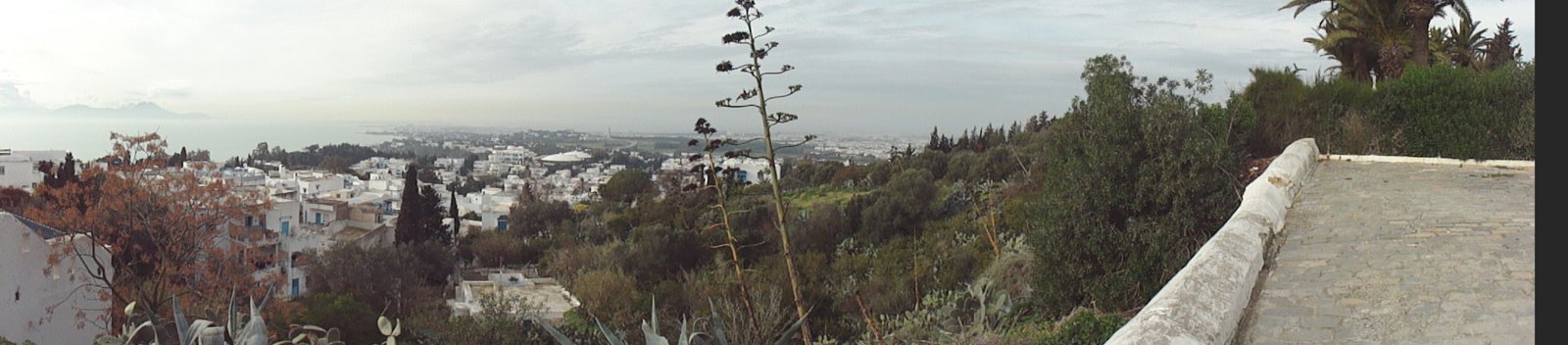
Tunis anchors the northeast, with Carthage and Sidi Bou Said close to the capital. Bizerte and the Ichkeul wetlands lie farther north; Tabarka and Aïn Draham lead into the wooded northwest. Cap Bon includes Nabeul, Hammamet and the Punic remains of Kerkouane. Along the eastern coast, Sousse, Monastir, Mahdia and Sfax connect ports, historic centres and olive-growing country.
Kairouan and El Jem introduce different layers of inland heritage. Tozeur and Nefta lie beside the southern chotts, while Douz faces the dunes and Djerba sits beside the Gulf of Gabès. Three map games, fifteen sights, ten illustrated topics and eighty reviewed questions connect these landscapes with daily life. Waterways retain their available full courses and the Mediterranean extends beyond Tunisia. Check current official travel advice and local access arrangements before planning remote or border routes.
Geography of Tunisia
Mediterranean shores, northern uplands and southern chotts link the Maghreb with the Sahara.
- Which countries border Tunisia?
- Algeria lies to the west and southwest, and Libya to the southeast. The Mediterranean borders Tunisia to the north and east.
- What is Tunisia’s highest mountain?
- Jebel Chambi rises to about 1,544 metres near Kasserine in western Tunisia. It belongs to the country’s Atlas-related mountain landscape.
- Does the Medjerda continue beyond Tunisia?
- Yes. The river rises in northeastern Algeria before crossing Tunisia and reaching the Gulf of Tunis. Its map target retains that cross-border course.
More about Tunisia: geography
Tunisia lies in North Africa between Algeria and Libya, with the Mediterranean Sea along its northern and eastern shores. Tunis faces a gulf near the northeastern tip, while Cap Bon projects toward Sicily. The northern Tell and the Tunisian Dorsal belong to the wider Atlas mountain system. Jebel Chambi, near Kasserine, is the highest summit at about 1,544 metres. Rainfall generally decreases toward the south, although altitude and exposure also matter.
The Medjerda rises in Algeria, crosses northern Tunisia and reaches the Gulf of Tunis. Its valley supports farming and water infrastructure. Farther south, olive-growing plains give way to oases, rocky desert and dune fields. Chott el Djerid is a broad salt-flat and seasonal lake basin rather than a permanent freshwater lake; the below-sea-level Chott el Gharsa is a separate feature. Djerba lies beside the Gulf of Gabès. Twenty-four governorates divide the country administratively.
History of Tunisia
Carthage, Roman Africa, Islamic dynasties and modern independence left different layers of history.
- Who founded Carthage?
- Carthage was founded by Phoenician settlers from the eastern Mediterranean. It later became a powerful city with its own North African and maritime connections.
- When did Tunisia become independent?
- Tunisia regained independence from the French protectorate on 20 March 1956. The republic was proclaimed the following year.
- What happened in Tunisia in 2011?
- A popular uprising led to President Ben Ali’s departure on 14 January 2011. Tunisia’s revolution helped inspire wider Arab Spring movements.
More about Tunisia: history
Phoenician settlers established Carthage, which developed into a major Mediterranean power. Its rivalry with Rome produced three Punic Wars. Hannibal crossed the Alps during the second; Rome destroyed Punic Carthage in 146 BCE. A later Roman city occupied the site, while places such as Dougga and El Jem preserve other aspects of Roman Africa. These cities also grew from local North African histories rather than an empty landscape awaiting colonisation.
Kairouan became an important centre after the Arab conquests of the seventh century. Aghlabid and Hafsid rule formed part of the region’s Islamic history. Ottoman authority was established in 1574, followed by increasingly autonomous beys. France imposed a protectorate in 1881; Tunisia regained independence on 20 March 1956. The republic was proclaimed in 1957, with Habib Bourguiba its first president. Protests beginning in late 2010 led to Zine El Abidine Ben Ali’s departure in January 2011.
Languages of Tunisia
Official Arabic, everyday Derja, French and Amazigh varieties have different roles.
- What is Derja?
- Derja is a common name for Tunisian Arabic, used in everyday conversation. It differs from Modern Standard Arabic in pronunciation, vocabulary and grammatical patterns.
- Is French an official language of Tunisia?
- No. Arabic is the official language. French remains widely used in some educational, business and professional settings.
- Do Worldly’s Arabic lessons teach Tunisian Arabic?
- The linked Arabic lessons introduce Modern Standard Arabic. They are useful for formal Arabic but are not a dedicated course in Tunisian Derja.
More about Tunisia: language
Arabic is Tunisia’s official language. Modern Standard Arabic appears in formal writing, education and public institutions, while Tunisian Arabic, commonly called Derja, is widely used in everyday conversation. Its vocabulary and pronunciation reflect a long history of contact within North Africa and across the Mediterranean. Speakers adapt their language to setting and audience rather than using one uniform form in every situation.
French is used in many professional and educational settings, but it is not an official language. Amazigh varieties survive in some communities, including parts of Djerba and the southern hill villages, with differing levels of use between generations. Neither language nor identity can be reduced to a single ancestry percentage. The linked Arabic course teaches Modern Standard Arabic rather than a dedicated Tunisian Derja course; French lessons are available separately.
Culture and crafts of Tunisia
Malouf music, chechia makers, pottery workshops and living medinas connect craft with daily life.
- What is Tunisian malouf?
- Malouf is a Tunisian musical tradition with Arab-Andalusian roots. It uses organised repertoires and ensembles, alongside other forms of Tunisian music.
- What is a chechia?
- A chechia is a soft felt cap, often red, associated with traditional Tunisian dress and specialist craft workshops in Tunis.
- Why is Sejnane pottery recognised by UNESCO?
- UNESCO recognised the women potters’ skills, knowledge and transmission in 2018. The tradition includes hand shaping, firing and decoration using local materials.
More about Tunisia: culture
Malouf belongs to the Arab-Andalusian musical traditions of North Africa, with a distinct Tunisian repertoire. Oud, violin, percussion and voices can come together in ensembles, while the bendir is a frame drum used in several musical settings. Contemporary music, cinema and visual art add new expressions to inherited forms. Cultural life differs between cities, rural communities and generations; no single wedding schedule describes every family.
The chechia is a soft felt cap associated with Tunisian craft workshops, while the jebba is a traditional outer garment. Nabeul is known for pottery and ceramics, and Kairouan for carpets and weaving. Sejnane’s women potters maintain a tradition recognised by UNESCO in 2018. These are working skills passed between people, not only museum objects. Historic medinas contain homes, schools and shops as well as monuments, so respectful visits recognise ordinary neighbourhood life.
Economy of Tunisia
Olive oil, manufacturing, phosphate, tourism and services support different regional livelihoods.
- What currency does Tunisia use?
- Tunisia uses the Tunisian dinar, with the international code TND. It is divided into 1,000 millimes.
- What does Tunisia export?
- Exports include manufactured goods such as clothing and electrical equipment, agricultural products such as olive oil and dates, and phosphate-related products.
- Why does water matter to Tunisia’s economy?
- Farming, households, industry and tourism all need reliable water. Repeated drought places pressure on reservoirs, irrigation and already limited supplies.
More about Tunisia: economy
Tunisia’s economy includes manufacturing, agriculture, tourism and a broad services sector. Olive oil and dates are important agricultural exports; Deglet Nour dates connect oasis cultivation with overseas markets. Northern districts also grow cereals. The Gafsa basin is associated with phosphate extraction, used in fertiliser production. Clothing, electrical equipment and automotive components link factories with international supply chains. The currency is the Tunisian dinar, abbreviated TND.
Tunis and coastal centres concentrate many businesses and transport links, while inland regions face different employment and investment conditions. Visitors support hotels, restaurants, transport and heritage work in places such as Sousse, Hammamet and Djerba. Drought can affect crops and household water at the same time. Economic debates concern jobs, public finances, regional inequality and resilience to outside shocks. A single tourism percentage would depend on the year and whether indirect activity was included.
Government and institutions of Tunisia
The 2022 constitution strengthened the presidency and established a two-chamber legislative framework.
- Which constitution provides Tunisia’s current framework?
- The constitution adopted in 2022 replaced the 2014 constitution and strengthened presidential authority. The guide distinguishes these two periods.
- What are Tunisia’s two legislative chambers?
- They are the Assembly of the Representatives of the People and the National Council of Regions and Districts, which began work in 2024.
- How many governorates does Tunisia have?
- Tunisia has 24 governorates. Tunis, Ariana, Ben Arous and Manouba are separate governorates within the greater capital region.
More about Tunisia: politics
Tunisia is a republic. Its institutional framework changed after the 2011 revolution, through the 2014 constitution and again after President Kais Saied’s concentration of power beginning in 2021. The constitution adopted in 2022 gives the presidency extensive authority. It replaced the earlier constitutional arrangement; describing the current system simply as the parliamentary democracy established after 2011 would miss this change. Political participation, judicial independence and civil liberties remain subjects of concern and debate.
The president is head of state, and the head of government is appointed within the presidential framework. The Assembly of the Representatives of the People and the National Council of Regions and Districts are the two legislative chambers; the latter began work in 2024. Tunisia has 24 governorates. It is a member of the African Union, Arab League and United Nations. These memberships do not make it a member of the European Union, despite extensive trade and migration connections with Europe.
Nature and water in Tunisia
Wetlands, northern oak forests, steppe and desert habitats respond to a strong rainfall gradient.
- Why is Ichkeul National Park important?
- Its lake and marshes support migratory waterbirds. Seasonal freshwater inflow and connection to coastal saltwater influence the habitats they use.
- Is Chott el Djerid always covered by water?
- No. It is a salt-flat and seasonal lake basin. Rainfall and evaporation alter its water coverage, leaving extensive exposed salt crust in dry conditions.
- Where are Tunisia’s wetter forests?
- The northwest, including Kroumirie near Aïn Draham and Tabarka, has wetter uplands and oak woodland, contrasting with the much drier south.
More about Tunisia: nature & wildlife
Ichkeul National Park protects a lake and wetland system near Bizerte, used by migratory waterbirds. Its seasonal exchange of freshwater and saltwater is part of its ecology, and reduced freshwater inflow can alter salinity and vegetation. Northern Kroumirie has cork-oak woodland and a wetter climate than the southern desert. Flamingos use suitable shallow wetlands, while fennec foxes are adapted to arid country. Barbary macaques are not a present-day wild forest species of Tunisia.
The southern chotts are saline basins whose surface conditions change with rainfall and evaporation. A pale dry crust is not evidence of a permanent navigable lake. Dunes of the Grand Erg Oriental continue into Algeria, while the Medjerda connects upstream landscapes with northern farms and the coast. Drought, erosion, fire and pressure on groundwater affect habitats and livelihoods. Generalised learning maps show reference extents, not current water levels, safe routes or permission to enter protected places.
Food of Tunisia
Harissa, couscous, brik, lablabi and date-filled makroudh bring different textures to the table.
- What is harissa?
- Harissa is a chilli-based paste with seasonings such as garlic, coriander or caraway. Recipes vary, and UNESCO recognised its Tunisian knowledge and practices in 2022.
- What is brik?
- Brik is a thin pastry parcel, commonly fried around an egg with ingredients such as tuna or potato. Fillings and shapes vary.
- How is Tunisian tajine different from Moroccan tagine?
- Tunisian tajine is generally an egg-based baked dish cut into portions. Moroccan tagine commonly refers to a slow-cooked stew and its earthenware vessel.
More about Tunisia: food & cuisine
Harissa is a chilli-based paste prepared with seasonings that vary by recipe. UNESCO recognised the knowledge and practices of Tunisian harissa in 2022. Couscous has many regional preparations, including fish versions along the coast; its UNESCO recognition is shared with Algeria, Mauritania and Morocco. Olive oil, vegetables, grains and seafood appear widely, but the amount of chilli and the dishes served differ between households and occasions.
Brik uses thin pastry wrapped around fillings, often including egg with tuna or potato, before frying. Lablabi is a chickpea-based dish commonly served with bread and seasonings. A fricassé is a small fried sandwich, while ojja brings eggs together with a tomato-based sauce and other ingredients. Makroudh is a semolina pastry often filled with dates and associated with Kairouan. Tunisian tajine is typically an egg-based baked dish, distinct from the slow-cooked stews many visitors associate with Morocco.
Landmarks and heritage of Tunisia
Punic harbours, Roman monuments, Islamic cities and Djerba’s settlement landscape tell different stories.
- How many UNESCO World Heritage properties does Tunisia have?
- Tunisia has nine listed properties, including the settlement heritage of Djerba, inscribed in 2023. Eight are cultural and Ichkeul is natural.
- What is special about Kerkouane?
- Kerkouane preserves a Punic town and its necropolis on Cap Bon. Its remains offer evidence of Punic urban life without a later Roman rebuilding.
- What is the Bardo Museum known for?
- The Bardo Museum near Tunis is especially known for its collection of Roman mosaics, alongside objects representing other periods of Tunisian history.
More about Tunisia: landmarks
Carthage preserves Punic and Roman remains close to modern Tunis. Dougga, also called Thugga, occupies a hilltop site with a theatre, Capitol and evidence of earlier Numidian settlement. El Jem’s amphitheatre demonstrates the scale of Roman urban life inland from the Sahel coast. Kerkouane on Cap Bon preserves a Punic town that was not rebuilt as a Roman city. The Bardo Museum in the capital region is especially known for Roman mosaics.
The medinas of Tunis and Sousse and the city of Kairouan are UNESCO World Heritage properties. Kairouan’s Great Mosque has substantial ninth-century Aghlabid fabric. Djerba’s World Heritage property, inscribed in 2023, recognises a settlement pattern adapted to an island environment, including dispersed communities and religious buildings. Ichkeul is the country’s natural World Heritage property. Together these make nine listed properties, distributed across Tunisia rather than confined to Tunis.
People and communities of Tunisia
Coastal cities, inland towns, island communities and a diaspora connect many Tunisian experiences.
- What is the Tunisian diaspora?
- It includes Tunisians and their descendants living abroad. Family ties, study, work and remittances connect these communities with places across Tunisia.
- Who received Tunisia’s 2015 Nobel Peace Prize?
- The National Dialogue Quartet received the prize for its contribution to building pluralistic democracy through dialogue after the 2011 revolution.
- Who was Aboul-Qacem Echebbi?
- He was a Tunisian poet whose work became influential beyond Tunisia. Lines from his poetry form part of the national anthem.
More about Tunisia: people & society
Tunis is the capital, with a wider urban region extending into neighbouring governorates. Sfax is a major commercial centre, Sousse serves the central coast and inland towns connect agricultural and oasis regions. Arab and Amazigh histories overlap with Mediterranean and African connections. Djerba includes long-established Jewish communities alongside Muslim communities; the island’s heritage includes different forms of religious architecture. No single ancestry label describes every Tunisian family.
Migration links households with France, Italy and other countries through family visits, work, study and remittances. The writer and reformer Tahar Haddad argued for social change, while the poet Aboul-Qacem Echebbi’s words appear in the national anthem. Tunisian women’s organisations and other civil society groups have shaped public debate across different political periods. The National Dialogue Quartet received the 2015 Nobel Peace Prize for its contribution to dialogue during the transition after the revolution.