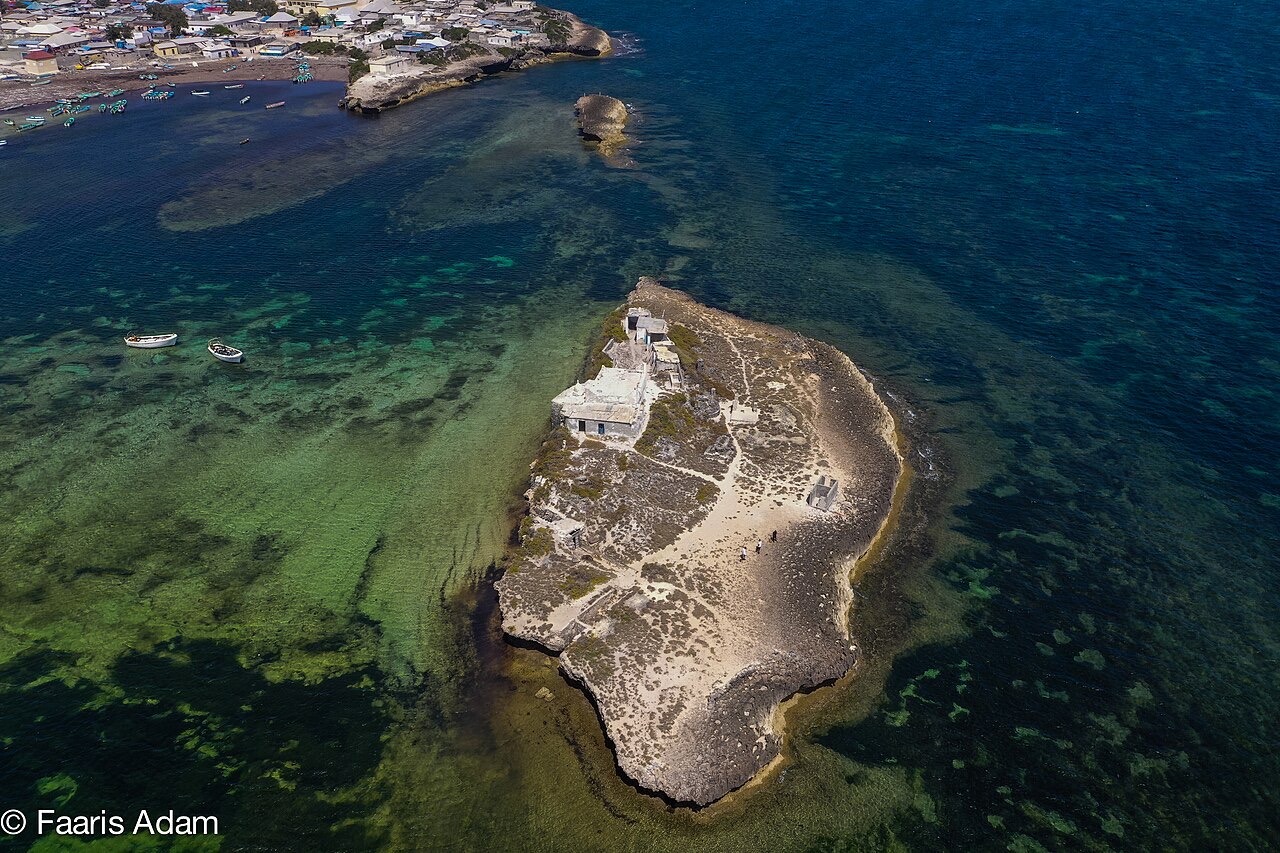
Facts about Somalia
Explore Somalia through the Indian Ocean coast, the Juba and Shabelle valleys, the central interior and the Gulf of Aden. Ten illustrated topics connect landscapes with history, languages, poetry, food and everyday life.
- Capital
- Mogadishu (Muqdisho)
- Official languages
- Somali and Arabic
- Currency
- Somali shilling (SOS)
- Region
- Horn of Africa
- Major rivers
- Juba and Shabelle
- Republic formed
- 1 July 1960
Somalia · 0 of 20 rounds passed
Two timed rounds per topic, 20 seconds a question
Mogadishu faces the Indian Ocean. Merca and Barawe recall centuries of coastal trade; Kismayo connects the southern coast with the lower Juba. Inland, Baidoa, Beledweyne and Dhuusamareeb introduce farming areas, river corridors and dryland settlements.
Galkayo and Garowe lead toward the northeastern interior, Qardho, the Gulf of Aden port of Bosaso and the Hafun peninsula. The city exercise follows Worldly’s Somalia outline, with Somaliland displayed separately. The map does not resolve territorial claims or show political control.
Geography of Somalia
The Horn of Africa, two sea frontages and the Juba–Shabelle river country.
- Where is Somalia?
- In the eastern Horn of Africa, between the Gulf of Aden and the Indian Ocean.
- Which two major rivers cross southern Somalia?
- The Juba, also written Jubba, and the Shabelle, also written Shebelle. Both rise in Ethiopia.
- Why does the map omit the Somaliland entry?
- Worldly displays Somaliland separately. This is the site’s map convention, not a resolution of disputed status or territorial claims.
More about Somalia: geography
Somalia occupies the eastern Horn of Africa, beside the Gulf of Aden to the north and the Indian Ocean to the east and south. Its internationally claimed territory borders Djibouti, Ethiopia and Kenya. Mogadishu, called Muqdisho in Somali, stands on the Indian Ocean coast. Much of the interior is dry plateau and plain, with mountain country in the north and river valleys in the south.
The Juba and Shabelle rivers rise in the Ethiopian highlands and cross into southern Somalia. The Juba reaches the ocean near Kismayo; the Shabelle usually loses its flow inland rather than reaching the sea. Seasonal rainfall brings both vital water and flood risks. Worldly displays Somaliland separately: this city exercise uses the site’s Somalia outline, not a map of agreed sovereignty, federal boundaries or military control.
History of Somalia
Indian Ocean trading towns, the 1960 union and the legacies of dictatorship and war.
- What happened on 1 July 1960?
- The former Italian-administered territory became independent and united with the already independent northern territory to form the Somali Republic.
- When did Siad Barre take power?
- In a military coup in 1969. His government fell in 1991.
- Was ancient Punt identical to present-day Somalia?
- That is not established. Scholars associate Punt with the wider Horn and Red Sea region, but its exact location and extent remain debated.
More about Somalia: history
For centuries, coastal towns such as Mogadishu, Merca and Barawe connected inland producers with merchants across the Indian Ocean. Muslim sultanates, including Ajuran, shaped regional trade and power. The ancient land of Punt is often associated with the wider Horn, but its precise extent remains debated. In the colonial period, Britain governed the northern protectorate and Italy controlled much of the south.
British Somaliland became independent on 26 June 1960; the former Italian-administered trust territory became independent on 1 July, when the two united as the Somali Republic. Mohamed Siad Barre seized power in 1969. His dictatorship, the Ogaden War and repression preceded state collapse in 1991 and prolonged civil conflict. Somaliland declared independence in 1991 and developed separate institutions. Federal state-building in Somalia continues amid conflict and political disputes; neither 1991 nor the 2012 provisional constitution marks a simple end to the conflict.
Somali and Somalia’s languages
Somali writing, regional varieties and Arabic’s official role.
- Is Somali an Arabic dialect?
- No. Somali is Cushitic; Arabic is Semitic. Both belong to the Afroasiatic family.
- When was the Latin-based official Somali orthography adopted?
- In 1972. Somali also has earlier Arabic-script and locally developed writing traditions.
- What does the linked language course teach?
- Common introductory Somali phrases. It does not cover every regional variety or community language.
More about Somalia: language
Somali is a Cushitic language within the Afroasiatic family. It is spoken in Somalia, Somaliland, Djibouti, Ethiopia, Kenya and diaspora communities. Somali and Arabic have official status in Somalia. Arabic is important in religious life and education, but Somali is not a variety of Arabic. The languages belong to different branches of the same wider language family.
A Latin-based Somali orthography was officially adopted in 1972 and supported literacy campaigns. Earlier writing traditions included Arabic script and locally developed scripts such as Osmanya. Maxaa-tiri and Maay illustrate important linguistic diversity; constitutional terminology and linguistic classifications are not identical. Some communities also use coastal languages and varieties such as Chimwiini. The linked lessons introduce common Somali phrases rather than representing every regional variety.
Culture of Somalia
Poetry, storytelling, faith and a musical life that crosses borders.
- Why is poetry prominent in Somali culture?
- It has served as a medium for memory, public debate, storytelling and artistic expression, and continues through modern media.
- Which religion strongly shapes public and family life?
- Islam, while individual practice and local customs vary.
- Is Somali culture only pastoral?
- No. Coastal urban traditions, farming communities and diaspora life are also important parts of its diversity.
More about Somalia: culture
Poetry has long carried news, argument, praise and memory in Somali society. Forms such as gabay sit within a rich oral tradition, while songs, radio, books and digital media carry words to new audiences. Poetry is a living art rather than a relic of nomadic life. Musicians and writers in cities and the diaspora draw on both inherited forms and international influences.
Islam shapes religious calendars, learning and many everyday customs. Hospitality, family relationships and shared meals matter in many settings, but customs vary by place, generation and community. Coastal towns, farming areas, pastoral communities and diaspora neighbourhoods have distinct experiences. Historical photographs of book fairs and public gatherings record particular moments; they do not establish present-day access or security conditions.
Economy of Somalia
Livestock, ports, remittances and mobile money connect local and global livelihoods.
- Why is livestock important?
- It supports food, income, trade and exports, particularly through links with markets around the Gulf.
- How does the diaspora support the economy?
- Remittances help families meet expenses and can support businesses and investment.
- What is Somalia’s national currency?
- The Somali shilling (SOS). US dollars are also widely used.
More about Somalia: economy
Livestock keeping and trade are central to many livelihoods. Camels, goats, sheep and cattle connect pastoral areas with towns and export markets around the Gulf. Farming along the Juba and Shabelle produces food and commercial crops; fishing supports coastal communities. Frankincense and myrrh link parts of the northern landscape with long histories of regional trade.
Mogadishu, Bosaso and Kismayo are important ports and commercial centres. Money sent by the diaspora helps households and businesses, and mobile money is widely used for everyday payments. The Somali shilling is the national currency, while US dollars also circulate widely. Conflict, drought, floods and weak infrastructure constrain economic opportunity. National totals and exchange rates change quickly, so this guide focuses on economic relationships rather than undated rankings.
Politics of Somalia
Federal institutions, contested arrangements and the difference between a constitution and control.
- Where are the federal institutions based?
- In Mogadishu, the national capital.
- Does a federal map show who controls each place?
- No. Constitutional arrangements, territorial claims and actual control are different questions.
- Are Puntland and Somaliland the same political entity?
- No. Puntland developed an autonomous administration within Somalia’s political framework; Somaliland declared independence and maintains separate institutions.
More about Somalia: politics
Somalia’s federal framework includes a president, a prime minister and a bicameral parliament, with institutions based in Mogadishu. The 2012 provisional constitution provided a foundation for rebuilding national government. Relations between federal authorities and member-state administrations, constitutional changes and electoral arrangements remain politically contested. A formal institutional description should not be mistaken for uniform government control across the country.
Puntland developed an autonomous administration in 1998 and has participated in the federal political framework, while disputes over powers and constitutional changes continue. Somaliland declared independence in 1991 and maintains separate institutions; its status and territorial claims remain disputed. Al-Shabaab insurgency and other violence affect governance and civilian life. The city map depicts locations rather than control lines, and this guide avoids a volatile list of officeholders or a fixed account of future elections.
Nature & Wildlife of Somalia
Dryland habitats, river corridors and a coast shaped by monsoons.
- Is Somalia mostly rainforest?
- No. Much of the country is arid or semi-arid, with distinctive riverine and coastal habitats.
- Which trees provide frankincense?
- Boswellia trees. Several species occur in the wider Horn region.
- Why are the southern rivers ecologically important?
- They sustain riverine vegetation, floodplains, farming and other habitats in an otherwise largely dry region.
More about Somalia: nature & wildlife
Arid and semi-arid habitats cover much of Somalia, including thorn scrub, grasslands and rocky uplands. These landscapes support specialised plants and animals as well as pastoral livelihoods. Frankincense-bearing Boswellia trees grow in parts of the north. Sustainable harvesting, woodland protection and local knowledge matter because trees and grazing lands support communities as well as biodiversity.
The Juba and Shabelle corridors support farming, riverine vegetation and floodplain habitats that contrast with the drier interior. Along the coast, fisheries and marine habitats are shaped by seasonal winds and ocean conditions. Drought, flooding, habitat loss and conflict create overlapping pressures. Protected-area designations or older wildlife accounts do not guarantee current management, animal abundance or safe visitor access.
Food & Cuisine of Somalia
Canjeero, spiced rice, pasta and the food traditions of inland and coastal communities.
- What is canjeero?
- A fermented pancake, with regional names and recipes, often eaten at breakfast.
- What is bariis iskukaris?
- A spiced rice dish whose ingredients and preparation vary by household.
- Why is pasta part of Somali cuisine?
- Historical connections, including Italian colonial rule, helped establish baasto as a familiar food.
More about Somalia: food & cuisine
Canjeero, also called laxoox in some regions, is a fermented pancake often eaten at breakfast. Rice dishes such as bariis iskukaris use spices including cumin, cardamom and cinnamon, with recipes varying by household. Sambusa are filled pastries associated especially with Ramadan and gatherings. Tea, often spiced and sweetened, is part of many social occasions.
Pastoral traditions bring milk and meat into many diets; farming regions contribute grains and vegetables, and coastal communities have fishing and seafood traditions. Pasta, known as baasto, reflects exchanges that include the Italian colonial period and has become part of everyday cuisine. A banana may accompany a savoury meal in some households. No single dish represents every community, and drought, conflict and displacement can sharply limit access to food.
Landmarks of Somalia
Historic ports, Mogadishu’s old quarters and the northeastern headlands.
- Which Mogadishu quarters feature in the guide?
- Hamar Weyne and Shangani, both associated with the city’s historic coastal life.
- Where is Hafun?
- On a peninsula along the northeastern Indian Ocean coast.
- Do landmark pins mean a place is safe or open to visitors?
- No. They are approximate educational locations; current access and security must be checked separately.
More about Somalia: landmarks
Mogadishu’s Hamar Weyne and Shangani quarters recall the city’s Indian Ocean trading history. The Arba’a Rukun Mosque and other religious buildings connect architecture with centuries of Islamic life. Merca and Barawe are also historic coastal towns, with their own communities, languages and trading traditions. War has damaged heritage, and the condition of individual buildings changes.
Liido and Jazeera locate the coastal landscape around Mogadishu, while Hafun marks a distinctive peninsula on the northeastern Indian Ocean coast. The guide’s eight heritage and landscape pins are approximate learning locations. They are not a list of open attractions, travel routes or assurances of access. Consult current official travel advice separately; the educational priority labels describe what to learn first.
People & Society of Somalia
Pastoralists, farmers, coastal communities and a far-reaching diaspora.
- Does clan identity explain everyone’s experience?
- No. It is one influence among many, alongside place, occupation, generation, gender and individual choices.
- Who is Nuruddin Farah?
- A Somali novelist known for exploring power, identity, family and belonging.
- Who is Abdi Bile?
- A Somali middle-distance runner who won the men’s 1,500 metres at the 1987 World Championships.
More about Somalia: people & society
Somali society includes pastoral, farming, urban and coastal communities. Clan and family networks can provide identity and support and influence politics, but they do not describe every individual’s life or opinion. Somali Bantu communities and Benadiri and other coastal communities are part of the country’s social history. Describing the population as culturally uniform erases important differences.
Conflict, environmental shocks and economic pressures have displaced many people within the country and across borders. Diaspora communities maintain family, business and cultural ties while contributing to the societies where they live. Writers such as Nuruddin Farah explore memory, power and belonging; athletes such as Abdi Bile connect Somali experience with international sport. Their stories are examples, not a substitute for the many less public lives that shape the country.