The France course
Facts about France, for your next trip
Explore ten topics about France, from its river valleys and history to regional cooking and everyday life. Play the facts rounds on this page, then continue with another topic.
Capital Paris · Europe · 10 topics · 20 rounds · 80 questions · 20 seconds each
France is the largest country in the European Union by land area and one of its two great political engines. It has spent centuries exporting its language, legal codes and ideas about citizenship, and it remains the most visited country on Earth, drawing close to 100 million travelers in a normal year.
Mainland France is divided into thirteen regions, with five more scattered across the Caribbean, the Indian Ocean and South America. Île-de-France, the small ring around Paris, holds roughly a fifth of the population on about two percent of the land. Beyond it the country changes character quickly: wheat plains and cathedral towns in the north, château country along the Loire, volcanic uplands in the center, Provence and the Côte d’Azur on the Mediterranean, and the Alps and Pyrenees walling off the eastern and southwestern borders.
Paris dominates, but the other cities are distinct enough to be worth the journey on their own. Marseille is the oldest, founded by Greek sailors around 600 BC and still the country’s main port. Lyon claims the culinary crown, Bordeaux the wine trade, Toulouse the aerospace industry, and Strasbourg sits on the German border hosting the European Parliament. Visitors, and there are close to a hundred million of them a year, tend to come for some combination of the same four things: the museums and streets of Paris, the wine regions, the Mediterranean coast, and the food.
- Population
- 68.6 million
- Area
- 551,695 km² mainland
- Currency
- Euro (€)
- Official language
- French
- Regions
- 13 mainland, 5 overseas
- Highest point
- Mont Blanc, 4,806 m
France · Geography
Geography of France
The Atlantic, Channel and Mediterranean give France three very different coasts. Inland, the Loire and Seine cross broad plains while the Alps and Pyrenees form mountain borders. Begin with metropolitan France, then discover how its overseas regions extend the country beyond Europe.
Commonly asked
- What does metropolitan France include?
- Metropolitan France is the part of France in Europe, including the mainland and Corsica. It is distinct from the overseas regions and other overseas territories.
- Which river runs through Paris?
- The Seine flows through Paris and reaches the English Channel near Le Havre. The Loire, farther south, is the longest river in France.
France · History
History of France
Roman Gaul, the monarchy at Versailles and the Revolution all left their mark on France. Follow the changes from royal rule to republic, then explore how Napoleon and the upheavals of the twentieth century shaped the country.
Commonly asked
- When did the French Revolution begin?
- The Revolution began in 1789. The storming of the Bastille on 14 July became one of its best-known events, alongside the abolition of feudal privileges and the Declaration of the Rights of Man and of the Citizen.
- When did the Fifth Republic begin?
- The Fifth Republic began in 1958, with a new constitution and Charles de Gaulle as its first president.
France · Language
The French language
French grew from spoken Latin and spread far beyond Europe. Within France, Breton, Occitan, Alsatian and Corsican tell other stories about the places where they are spoken. Start with that background, then practise the words for a first conversation.
Commonly asked
- What language family does French belong to?
- French is a Romance language, descended from Latin. Italian, Spanish and Portuguese belong to the same family.
- What is the difference between tu and vous?
- Tu addresses one person informally. Vous addresses several people, or one person politely. Vous is a useful starting point when speaking to an adult you do not know.
France · Culture
Culture of France
Painting, literature and cinema are part of everyday cultural life, alongside local festivals and the ritual of sharing a meal. Explore the artists and ideas that travelled abroad, and the regional traditions that remain rooted in particular places.
Commonly asked
- What was Impressionism?
- Impressionism was an art movement associated with nineteenth-century France. Painters such as Claude Monet explored light, colour and scenes of everyday life, often working outdoors.
- What is the Cannes Film Festival?
- It is an international film festival held in Cannes on the Mediterranean coast. Its top award is the Palme d’Or.
France · Economy
Economy of France
France produces aircraft, trains and agricultural goods as well as the fashion and wine it is known for. Toulouse is closely associated with aerospace, while farms and vineyards connect regional economies to the landscape. Tourism brings visitors to cities and countryside alike.
Commonly asked
- What currency does France use?
- France uses the euro. Euro banknotes and coins entered circulation in 2002, replacing the French franc.
- Which French city is known for aerospace?
- Toulouse is a major centre of the aerospace industry, with aircraft assembly and a network of engineering and research activity around it.
France · Politics
How France is governed
France is a semi-presidential republic, with a president as head of state and a prime minister leading the government. Explore how those roles fit together, how Parliament works and how the regions connect national institutions to local life.
Commonly asked
- What are the two houses of the French Parliament?
- The National Assembly and the Senate. Members of the National Assembly are directly elected; senators are elected indirectly.
- How many regions does France have?
- France has eighteen regions: thirteen in metropolitan France, including Corsica, and five overseas. The overseas regions are Guadeloupe, Martinique, French Guiana, Réunion and Mayotte.
France · Nature & Wildlife
Nature and wildlife of France
Atlantic dunes, Alpine slopes and Mediterranean wetlands support different kinds of wildlife. Explore the flamingos of the Camargue and the mountain habitats of the Alps and Pyrenees, then look beyond Europe to the rainforest of French Guiana.
Commonly asked
- Where is the Camargue?
- The Camargue is the wetland region around the Rhône delta in southern France. It is known for greater flamingos, white horses and salt marshes.
- Which mountain ranges border France?
- The Alps lie along the southeastern frontier, while the Pyrenees separate France from Spain and Andorra. The Jura also forms part of the border with Switzerland.
France · Food & Cuisine
Food and cooking in France
Butter and cream feature in Normandy, while olive oil and vegetables shape much of Provençal cooking. Discover how regional ingredients influence the meal, and why bread, cheese and the place a food comes from matter so much.
Commonly asked
- What does terroir mean?
- Terroir describes how a place’s soil, climate and local practices contribute to the character of a food or drink. It is often used when discussing wine and cheese.
- What is ratatouille?
- Ratatouille is a vegetable dish associated with Provence, commonly made with aubergines, courgettes, peppers and tomatoes cooked with olive oil.
France · Landmarks
Landmarks of France
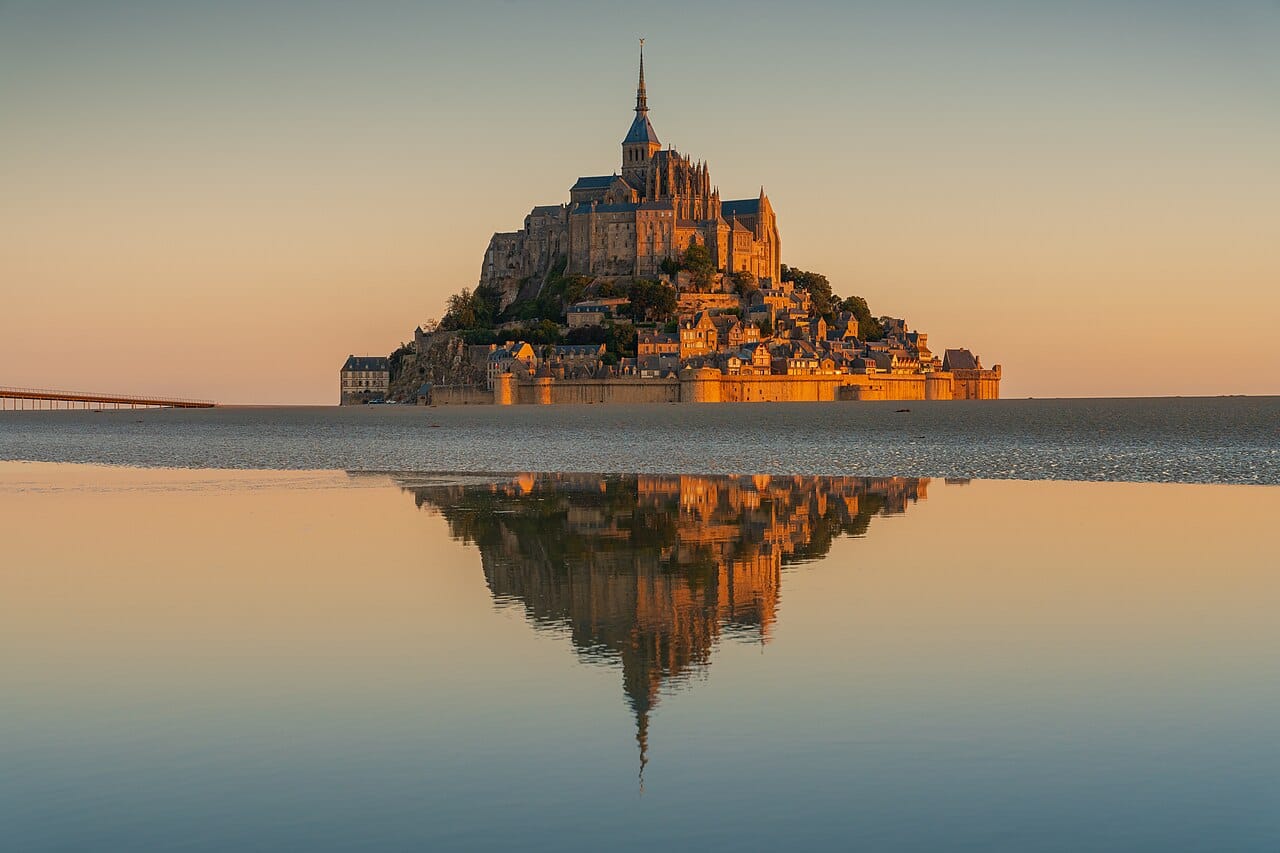
The Eiffel Tower and Louvre are only the beginning. Beyond Paris, the abbey of Mont-Saint-Michel rises above tidal flats and the Loire Valley holds centuries of château building. Learn where the landmarks stand and what their stories reveal.
Commonly asked
- Why was the Eiffel Tower built?
- The Eiffel Tower was built for the 1889 World’s Fair in Paris, marking the centenary of the French Revolution.
- Where is Mont-Saint-Michel?
- Mont-Saint-Michel is a tidal island off the Normandy coast, near Brittany. Its abbey and surrounding bay form a UNESCO World Heritage Site.
France · People & Society
People and everyday life in France
Paris is the largest urban centre, but life in a Breton harbour, an Alpine town or Marseille follows a different rhythm. Explore regional identities and the habits of everyday conversation, from greeting a shopkeeper to finding your way around a neighbourhood.
Commonly asked
- What is Île-de-France?
- Île-de-France is the region containing Paris and its surrounding suburbs and towns. Its name does not mean it is an island off the coast.
- How do you greet someone in a French shop?
- Bonjour is the usual daytime greeting when you enter or begin speaking to a shopkeeper. Merci and au revoir are useful when leaving.