Facts about Tanzania
Tanzania links the African Great Lakes with the Indian Ocean through highlands, savannas, trading towns and growing cities. Dodoma is the capital; Dar es Salaam is its largest city and major port. The mainland and Zanzibar form a union whose many communities share Swahili alongside distinct languages and local histories.
- Capital
- Dodoma
- Population (2022 census)
- 61,741,120
- Currency
- Tanzanian shilling (TZS)
- Shared language
- Kiswahili (Swahili)
- Regions
- 31: 26 mainland, 5 Zanzibar
- Highest point
- Kilimanjaro, 5,895 m
Tanzania · 0 of 20 rounds passed
Two timed rounds per topic, 20 seconds a question
From Mwanza on Lake Victoria and Kigoma on Lake Tanganyika, routes cross the inland plateau towards Dodoma and the coast. Arusha and Moshi sit near northern wildlife landscapes and Kilimanjaro, while Mbeya connects the southern highlands. The country has 31 regions, including five in Zanzibar.
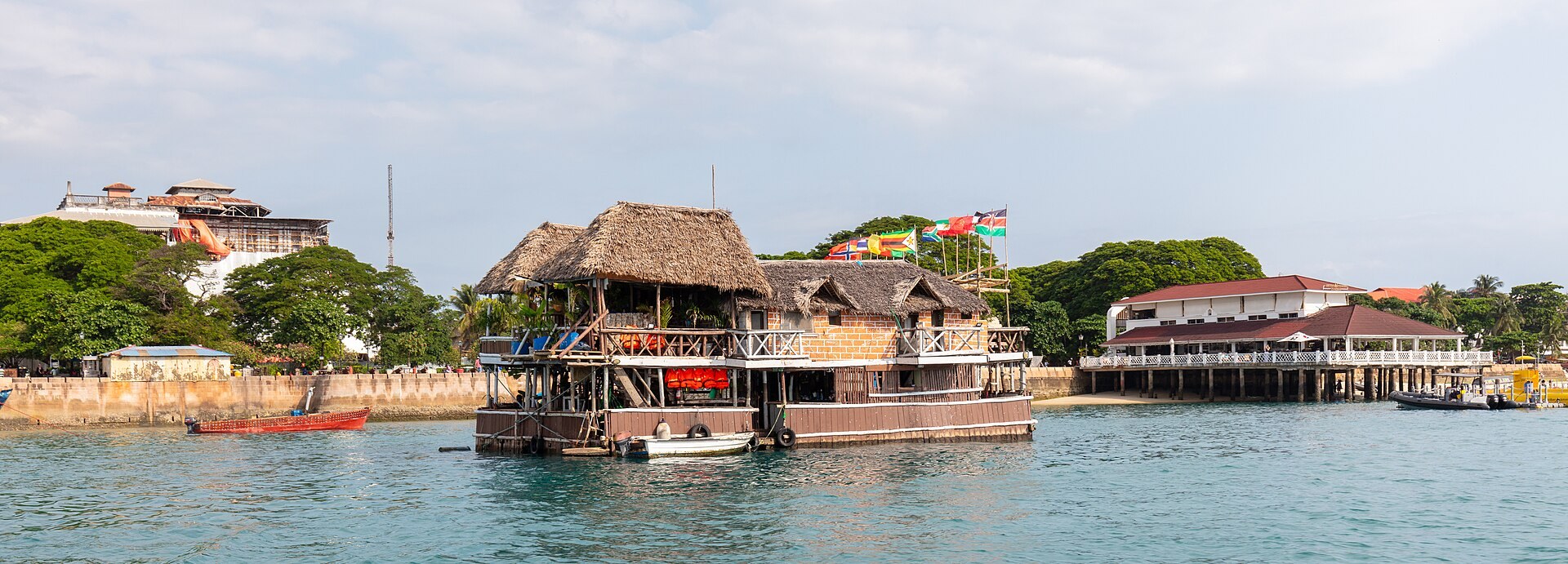
Zanzibar’s principal islands are Unguja and Pemba. Stone Town, Kilwa Kisiwani and Kondoa introduce different human histories; Serengeti, Ngorongoro and the Eastern Arc Mountains reveal contrasting environments. The guide teaches everyday Swahili alongside reading about the country’s many other languages.
Geography of Tanzania
Great Lakes shores, an inland plateau and Africa’s highest mountain.
- What is Tanzania’s capital?
- Dodoma is the capital and seat of Parliament. Dar es Salaam remains the largest city, a major port and an important commercial centre.
- Is Kilimanjaro in Kenya or Tanzania?
- Kilimanjaro is in Tanzania, near the Kenyan border. Uhuru Peak on Kibo reaches 5,895 metres; the mountain is also visible from parts of Kenya.
- Which countries share Lake Tanganyika?
- Tanzania, Burundi, the Democratic Republic of the Congo and Zambia share Lake Tanganyika. Its long basin follows the western branch of the East African Rift.
More about Tanzania: geography
Tanzania lies in East Africa between the African Great Lakes and the Indian Ocean. It borders Kenya, Uganda, Rwanda, Burundi, the Democratic Republic of the Congo, Zambia, Malawi and Mozambique. Lake Victoria is shared with Kenya and Uganda; Lake Tanganyika with Burundi, DR Congo and Zambia; Lake Malawi, also called Lake Nyasa, lies along the southwest. Dodoma is the inland capital. Dar es Salaam is the largest city and a major Indian Ocean port.
Kilimanjaro rises to 5,895 metres at Uhuru Peak on Kibo, entirely within Tanzania near the Kenyan border. The central plateau is generally drier than the coast and some highland areas. The Eastern Arc Mountains shelter humid forests, while the southern highlands include productive farming districts. Zanzibar’s two main islands are Unguja and Pemba; Mafia Island belongs to mainland Tanzania’s administrative system. Rainfall patterns differ by region, so the country has no single uniform rainy season.
History of Tanzania
Swahili trading towns, mainland colonial rule and a union formed in 1964.
- When did Tanzania become independent?
- Tanganyika became independent on 9 December 1961. Zanzibar became independent in December 1963. Their union on 26 April 1964 created the state later named Tanzania.
- What was the Maji Maji uprising?
- It was resistance to German colonial rule in 1905–1907, especially in southern and eastern mainland areas. Colonial repression and famine caused immense loss of life.
- What did ujamaa mean in Nyerere’s policies?
- Ujamaa, often translated as familyhood, was the basis of Nyerere’s African socialism. Policies emphasised collective development and village life, including a villagisation programme that involved coercion and disruption.
More about Tanzania: history
The coast was part of an African and Indian Ocean world long before European colonial rule. Kilwa Kisiwani prospered through trade linking eastern Africa with Arabia, Persia, India and beyond. Inland societies developed their own farming, pastoral and trading networks. In the late nineteenth century, Germany imposed colonial rule over most of the mainland. The Maji Maji uprising of 1905–1907 resisted German rule and was met with devastating military repression and famine.
After the First World War, Britain administered Tanganyika under a League of Nations mandate, later a United Nations trusteeship. Tanganyika became independent on 9 December 1961 and a republic in 1962 under Julius Nyerere. Zanzibar became independent in December 1963; a revolution followed in January 1964, with violence and displacement. Tanganyika and Zanzibar united on 26 April 1964. The name Tanzania was adopted later that year. Nyerere’s 1967 Arusha Declaration promoted ujamaa, a socialist programme whose village policies reshaped rural life.
Languages of Tanzania
Kiswahili connects public life alongside English and many community languages.
- Is Swahili an African or an Arabic language?
- Swahili is an African Bantu language. It has borrowed words from Arabic through longstanding contact, while its grammar and core structure remain Bantu.
- What languages are used in Tanzania?
- Swahili connects national life; English has educational, legal and business roles. Many community languages, including Sukuma, Haya and Makonde, remain in use.
- Does Zanzibar speak a different language?
- Swahili is widely spoken in Zanzibar, with local varieties. Kiunguja, associated with Unguja, helped shape Standard Swahili; Pemba also has its own varieties.
More about Tanzania: language
Kiswahili, usually called Swahili in English, is Tanzania’s national language and its main shared language of public life. It belongs to the Bantu branch of the Niger-Congo language family. Centuries of contact with Arabic and other languages contributed vocabulary without changing that underlying Bantu structure. The modern written standard draws particularly on Kiunguja, associated with Zanzibar. The language is used far beyond Tanzania across East and Central Africa.
English has important roles in higher education, law, business and administration. Language use in schools depends on the educational level and institution; it should not be reduced to one rule for every classroom. Sukuma, Chagga varieties, Haya, Makonde, Maasai and many other languages are also spoken. Habari asks about news or how someone is; asante means thank you. The Words section introduces everyday Swahili, offering a beginning alongside this wider linguistic diversity.
Culture of Tanzania
Taarab, bongo flava, carved sculpture and regional performance traditions.
- What is taarab?
- Taarab is a musical tradition closely associated with Zanzibar and the Swahili coast. Poetry, instrumental ensembles and Indian Ocean musical exchanges shaped its development.
- What is bongo flava?
- Bongo flava is Tanzanian urban popular music, drawing on hip-hop, R&B and local musical styles. Swahili lyrics have helped it reach audiences across East Africa.
- What is written on a kanga?
- Many kanga cloths carry Swahili sayings or messages alongside decorative patterns. Their words may communicate advice, affection, social commentary or a personal sentiment.
More about Tanzania: culture
Taarab music is strongly associated with Zanzibar and other Swahili coastal communities. Its histories connect local poetry and performance with influences circulating around the Indian Ocean. Bongo flava developed through Tanzanian urban popular music, drawing on hip-hop, R&B and local styles. Singeli, associated especially with Dar es Salaam, is known for fast electronic rhythms. These are distinct musical traditions rather than a single national sound.
Makonde carving includes figurative sculpture and complex intertwined forms; Makonde communities also live across the border in Mozambique. Tingatinga painting developed in Dar es Salaam through Edward Saidi Tingatinga and later artists. Kanga cloth often combines patterned designs with a written Swahili message, while kitenge has many uses in clothing and design. Football is widely followed, including the rivalry between Simba and Young Africans. Customs, religious calendars and ceremonies vary between communities and households.
Economy of Tanzania
Farms, gold mines, tourism and a port serving inland neighbours.
- What currency does Tanzania use?
- The Tanzanian shilling, with the currency code TZS. Zanzibar uses the same national currency.
- What does Tanzania produce?
- Major activities include food farming, export crops such as cashews and coffee, gold mining, manufacturing and services. Tourism and transport also support jobs and trade.
- Why is Dar es Salaam’s port important?
- It handles Tanzanian overseas trade and serves inland neighbours through regional transport corridors. Its role extends beyond the city and Tanzania’s own domestic market.
More about Tanzania: economy
Agriculture supports many Tanzanian households. Maize, rice, cassava and bananas are important food crops, while coffee, tea, cotton, tobacco and cashews connect farming areas with export markets. Zanzibar has a long association with cloves, especially on Pemba. Fishing supports communities around the Great Lakes and along the coast. Conditions differ between small farms, commercial estates and pastoral livelihoods, with rainfall, roads and market access influencing incomes.
Gold mining, tourism, manufacturing and services are other important activities. Natural gas from fields including Songo Songo and Mnazi Bay supplies domestic energy needs. Dar es Salaam’s port links Tanzania and several landlocked neighbours with overseas trade. Arusha is an important northern tourism centre, while Mwanza connects the Lake Victoria economy. The Tanzanian shilling, code TZS, is the currency. Mobile payments and small enterprises are part of everyday commerce alongside formal banking and larger businesses.
Politics of Tanzania
A union republic with a separate Zanzibar government for non-union matters.
- Is Zanzibar an independent country?
- Zanzibar is part of the United Republic of Tanzania. It retains its own president, government and House of Representatives for non-union matters under the union arrangement.
- How many regions does Tanzania have?
- There are 31 regions: 26 on the mainland and five in Zanzibar. Songwe became a separate mainland region in 2016.
- What is the Bunge?
- Bunge is Tanzania’s national Parliament. It has one chamber and sits in Dodoma, the capital.
More about Tanzania: politics
The United Republic of Tanzania has a president and a single-chamber national Parliament, the Bunge. Dodoma is the capital and seat of Parliament. The Union government handles union matters across the country and non-union matters for mainland Tanzania. Zanzibar has its own president, Revolutionary Government and House of Representatives for non-union affairs. This arrangement makes the union different from a system in which all regions have identical governmental powers.
The country has 31 regions: 26 on the mainland and five in Zanzibar. Songwe was created from part of Mbeya in 2016. Regions are administrative units rather than constituent states. Multiparty politics was restored in 1992 after decades of one-party rule. Chama Cha Mapinduzi, formed in 1977 through the merger of TANU and the Afro-Shirazi Party, has dominated national politics. Elections, political freedoms and the balance between union and Zanzibar institutions remain subjects of public debate.
Nature and wildlife of Tanzania
Migrating herds, forest primates, lake life and Indian Ocean reefs.
- Does the Serengeti migration cross a national border?
- Yes. The wider Serengeti–Mara ecosystem spans Tanzania and Kenya. Herd movements depend on rainfall and grazing conditions, with timing varying from year to year.
- Where do chimpanzees live in Tanzania?
- Gombe and Mahale Mountains national parks protect chimpanzee habitats along Lake Tanganyika in western Tanzania. Chimpanzees are forest apes, distinct from savanna monkeys.
- Is Ngorongoro a national park?
- Ngorongoro is a conservation area with a different management framework from a national park. The crater is part of a much larger landscape with wildlife, pastoral livelihoods and archaeological heritage.
More about Tanzania: nature & wildlife
The Serengeti ecosystem stretches into Kenya’s Maasai Mara. Wildebeest, zebra and other grazers move in response to rainfall, fresh grazing and water; their route is not a fixed calendar circuit. Ngorongoro’s caldera supports abundant wildlife within a wider conservation area that also has pastoral communities and archaeological sites. Tarangire is known for elephants and baobabs, while Ruaha protects extensive central-southern savanna landscapes.
Gombe and the Mahale Mountains protect chimpanzee habitat beside Lake Tanganyika. The Eastern Arc Mountains contain forests with high levels of endemism, meaning species occur naturally in restricted areas. The Great Lakes support diverse aquatic life, including cichlid fishes. Mangroves, seagrass beds and coral reefs add coastal habitats. Conservation involves land access, livelihoods and wildlife corridors as well as protected areas. Farming, settlement, fishing pressure and climate variability affect these connected systems.
Food of Tanzania
Ugali, rice dishes, banana stews and coastal coconut flavours.
- What is ugali?
- Ugali is a firm flour porridge, commonly made with maize. Pieces are eaten with an accompaniment such as vegetables, beans, fish, meat or sauce.
- What is chipsi mayai?
- A potato-and-egg omelette made by cooking chips with beaten eggs. It is a familiar street and café food in Tanzania.
- How does coastal food differ from inland food?
- Many coastal dishes use coconut, seafood and spices. Inland meals often reflect locally available grains, beans, cooking bananas, livestock and lake fish; traditions also overlap.
More about Tanzania: food & cuisine
Ugali is a firm porridge commonly made from maize flour and served with greens, beans, fish, meat or a sauce. Mlenda is a leafy preparation that can accompany it. Rice is also widely eaten; pilau uses spices, while biryani combines seasoned rice with meat, fish or vegetables in varied recipes. Chapati and mandazi show how foods circulate through East African and Indian Ocean connections and become part of everyday local meals.
Coconut, seafood and spices are prominent in many coastal and island dishes. Inland meals reflect different grains, beans, livestock and freshwater fish. Cooking bananas are important in parts of the north and northwest, including dishes broadly described as ndizi. Chipsi mayai combines fried potatoes with eggs into a popular omelette. Zanzibar’s urojo is a tangy soup served with a mix of additions. Regional, religious and household choices mean that no short menu represents everyone’s food.
Landmarks of Tanzania
Stone Town, Kilwa, rock art and mountain and savanna landscapes.
- What is Stone Town?
- The historic urban centre of Zanzibar City on Unguja. Its streets and buildings preserve Swahili urban traditions and wider Indian Ocean connections.
- What was Kilwa Kisiwani?
- An important Swahili trading town on an island off Tanzania’s southern coast. Its ruins include the Great Mosque and Husuni Kubwa palace complex.
- Are Nyerere National Park and Selous the same place?
- No. Nyerere National Park was created in 2019 from part of the Selous Game Reserve. Their present boundaries and management designations differ.
More about Tanzania: landmarks
Stone Town on Unguja preserves a Swahili urban landscape shaped by African, Arab, Indian and European connections. Its buildings also record Zanzibar’s histories of slavery, commerce and political power. Kilwa Kisiwani and nearby Songo Mnara preserve the remains of major Swahili trading towns farther south on the mainland coast. Kondoa’s rock-art shelters preserve paintings accumulated over long periods, connected with local cultural traditions.
Kilimanjaro, Serengeti and Ngorongoro are UNESCO World Heritage properties with very different landscapes. Olduvai Gorge within the Ngorongoro area is important for early human archaeology; Laetoli preserves much older hominin footprints. Nyerere National Park was established from part of the Selous Game Reserve in 2019; the two names are not interchangeable. Jozani forest on Unguja, Mafia’s marine habitats and Lake Tanganyika’s forested shores offer other ways to understand the country’s geography.
People and society of Tanzania
Many community histories connected through language, work and migration.
- How many people live in Tanzania?
- The 2022 census counted 61,741,120 residents across mainland Tanzania and Zanzibar. Later estimates differ, so the guide labels this figure with its census year.
- Is Swahili one ethnic identity for all Tanzanians?
- No. Swahili connects a country with many community identities. Swahili coastal identities also have their own histories; language use alone does not define someone’s ancestry or affiliation.
- Who is Abdulrazak Gurnah?
- A novelist born in Zanzibar who won the 2021 Nobel Prize in Literature. His work explores displacement, colonialism, memory and belonging.
More about Tanzania: people & society
The 2022 census counted 61,741,120 residents in the United Republic, including mainland Tanzania and Zanzibar. This is a dated count, not a current population estimate. Sukuma, Nyamwezi, Chagga, Haya, Hehe, Makonde, Maasai and many other communities contribute languages and local histories. These broad names do not define every individual’s identity or occupation. National identification, religion, family histories and regional belonging overlap in different ways.
Dar es Salaam draws people from across the country and beyond; Mwanza, Arusha, Dodoma, Mbeya and other cities connect with rural homes through trade and migration. Islam and Christianity are major religious traditions, alongside varied other beliefs and practices. Zanzibar has distinct island identities within the union. Julius Nyerere’s national influence, Abdulrazak Gurnah’s Zanzibar-born literary voice and Jane Goodall’s long research association with Gombe introduce different connections between Tanzania and the wider world.