Facts about Timor-Leste
Explore Timor-Leste from Dili and Atauro to the coffee highlands and eastern plateau. Learn thirteen municipalities and the special region of Oecusse-Ambeno, place sixteen settlements and follow inland waters to the surrounding seas.
- Capital
- Dili
- Currency
- US dollar (USD)
- Official languages
- Tetum and Portuguese
- Highest mountain
- Tatamailau (Mount Ramelau)
- Declaration of independence
- 28 November 1975
- Restoration of independence
- 20 May 2002
Timor-Leste · 0 of 20 rounds passed
Two timed rounds per topic, 20 seconds a question
Timor-Leste occupies the eastern part of Timor in Southeast Asia, together with Oecusse on the island’s northwestern coast, Atauro north of Dili and the small island of Jaco at the eastern tip. Indonesia is its only land neighbour; Australia lies across the Timor Sea to the south. Mountain ridges divide northern coastal settlements from the southern plains. Tatamailau, also known as Mount Ramelau, is the highest summit.
Dili is the capital and main urban centre on the north coast. Baucau lies farther east; Lospalos opens the way to Lautém’s plateau and coastal landscapes. Inland, Aileu, Maubisse and Ainaro connect mountain communities, while Gleno serves the coffee-growing Ermera area. Maliana lies near the western border, Suai near the south coast, and Pante Macassar is the main town of Oecusse. These places have different histories and languages rather than one uniform island culture.
Geography of Timor-Leste
Eastern Timor, the coastal exclave of Oecusse and islands across deep northern straits.
- Does Timor-Leste occupy all of Timor?
- No. The main territory occupies eastern Timor; the country also includes Oecusse, Atauro and Jaco. Indonesian West Timor occupies the west of the island.
- Is Oecusse landlocked?
- No. Indonesian territory surrounds its landward sides, but Oecusse has a northern coast.
- Are Tatamailau and Mount Ramelau different highest peaks?
- Tatamailau is the summit commonly called Mount Ramelau, in the Ramelau massif.
More about Timor-Leste: geography
Timor belongs to the Lesser Sunda island chain, but Timor-Leste does not occupy the whole island. Indonesian West Timor lies to the west of the main territory and surrounds Oecusse on its landward sides. Oecusse also has a northern coast: it is not enclosed by land on every side. Atauro lies across the Wetar Strait from Dili, while Jaco lies off the eastern tip near Tutuala.
Steep mountains shape rivers, roads and farming. Tatamailau rises in the Ramelau massif above the central highlands; Maubisse and Hato Builico are mountain settlements, not coastal ports. The north coast meets deep straits connected with the Banda Sea region, and the Timor Sea lies to the south. Seasonal rainfall varies across the mountains and coasts, so one national wet-season calendar cannot describe every valley.
History of Timor-Leste
Sandalwood trade, Portuguese rule, Indonesian occupation and two independence anniversaries.
- Why are there two independence anniversaries?
- 28 November 1975 marks the declaration of independence; 20 May 2002 marks the restoration of independence after occupation and UN administration.
- What did the 1999 ballot decide?
- Voters rejected a proposed special autonomy arrangement within Indonesia, opening the way to independence.
- What happened at Santa Cruz in 1991?
- Indonesian troops killed demonstrators at Dili’s Santa Cruz Cemetery on 12 November; the massacre drew international attention.
More about Timor-Leste: history
Long before European rule, Timorese communities participated in regional trade, including the sandalwood trade that attracted Portuguese merchants in the sixteenth century. Colonial authority developed unevenly through relationships and conflict with local rulers. Portuguese and Dutch claims eventually divided Timor. During the Second World War, Japan occupied Portuguese Timor after Allied forces had entered the territory, bringing severe violence and hardship to civilians.
FRETILIN declared independence on 28 November 1975. Indonesia invaded on 7 December and occupied the territory until 1999. The Santa Cruz massacre in Dili on 12 November 1991 drew international attention to repression. In the UN-organised ballot of 30 August 1999, voters rejected the proposed autonomy arrangement within Indonesia. Violence and displacement followed, then an international force and UN administration. Independence was restored on 20 May 2002; this date and the 1975 declaration commemorate different events.
Tetum, Portuguese and Timor-Leste’s languages
Tetum and Portuguese are official; many other languages carry regional and family histories.
- What are the official languages?
- Tetum and Portuguese. Indonesian and English have a separate transitional working-language status under the Constitution.
- Does Papuan mean one language family?
- No. It is a broad term for several non-Austronesian language groups, not a single family shared by all of them.
- Do the linked lessons teach Tetum?
- They introduce general Portuguese. The reading also explains Tetum and other languages of Timor-Leste.
More about Timor-Leste: language
The Constitution names Tetum and Portuguese as official languages. Tetum, an Austronesian language, is widely used for communication between communities; Tetum Prasa, associated with Dili, includes much Portuguese vocabulary. Bondia is a common morning greeting and obrigadu or obrigada expresses thanks. Indonesian and English are recognised as working languages under a transitional constitutional provision, a different status from the two official languages.
Mambai, Kemak and Tokodede are among the other Austronesian languages. Fataluku, Makasae and Bunak belong to distinct non-Austronesian language groups often described broadly as Papuan; Papuan is not the name of one single language family. Baikeno is prominent in Oecusse, while Atauro has its own language varieties. Counts depend on how languages and dialects are distinguished. Worldly’s linked Portuguese course introduces general Portuguese, rather than Tetum or every language spoken in Timor-Leste.
Culture of Timor-Leste
Tais weaving, sacred houses, oral poetry and customs that differ between communities.
- What are tais?
- Handwoven textiles with community-specific patterns, used in dress, exchange and ceremonies.
- Is tais a World Heritage site?
- No. UNESCO inscribed the textile tradition on its intangible heritage Urgent Safeguarding List in 2021.
- What is an uma lulik?
- A sacred house connected with ancestry, ritual duties and community relationships; traditions differ by community.
More about Timor-Leste: culture
Tais are handwoven textiles whose colours, motifs and uses express community identity and relationships. Cloth may be worn, exchanged or used in ceremonies. UNESCO placed tais, traditional textile, on the List of Intangible Cultural Heritage in Need of Urgent Safeguarding in 2021. This is a living textile tradition and a safeguarding commitment, not a World Heritage designation for a building or a claim that every tais shares the same design.
An uma lulik is a sacred house connected with ancestry, ritual responsibilities and community relationships. Lisan refers to customary traditions and rules; its expression varies by place. Tebe brings people together through dance and singing, and oral poetry carries histories and social knowledge. Catholic worship is prominent alongside ancestral practices and other religious traditions. Sacred houses and ceremonies belong to living communities, so access and photography depend on local permission.
Economy of Timor-Leste
Coffee farms, household agriculture and public finances supported by the Petroleum Fund.
- What currency does Timor-Leste use?
- The US dollar. Timorese centavo coins circulate at the same value as US cents.
- Why is the Petroleum Fund important?
- Established in 2005, it manages accumulated petroleum wealth and supports public spending; sustainable withdrawals are a central policy issue.
- Where is coffee grown?
- In upland areas including Ermera. Coffee is an important agricultural export, with many smallholder growers.
More about Timor-Leste: economy
Farming supports many households, with maize, rice, cassava and other crops grown in different landscapes. Coffee is an important agricultural export, especially from upland areas including Ermera. Shade trees and smallholder production are familiar features of coffee growing, but that does not mean every crop has organic certification. Markets, processing, transport and access to water affect the livelihoods behind a bag of Timorese coffee.
Oil and gas revenues accumulated in the Petroleum Fund, established in 2005, have supported government spending. Managing withdrawals and developing employment beyond finite petroleum resources are central economic challenges. Tourism, services and other businesses offer opportunities alongside infrastructure and education needs. The US dollar is the official currency; Timorese centavo coins circulate at the same value as US cents. The country does not issue a separate floating national banknote currency.
Politics of Timor-Leste
A directly elected president, a prime minister and a single-chamber National Parliament.
- Who heads the government?
- The prime minister. The directly elected president is head of state, with separate constitutional powers.
- What is the national legislature?
- The unicameral National Parliament, meaning it has a single chamber.
- Why do older maps place Atauro in Dili?
- Atauro was formerly administered within Dili and became a separate municipality in 2022. The map game locates settlements rather than administrative boundaries.
More about Timor-Leste: politics
Timor-Leste is a democratic republic with a semi-presidential constitutional system. The president is head of state and is elected directly. The prime minister heads the government, while the National Parliament is the unicameral legislature. These are separate roles: the president has constitutional powers, including a legislative veto, while the government directs day-to-day policy. Competitive elections form part of the country’s political life alongside debates about public services, justice and economic opportunity.
Municipal administration and the special administrative region of Oecusse-Ambeno connect national institutions with local communities. Atauro became a separate municipality in 2022, so older lists that include it within Dili need a date. The maps teach the thirteen municipalities and Oecusse-Ambeno separately from sixteen settlement pins, with the surrounding seas and inland waters on their own map. Timor-Leste is a member of the Community of Portuguese Language Countries and joined ASEAN as its eleventh member in October 2025. Its relations with Indonesia and Australia also involve trade, mobility and maritime issues, including the 2018 maritime boundary treaty with Australia.
Nature & Wildlife of Timor-Leste
Coral Triangle reefs, Wallacean birds and protected eastern forests and coasts.
- What does Nino Konis Santana National Park protect?
- Both land and sea in eastern Timor-Leste, including forests, coastal habitats and reef areas around the Tutuala–Jaco landscape.
- What is the Coral Triangle?
- A region of exceptional marine biodiversity in Southeast Asia and the western Pacific that includes Timor-Leste.
- Does a reef survey guarantee wildlife sightings?
- No. Survey results describe particular sites and conditions; species presence, visibility and safety vary.
More about Timor-Leste: nature & wildlife
Timor-Leste lies in Wallacea, a region whose deep-water barriers help explain its distinctive wildlife. Mountain forests, dry woodland, wetlands and coastal habitats support different species, including birds with restricted regional ranges. Nino Konis Santana National Park, established in 2007, protects terrestrial and marine landscapes in the east, including areas around Tutuala and Jaco. Its cultural landscapes and communities are part of the park’s story.
Atauro and the northern coast lie within the Coral Triangle and support rich reef life. Surveys finding exceptional reef-fish diversity at selected sites do not establish a permanent worldwide ranking for every reef. Whales and dolphins use deep nearby waters, while saltwater crocodiles inhabit some coastal and river environments. A crocodile ancestor appears in a well-known Timorese origin story; cultural importance does not make swimming safe. Reef visits and wildlife observation should follow local conservation and safety guidance.
Food & Cuisine of Timor-Leste
Maize, beans, pumpkin, fish and ai-manas connect farms and coastlines with family meals.
- What is batar daan?
- A maize dish commonly prepared with beans and pumpkin; ingredients vary.
- What is ai-manas?
- A chilli accompaniment whose ingredients and heat vary by cook.
- Are fermented and distilled palm drinks the same?
- No. Fermentation and distillation are different processes; local names and preparations vary.
More about Timor-Leste: food & cuisine
Maize, rice, cassava and vegetables appear in everyday meals, with their importance varying between households and regions. Batar daan combines maize with ingredients such as beans and pumpkin. Fish contributes to coastal diets, while inland food traditions depend on different farming and market connections. The food photograph shows traditional maize preparation at Suai Loro, rather than a plated version of every dish described here.
Ai-manas is a chilli accompaniment whose ingredients and heat vary by cook. Coffee links upland farms with home hospitality and cafés. Portuguese bread and other foods sit alongside influences from neighbouring Indonesia and older local traditions; these exchanges do not make every dish exclusive to one nation. Palm sap can be fermented into drinks commonly called tua or tuak, while distillation produces a different preparation. Names, ingredients and serving customs vary, so one fixed recipe cannot represent every community.
Landmarks of Timor-Leste
Dili’s memorials, Cristo Rei, mountain landscapes and the sacred island of Jaco.
- Where is Cristo Rei?
- On a headland east of central Dili, overlooking the north coast.
- What is Centro Nacional Chega!?
- An institution based in Dili’s former Comarca prison that supports remembrance, human rights and learning about the past.
- What makes Jaco significant?
- It is a small uninhabited island at the eastern tip, important to local sacred traditions and the surrounding protected marine landscape.
More about Timor-Leste: landmarks
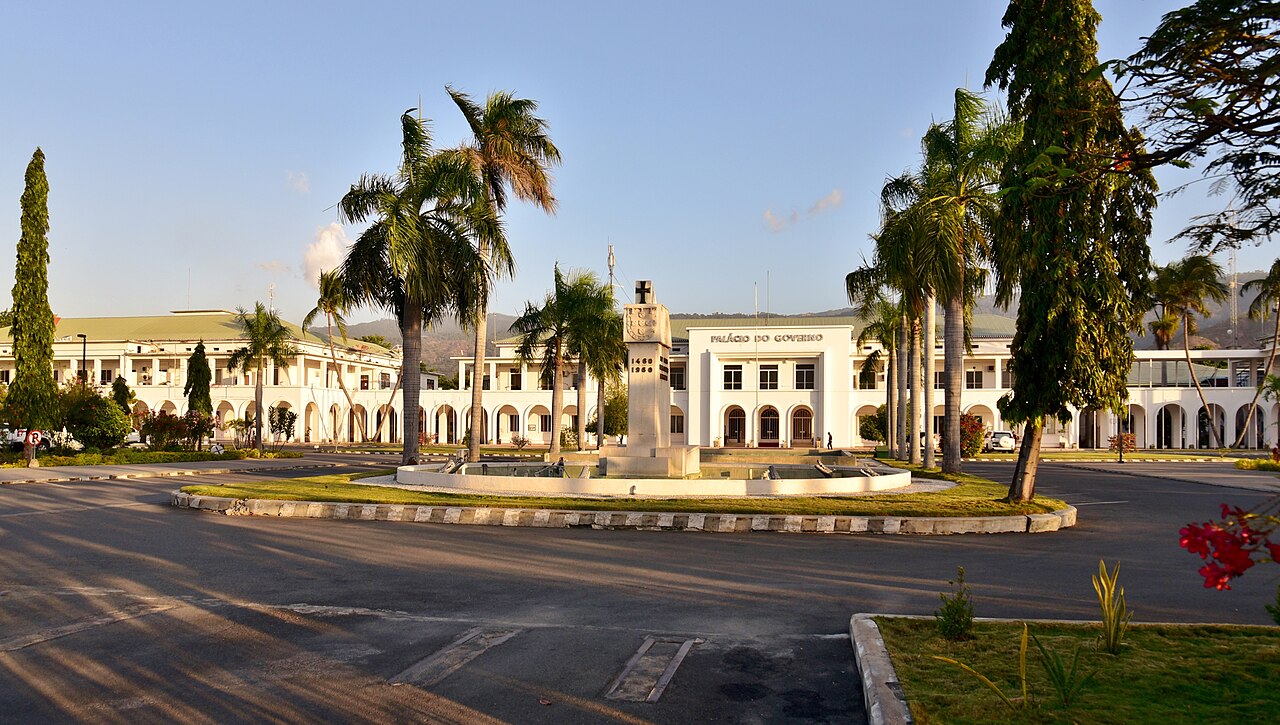
Dili’s Resistance Archive and Museum explains the independence struggle through documents and displays. Centro Nacional Chega!, based in the former Comarca prison, supports remembrance and learning about human rights. Santa Cruz Cemetery is associated with the 1991 massacre. These are places of memory as well as learning destinations. The Government Palace on the waterfront reflects late Portuguese colonial architecture, while Cristo Rei stands on a headland east of the city.
Beyond Dili, Baucau has a historic centre and a spring-fed public pool. The Ramelau massif rises above Hato Builico, with a Marian statue at Tatamailau’s summit. Lake Iralalaro, Tutuala and Jaco belong to a culturally important eastern landscape with sensitive habitats. Jaco is uninhabited and regarded as sacred; a map pin is not permission to camp or an indication of safe access. This guide’s sights are representative learning locations rather than entrances or a travel itinerary.
People & Society of Timor-Leste
Many language communities, rural and urban connections, and a generation growing up after 2002.
- Who shared the 1996 Nobel Peace Prize?
- José Ramos-Horta and Bishop Carlos Filipe Ximenes Belo, for work towards a peaceful solution to the conflict.
- Who was the first president after restored independence?
- Xanana Gusmão in 2002. Francisco Xavier do Amaral had been proclaimed president in 1975.
- Do all Timorese share one local language?
- No. Timorese nationality includes many language communities and regional identities.
More about Timor-Leste: people & society
Timorese nationality brings together people with many languages, family histories and regional identities. Tetum, Mambai, Makasae, Fataluku, Bunak, Kemak and Baikeno name languages and communities, not two simple blocks of ancestry. Chinese-Timorese families and people with mixed backgrounds also form part of society. Movement between villages, Dili and overseas connects education, work and family responsibilities across different places.
José Ramos-Horta and Bishop Carlos Filipe Ximenes Belo shared the 1996 Nobel Peace Prize for work towards a peaceful solution to the conflict. Xanana Gusmão became the first president after independence was restored in 2002; Francisco Xavier do Amaral had been proclaimed president with the 1975 declaration. Distinguishing these events avoids erasing the earlier republic. Many young Timorese were born after the occupation and bring their own ambitions to education, arts, sport and public life.