Facts about Bahrain
Explore Bahrain from Manama’s souq and Muharraq’s pearling houses to Dilmun’s temples, burial mounds and the desert around Sakhir. Explore four governorates, cities and coastal waters, then read illustrated topics about the communities that shape this Gulf archipelago.
- Capital
- Manama
- Official language
- Arabic
- Currency
- Bahraini dinar (BHD)
- Governorates
- 4
- Independence
- 15 August 1971
- UNESCO World Heritage
- 3 properties (2026)
Bahrain · 0 of 20 rounds passed
Two timed rounds per topic, 20 seconds a question
Bahrain is an island country in the Persian Gulf, called the Arabian Gulf locally, between Saudi Arabia and Qatar. Manama occupies the northeast of the main island. Muharraq lies across the water to the northeast, Sitra to the east and the Hawar Islands farther southeast. Bridges join the principal urban islands; the King Fahd Causeway links the country with Saudi Arabia.
The densely settled north contrasts with the main island’s dry central ridge and southern coast. Riffa, A’ali, Isa Town and Hamad Town form other centres within this compact landscape. Freshwater springs once sustained date gardens and settlement, while pearling connected coastal households with distant markets. Archaeological sites, living neighbourhoods and modern industries reveal different layers of the same islands.
Geography of Bahrain
Low islands, a central limestone ridge and a shoreline reshaped by reclamation.
- Is Bahrain a peninsula?
- No. It is an archipelago. The King Fahd Causeway connects it with Saudi Arabia.
- Where is Manama?
- In the northeast of Bahrain’s main island, across the water from Muharraq.
- Why can island counts change?
- Land reclamation joins, enlarges and creates land, so counts depend on the date and definition.
More about Bahrain: geography
Bahrain is an archipelago off the eastern Arabian Peninsula. The largest island carries the country’s name, while Muharraq, Sitra and the Hawar group form other parts of its geography. The King Fahd Causeway connects Bahrain with Saudi Arabia, but Bahrain has no mainland land border. Reclamation has enlarged and altered the coast, so a fixed island count or an undated land-area figure can mislead.
Manama faces Muharraq across a narrow channel in the northeast. Riffa lies farther inland, A’ali and Hamad Town to the west, and Sakhir to the southwest. Jabal al Dukhan is the main island’s highest natural point, a low hill rather than a mountain range. There are no permanent rivers. Historic springs and groundwater, modern desalination and treated wastewater have distinct roles in supplying water. Four governorates divide the country administratively. The governorate map shows these areas, while settlement pins mark centres.
History of Bahrain
Dilmun’s trading connections, pearling livelihoods and independence in 1971.
- What was Dilmun?
- An ancient trading civilisation with a major centre in Bahrain and connections across the Gulf.
- When did Bahrain become independent?
- 15 August 1971. December National Day celebrations mark a different anniversary.
- Which discovery transformed the twentieth-century economy?
- Oil was discovered in 1932, after generations of pearling, fishing and trade.
More about Bahrain: history
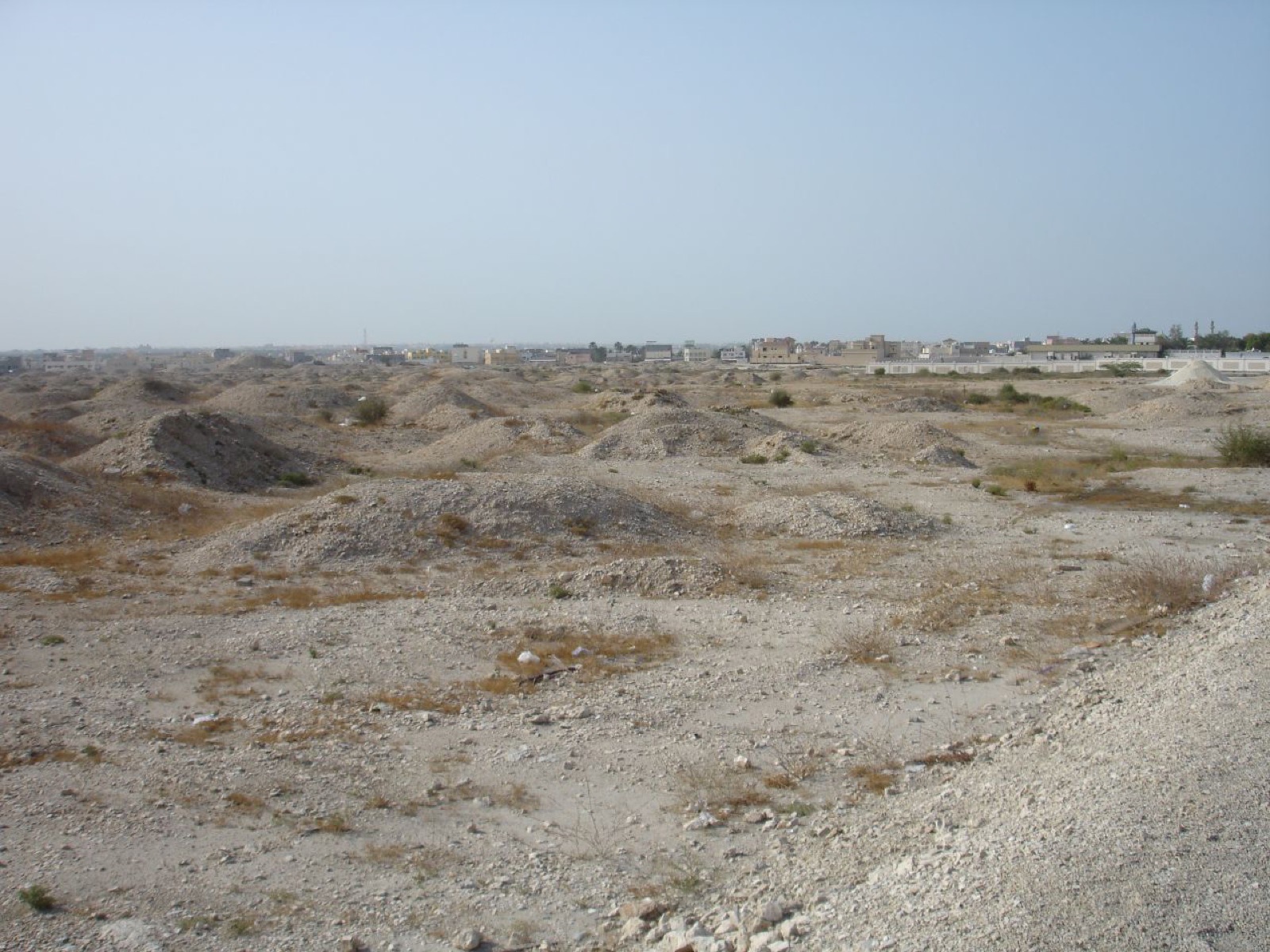
Bahrain was a major centre of ancient Dilmun, a trading civilisation connecting Mesopotamia with the Gulf and routes towards the Indus region. Qal’at al-Bahrain preserves successive settlements, while temples at Barbar and burial mounds around A’ali provide other evidence of ancient life. Dilmun’s trading world extended beyond the boundaries of the modern country. Later periods included the Hellenistic-era name Tylos and successive regional powers.
Portuguese and Persian influence preceded the establishment of Al Khalifa rule in 1783. Nineteenth-century treaties brought Bahrain into a British protected relationship. Fishing, boatbuilding, commerce and natural-pearl diving sustained coastal communities before cultured pearls and economic crisis undermined the pearl trade. Oil was discovered in 1932. Bahrain became independent on 15 August 1971 and was proclaimed a kingdom in 2002. The December National Day celebrations are distinct from the August independence anniversary.
Arabic and the languages of Bahrain
Official Arabic, varied local speech and languages carried by trade and migration.
- What is Bahrain’s official language?
- Arabic. English is widely used but has no second-official-language status.
- Do these lessons teach Bahraini dialect?
- They introduce Modern Standard Arabic; everyday Bahraini Arabic includes different local varieties.
- Why are many other languages heard?
- Residents have varied family, work, education and migration connections, including across South Asia and the Gulf.
More about Bahrain: language
Arabic is Bahrain’s official language. Modern Standard Arabic serves formal writing, education and news, while everyday speech includes Bahraini varieties of Arabic. Baharna Arabic and other Gulf varieties reflect different community histories; a single dialect label cannot describe every household. The Arabic course linked here introduces Modern Standard Arabic rather than a dedicated Bahraini dialect curriculum.
English is widely used in business, higher education and communication between residents with different first languages. Persian, Urdu, Hindi, Malayalam, Bengali, Tagalog and other languages are also heard. Signs often use Arabic and English together, but this does not give English official status. Maritime exchange long preceded today’s migration, and language, ancestry and citizenship describe different aspects of a person’s identity.
Culture of Bahrain
Pearling songs, majlis hospitality, pottery and contemporary cultural institutions.
- What did a nahham do?
- The nahham was a singer aboard a pearling boat, supporting the crew through work and long voyages.
- What is a majlis?
- A gathering place and social occasion for conversation and hospitality.
- Which craft is associated with A’ali?
- Pottery, alongside the town’s distinct archaeological association with ancient burial mounds.
More about Bahrain: culture
Muharraq’s pearling houses connect architecture with the lives of merchants, divers, crews and their families. Maritime music includes the work of the nahham, the singer who helped sustain a pearling crew through long voyages. Sawt is another musical tradition associated with the wider Gulf. A majlis provides a setting for hospitality and conversation, often accompanied by coffee and dates; customs differ between households and occasions.
A’ali is associated with pottery, while basketry and boatbuilding recall skills shaped by local materials and livelihoods. Heritage buildings now host exhibitions, research and performance alongside living neighbourhoods. The Bahrain National Museum and National Theatre offer different ways into cultural life. Art, literature and music continue to change through people’s work, rather than existing only as preserved traditions for visitors.
Economy of Bahrain
Oil, aluminium, banking and logistics link a small island economy with regional markets.
- How many fils make one Bahraini dinar?
- 1,000. The international currency abbreviation is BHD.
- What is Alba?
- Aluminium Bahrain, a major aluminium producer and part of the country’s industrial economy.
- Does Bahrain rely only on oil?
- No. Petroleum remains important alongside financial services, aluminium, manufacturing, logistics and tourism.
More about Bahrain: economy
The 1932 oil discovery helped transform Bahrain’s economy and infrastructure. Petroleum production and refining remain important, but aluminium smelting, financial services, manufacturing, logistics and tourism also contribute. Aluminium Bahrain, known as Alba, is a major industrial producer. Energy supply, industrial land and maritime transport connect these sectors with the islands’ environmental limits.
Bahrain developed a regional banking sector that includes conventional and Islamic finance. The causeway supports movement and commerce with Saudi Arabia, while ports and the airport connect wider markets. Diversification is an ongoing policy goal rather than proof that oil revenue no longer matters. The Bahraini dinar, abbreviated BHD, is divided into 1,000 fils. National economic measures do not describe every resident’s pay or living conditions.
Politics of Bahrain
A hereditary monarchy with two parliamentary chambers and a contested modern political history.
- How do the two parliamentary chambers differ?
- The Council of Representatives has 40 elected members; the Shura Council has 40 members appointed by the king.
- How many governorates does Bahrain have?
- Four: Capital, Muharraq, Northern and Southern. These are administrative areas, not the settlement pins.
- Why does the guide discuss 2011?
- The protests, their suppression and restrictions on opposition are central to understanding recent political history.
More about Bahrain: politics
Bahrain is a hereditary monarchy ruled by the Al Khalifa family. The king is head of state and appoints the prime minister. The constitution provides for a National Assembly with two chambers: a 40-member elected Council of Representatives and a 40-member Shura Council appointed by the king. This institutional description does not by itself measure the extent of political competition or the balance of executive and legislative power.
Protests in 2011, their suppression and subsequent restrictions on opposition organisations are central to recent political history. Political rights, citizenship and relations between Sunni and Shia communities remain sensitive issues; religious identity alone does not explain every political position. Bahrain is a member of the United Nations and a founding member of the Gulf Cooperation Council. Its four governorates are local administrative divisions, separate from the two national parliamentary chambers.
Nature & Wildlife of Bahrain
Tidal lagoons, seagrass and seabird islands complement the dry interior.
- Which marine mammal uses Bahrain’s seagrass habitats?
- The dugong, which feeds on seagrass in shallow coastal waters.
- What makes the Hawar Islands significant for wildlife?
- They are a Ramsar wetland site with important seabird colonies, including Socotra cormorants.
- Is the Tree of Life part of a forest?
- No. It is an individual desert tree and a landmark in a dry landscape.
More about Bahrain: nature & wildlife
Bahrain’s shallow coastal waters contain seagrass habitats used by dugongs and other marine life. The Hawar Islands are a Ramsar wetland site and support important seabird colonies, including Socotra cormorants. Dohat Arad’s tidal lagoon, on Muharraq, attracts flamingos and other waterbirds. A wildlife photograph records a species at a place and time; it does not guarantee that visitors will see it on every visit.
The main island’s interior is hot and dry, with plants and animals adapted to scarce freshwater. Historic date gardens depended on groundwater and springs; extraction and salinity have changed those environments. Reclamation, dredging, coastal construction and pollution put pressure on marine habitats. Protected areas and managed wildlife facilities serve different purposes. The Tree of Life is an individual desert tree and a landmark, rather than evidence of a surrounding forest.
Food & Cuisine of Bahrain
Machboos, sweet muhammar rice, fish and halwa connect Gulf cooking with wider trade.
- How do machboos and muhammar differ?
- Machboos is spiced rice with meat or fish. Muhammar is sweetened rice, often served with fish.
- What is balaleet?
- Sweetened vermicelli served with savoury egg, often eaten for breakfast.
- What is Bahraini halwa?
- A glossy, soft sweet commonly flavoured with saffron, rosewater and nuts; recipes vary.
More about Bahrain: food & cuisine
Machboos combines spiced rice with meat or fish. Muhammar is sweetened rice often paired with fish, creating a sweet-and-savoury contrast. Safi, or rabbitfish, is among the fish associated with local cooking. Balaleet brings sweetened vermicelli together with savoury egg, while samboosa pastries and flatbreads reflect culinary connections across the Gulf and South Asia. Recipes vary between households, and shared dishes need not have a single exclusive national origin.
Bahraini halwa is a glossy, soft sweet commonly flavoured with ingredients such as saffron, rosewater and nuts. Muharraq is associated with long-established halwa makers. Dates and Arabic coffee are familiar in hospitality, and everyday cafés and restaurants also reflect the cooking of Bahrain’s many resident communities. The accompanying photograph shows Bahraini halwa being made at a festival in Saudi Arabia: the dish’s identity and the photograph’s location are separate facts.
Landmarks of Bahrain
Three World Heritage properties connect ancient Dilmun with the pearling economy.
- How many World Heritage properties are inscribed in Bahrain?
- Three as of October 2026: Qal’at al-Bahrain, the pearling property and the Dilmun Burial Mounds.
- Is the pearling property only a museum?
- No. It includes buildings in Muharraq, a coastal site and offshore oyster beds.
- What distinguishes the Bahrain World Trade Center?
- Three wind turbines are mounted on bridges between its two towers.
More about Bahrain: landmarks
Bahrain has three inscribed UNESCO World Heritage properties as of October 2026: Qal’at al-Bahrain – Ancient Harbour and Capital of Dilmun, Pearling, Testimony of an Island Economy, and the Dilmun Burial Mounds. The first is a layered archaeological site, not only the visible fort. The pearling property links buildings in Muharraq with a coastal site and offshore oyster beds. The burial-mounds property contains multiple components, rather than every ancient mound on the islands.
The Bahrain National Museum introduces archaeology and social history. Barbar Temples, Arad Fort, Riffa Fort, Al Khamis Mosque and Bab Al Bahrain offer other perspectives on religion, defence and commerce. The Bahrain World Trade Center’s bridge-mounted wind turbines and Bahrain International Circuit represent more recent architecture and engineering. Sight pins identify learning locations; the responsible institution provides current information about access, conservation and opening arrangements.
People & Society of Bahrain
Citizens and residents with many backgrounds share a compact, connected urban landscape.
- Are all residents Bahraini citizens?
- No. Citizens and non-citizen residents have different legal statuses and varied backgrounds.
- Which Muslim communities form part of Bahrain’s society?
- Both Sunni and Shia communities, alongside residents of other faiths.
- Which school opened in Muharraq in 1919?
- Al Hidaya Al Khalifia, an early modern boys’ school in Bahrain.
More about Bahrain: people & society
Bahrain’s population includes Bahraini citizens and many non-citizen residents with varied family, work and education connections. Manama and Muharraq developed as distinct urban centres before bridges joined their daily lives more closely. Arab, Persian, South Asian and other connections overlap across generations. Community names carry particular histories and should not be used to divide everyone into two fixed ancestral categories.
Islam is the state religion, and Sunni and Shia Muslim communities both form part of national life. Long-established Jewish and Christian communities and residents practising other faiths contribute to its religious landscape. Modern education includes Al Hidaya Al Khalifia boys’ school, opened in Muharraq in 1919. Women participate in education, professions, public institutions, sport and the arts. Experiences and legal entitlements differ by individual circumstances and citizenship or employment status.