Facts about Israel
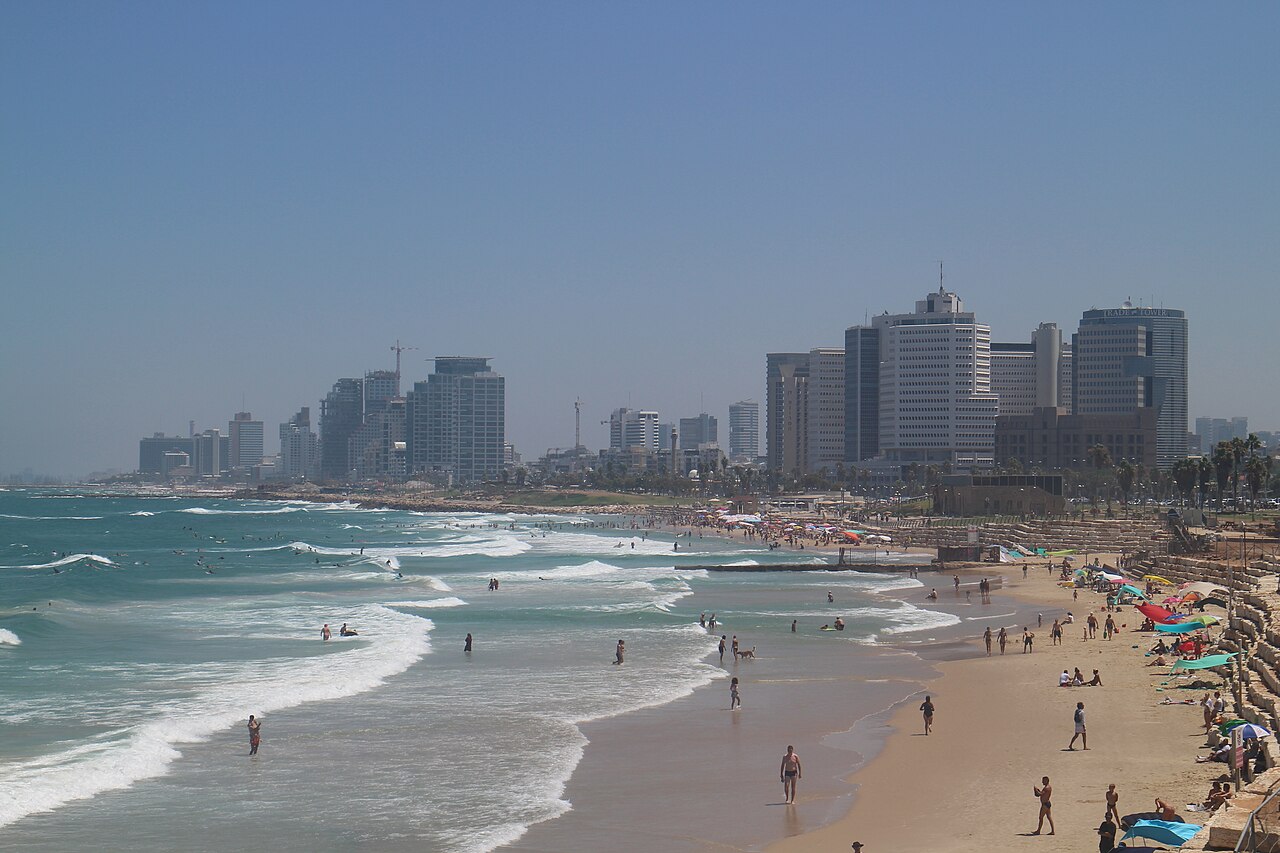
Explore Israel from the Mediterranean streets of Tel Aviv–Yafo and Haifa to Galilee’s hills, Jerusalem and the Negev. Connect ancient ports, modern architecture and desert landscapes with the languages, food and communities that give these places their character.
- Capital
- Jerusalem
- Capital designated by Israel
- Jerusalem; status disputed
- Currency
- New Israeli shekel (ILS)
- State language
- Hebrew
- Arabic
- Special legal status
- Knesset
- 120 members
- Administrative districts
- 6
Israel · 0 of 20 rounds passed
Two timed rounds per topic, 20 seconds a question
The coastal plain holds a dense network of cities, railways and ports. Inland, hills rise towards Jerusalem, while Galilee surrounds the freshwater Sea of Galilee in the north. Beersheba is a gateway to the Negev, whose erosion basins and open plateaus extend towards Eilat on the Gulf of Aqaba. Short distances can involve large changes in climate, elevation and landscape.
This guide separates Israel from the occupied Palestinian territory of the West Bank, including East Jerusalem, and Gaza, and from the occupied Syrian Golan Heights. Jerusalem’s status is disputed: Israel designates it as its capital, and Palestinians seek East Jerusalem as the capital of a future state. The city pin marks West Jerusalem. Descriptions of regional history and shared heritage do not determine sovereignty. Check current official travel advice, local restrictions and park conditions before planning a visit.
Geography of Israel
A Mediterranean plain, northern hills and the Negev meet the low Jordan Rift Valley.
- Is Tel Aviv Israel’s capital?
- Israel designates Jerusalem as its capital and its main national institutions are there. Jerusalem’s status remains internationally disputed, especially occupied East Jerusalem. Tel Aviv–Yafo is a major coastal city.
- Are the Dead Sea and Sea of Galilee seas?
- Both are inland lakes. The Sea of Galilee is freshwater; the Dead Sea is hypersaline and has no outlet to the ocean.
- What do the six districts on this map include?
- Six dated reference district areas within Israel. The exercise excludes the West Bank, including East Jerusalem, Gaza and the occupied Syrian Golan Heights. It does not show present control or settle boundaries.
More about Israel: geography
Israel lies on the eastern Mediterranean in Southwest Asia. The coastal plain links Tel Aviv–Yafo, Haifa and other densely settled cities. Galilee and Mount Carmel give the north varied hill landscapes, while inland hills extend towards Jerusalem. The Negev occupies much of the south and narrows towards Eilat on the Gulf of Aqaba, an arm of the Red Sea. The West Bank and Gaza are Palestinian territories, rather than Israeli districts; the Golan Heights is occupied Syrian territory.
The Jordan River system connects the Sea of Galilee with the Dead Sea. Despite their names, both are inland lakes: the first is freshwater, the second hypersaline and without an ocean outlet. The Dead Sea is shared with Jordan and the West Bank. Its falling water level changes the shoreline and exposes sinkholes, so an old outline is not a current access map. The six-district exercise uses dated reference geometry that excludes the Golan Heights and East Jerusalem.
History of Israel
Ancient kingdoms and empires precede Zionism, Palestinian displacement and modern statehood.
- When did Israel declare independence?
- On 14 May 1948, as the British Mandate ended. The surrounding war brought mass Palestinian displacement, remembered as the Nakba.
- What happened in the 1967 war?
- Israel captured the West Bank, East Jerusalem, Gaza, the Golan Heights and Sinai. Sinai was subsequently returned to Egypt following their peace treaty.
- When were peace treaties signed with Egypt and Jordan?
- The treaty with Egypt was signed in 1979, and the treaty with Jordan in 1994.
More about Israel: history
The region preserves Canaanite cities, ancient Israelite and Judean kingdoms, and successive Assyrian, Babylonian, Persian, Hellenistic and Roman periods. Jerusalem’s Second Temple was destroyed by Roman forces in 70 CE. Byzantine Christianity, early Islamic caliphates, Crusader states, Mamluk rule and the Ottoman Empire left further layers. Archaeological evidence and religious traditions answer different kinds of questions; the boundaries of a modern state cannot simply be projected onto an ancient kingdom.
Modern political Zionism developed in the nineteenth century, alongside Jewish migration to Ottoman and then British-ruled Palestine. After the Holocaust and the UN’s 1947 partition recommendation, Israel declared independence on 14 May 1948. The war surrounding its establishment brought mass Palestinian displacement, remembered as the Nakba. Israel captured the West Bank, East Jerusalem, Gaza, the Golan Heights and Sinai in 1967. Sinai was later returned to Egypt following their 1979 peace treaty; a peace treaty with Jordan followed in 1994. Palestinian statehood, occupation and security remain central unresolved issues.
Hebrew, Arabic and the languages of Israel
Modern Hebrew, Palestinian Arabic and migration histories shape everyday speech.
- What are the legal statuses of Hebrew and Arabic?
- The 2018 Nation-State Basic Law names Hebrew as the state language and gives Arabic special status, preserving its previous legal standing in practice.
- Do Hebrew and Arabic use the same alphabet?
- No. They have different scripts, although both are normally written from right to left.
- Which varieties do the language lessons teach?
- Modern Hebrew and Modern Standard Arabic. The Arabic lessons do not form a dedicated Palestinian spoken-dialect course.
More about Israel: language
Hebrew is the state language under the 2018 Nation-State Basic Law, which gives Arabic special status and preserves its previous legal standing in practice. Hebrew’s development as a modern everyday language involved teachers, writers, families and institutions as well as figures such as Eliezer Ben-Yehuda. Its long religious and literary history continued before that revival. Hebrew and Arabic use different scripts, both written from right to left.
Palestinian varieties of Arabic are spoken in many Arab communities; Modern Standard Arabic serves formal writing, education and media. Russian, Amharic, Yiddish, French and other languages reflect different migration and community histories. English is common in international work and tourism but is not the state language. The linked Hebrew course introduces modern Hebrew. The Arabic course teaches Modern Standard Arabic, rather than a dedicated Palestinian spoken dialect.
Culture of Israel
Different calendars, musical traditions and forms of communal life share a small landscape.
- When is Shabbat?
- From Friday evening to Saturday evening. Observance and the availability of transport and businesses vary by community and locality.
- How do a kibbutz and a moshav differ?
- A kibbutz developed around collective community life, often agricultural; a moshav combines cooperation with household farming. Both have changed over time.
- Does one religious calendar describe everyone?
- No. Jewish, Muslim, Christian and Druze communities have distinct calendars and practices, while levels of observance also differ within each community.
More about Israel: culture
Shabbat runs from Friday evening to Saturday evening and shapes the weekly rhythm of many Jewish communities. Observance differs widely, and transport and business hours vary by locality. Jewish festivals, Muslim Ramadan and Eid, Christian holidays and Druze celebrations form overlapping calendars. A single description of religious life cannot stand for secular households or for every branch of a faith.
Literature, cinema, theatre and music draw on Hebrew, Arabic and diaspora traditions. The Israel Philharmonic is one institution among many; Palestinian Arab writers, musicians and theatres contribute distinct perspectives. A kibbutz developed around collective community life, often agricultural, while a moshav combines cooperation with household farming. Both forms have changed over time. Markets, neighbourhood cafés and contemporary cultural venues offer everyday contexts alongside museums and ceremonial traditions.
Economy of Israel
Research and technology connect with ports, services and the practical costs of scarce water.
- What currency is used in Israel?
- The new Israeli shekel, abbreviated ILS.
- What are important economic activities?
- Services, research, technology and advanced manufacturing are important, alongside ports, energy, agriculture and other activities. These sectors do not describe every household’s circumstances.
- How does desalination differ from wastewater reuse?
- Desalination removes salt from seawater. Wastewater treatment makes used water suitable for specified uses, including agricultural irrigation. Both require management and have environmental costs.
More about Israel: economy
Services, advanced manufacturing and research are important parts of Israel’s economy. Technology firms work in software, medical equipment, semiconductors and other fields. Tel Aviv’s wider urban area is a major business centre, while Haifa combines a port, industry and research institutions. Ashdod is another major Mediterranean port. The currency is the new Israeli shekel, abbreviated ILS; technology-sector success does not describe every household’s income or employment opportunities.
Desalination and treated wastewater reuse help supply homes, industry and agriculture in a water-scarce environment. Offshore natural gas has also changed the energy sector. These technologies have financial and environmental costs, including energy use and brine disposal. Housing costs, unequal access to opportunity and regional conflict affect daily economic life. War and restrictions on Palestinian movement and employment also affect interconnected Israeli and Palestinian livelihoods. Current growth or employment figures require a date and a clear definition.
Politics of Israel
A 120-seat parliament, coalition governments and Basic Laws organise the state.
- What is the Knesset?
- Israel’s 120-member parliament, elected through nationwide proportional representation.
- Who heads the government?
- The prime minister. The president has a largely ceremonial role, and governments usually rely on parliamentary coalitions.
- Why does Jerusalem need a status explanation?
- Israel designates Jerusalem as its capital; Palestinians seek East Jerusalem as the capital of a future state. The UN does not recognise Israel’s annexation of occupied East Jerusalem. A map pin does not resolve the city’s status.
More about Israel: politics
Israel has a parliamentary system. Voters elect the 120-member Knesset through nationwide proportional representation, and governments usually depend on coalitions. The prime minister heads the government; the president has a largely ceremonial role. Basic Laws provide much of the constitutional framework, rather than a single consolidated written constitution. Courts, the executive and parliament are also the subjects of continuing public debate over powers and rights.
Israel designates Jerusalem as its capital and its main national institutions are there. The city’s status is internationally disputed, particularly occupied East Jerusalem, which Israel captured in 1967 and annexed in a move not recognised by the United Nations. The West Bank, including East Jerusalem, and Gaza are occupied Palestinian territory in UN usage; the Golan Heights is occupied Syrian territory. Citizenship, permanent residency and life under occupation involve different legal circumstances. A district map does not settle these issues or show present military control.
Nature & Wildlife of Israel
Migratory birds, Mediterranean woodland, desert ibex and coral reefs occupy contrasting habitats.
- Is Makhtesh Ramon an impact crater?
- No. It is a large erosion basin formed through geological processes, rather than by a meteorite or a volcanic eruption.
- Why is the Hula Valley important for birds?
- Its wetlands and restored habitats support migrating birds along a route linking Europe, Asia and Africa.
- Can a desert walk be assumed safe in dry weather?
- No. Heat and flash floods are serious hazards, and rain upstream can create danger elsewhere. Check forecasts and official park notices before setting out.
More about Israel: nature & wildlife
The region lies along a major bird migration route between Europe, Asia and Africa. The Hula Valley’s wetlands and restored habitats provide important stopovers. Mediterranean scrub and woodland around Carmel contrast with arid Negev habitats where Nubian ibex can be seen. Makhtesh Ramon is an erosion basin formed by geological processes, rather than a meteorite impact crater or a volcanic crater.
Eilat’s Gulf of Aqaba coast supports coral reefs and marine research. Coral resilience to heat does not remove threats from pollution, coastal development or physical damage. Freshwater diversion, wetland drainage and the decline of the Dead Sea connect conservation with water management. Desert heat and flash floods can make walking dangerous even when rain falls far upstream. Check official reserve notices and forecasts; an attractive landscape photograph does not establish present conditions.
Food & Cuisine of Israel
Shared Levantine food meets Jewish diaspora cooking, from sabich to Shabbat meals.
- What is sabich?
- A bread-based meal with fried aubergine, hard-boiled egg and accompaniments, associated with Iraqi Jewish food traditions.
- Are hummus and falafel exclusive to one country?
- No. They are shared across eastern Mediterranean cuisines, including Palestinian and Israeli food cultures, with many local variations.
- Does every restaurant serve kosher food?
- No. Kashrut matters to observant Jewish diners, but restaurants and households follow different practices. Check a venue’s own certification or information if it matters to your meal.
More about Israel: food & cuisine
Food reflects both Jewish diaspora histories and the living cuisines of Palestinian Arab and other local communities. Hummus, falafel, tahini, flatbreads, olives and chopped salads belong to wider eastern Mediterranean traditions, with many regional versions. Shakshuka connects with North African cooking. Describing a food as popular in Israel does not establish an exclusive national origin.
Sabich pairs fried aubergine and hard-boiled egg with bread and accompaniments, drawing on Iraqi Jewish food traditions. Jachnun and zhug have Yemenite Jewish connections; bourekas reflect Ottoman and Sephardi influences. Kashrut governs permitted foods and preparation for Jews who observe it, while halal practices matter in Muslim communities. Neither label describes every restaurant or household. Meals can follow family history, religious practice, personal preference and contemporary food trends at the same time.
Landmarks of Israel
Acre, Masada and Tel Aviv’s White City tell different chapters of a layered heritage.
- What is Tel Aviv’s White City?
- A UNESCO-recognised ensemble of Modern Movement architecture adapted to local conditions. “Bauhaus” is common shorthand, but does not describe every building’s precise origins.
- Is Jerusalem’s Old City part of Israel’s UNESCO country list?
- UNESCO treats the Old City of Jerusalem and its Walls as a separate property proposed by Jordan. It lies in occupied East Jerusalem and should not be added to Israel’s country-list total.
- Why visit Acre and Masada in a heritage lesson?
- Acre connects Crusader and Ottoman layers with a living port community. Masada preserves Herodian buildings and the setting of a Roman siege above the Dead Sea.
More about Israel: landmarks
Acre’s Old City brings together Crusader remains, Ottoman buildings and a living port community. Masada preserves Herodian buildings and the setting of a Roman siege above the Dead Sea. The White City of Tel Aviv is recognised for its ensemble of Modern Movement architecture; “Bauhaus” is a useful shorthand, but not every building has the same design or direct school connection. The Bahá’í gardens in Haifa belong to an active religious landscape, with visitor arrangements that differ from an ordinary public park.
UNESCO properties also include the biblical tels, the Negev incense-route towns, the caves of Maresha and Beit Guvrin, Beit She’arim’s necropolis and the Mount Carmel caves. Jerusalem’s Old City and Walls form a separate UNESCO property proposed by Jordan and should not be folded into Israel’s country-list total. The Old City is in occupied East Jerusalem and is sacred to Jews, Christians and Muslims. This guide’s selected sight pins focus on locations within its stated map scope, while the reading explains Jerusalem’s wider heritage.
People & Society of Israel
Jewish and Arab communities contain many languages, beliefs and overlapping identities.
- Does Jewish identity imply one family origin?
- No. Jewish Israelis have roots in many regions and differ in language, religious practice and family history. Ashkenazi, Sephardi and Mizrahi are distinct, sometimes overlapping terms.
- Who are Arab citizens of Israel?
- Citizens from Arab communities, including Muslim, Christian and Druze populations. Many identify as Palestinian; people’s preferred identities vary.
- Are citizenship and residency interchangeable?
- No. Citizens, permanent residents and Palestinians living under occupation have different legal circumstances. Population figures must state their year, geographical coverage and categories.
More about Israel: people & society
Jewish Israelis include families with roots across the Middle East, North Africa, Europe, Ethiopia and many other places. Ashkenazi, Sephardi and Mizrahi describe different, sometimes overlapping histories rather than interchangeable categories. Religious observance ranges from secular to Haredi and includes many positions between. Immigration has strongly shaped the population, but it is not the history of every family.
Arab citizens include Muslim, Christian and Druze communities, and many identify as Palestinian. Bedouin communities have distinct local histories and include settled urban and village populations as well as pastoral traditions. Circassians and other smaller communities add further perspectives. A person’s language, religion, citizenship and preferred national identity are different things. Population totals may include residents with different statuses and geographical coverage; a percentage needs its source, year and denominator.