Facts about El Salvador
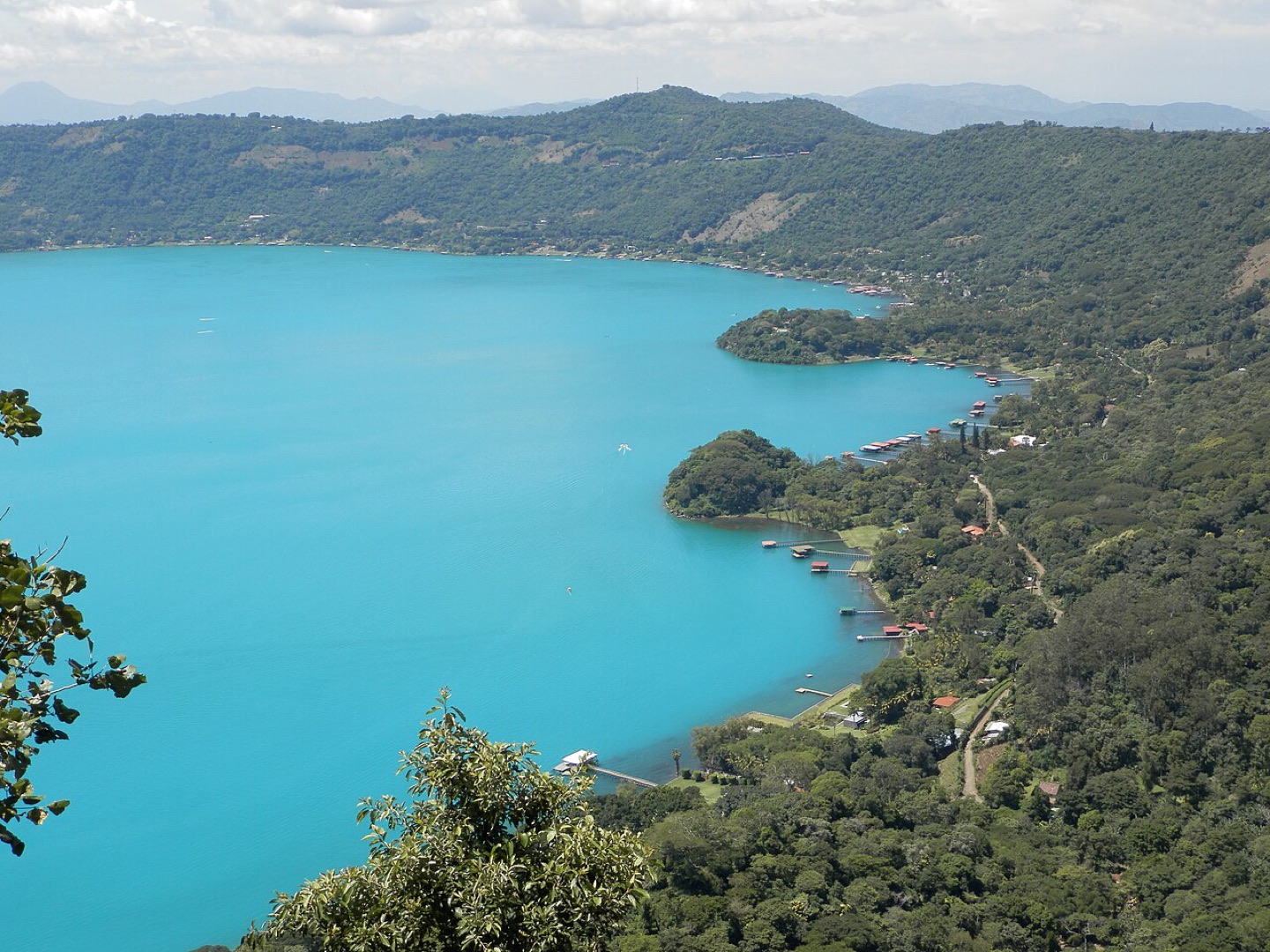
Explore El Salvador from the western volcanoes and Lake Coatepeque to San Salvador, the Lempa valley and the Gulf of Fonseca. Learn its departments, cities and waters, discover ten illustrated topics, then practise everyday Spanish.
- Capital
- San Salvador
- Everyday currency
- US dollar (USD)
- Official language
- Spanish
- Departments
- 14
- Highest point
- Cerro El Pital, about 2,730 m
- Coast
- Pacific Ocean
El Salvador · 0 of 20 rounds passed
Two timed rounds per topic, 20 seconds a question
El Salvador borders Guatemala and Honduras and faces the Pacific Ocean. Santa Ana and Chalchuapa introduce the western highlands and Maya archaeology; San Salvador and neighbouring Santa Tecla form part of the central urban region. Suchitoto overlooks Lake Suchitlán, while San Miguel and La Unión open different perspectives on the east. The coast connects La Libertad’s surfing beaches with the mangroves of Jiquilisco Bay and the Gulf of Fonseca.
Three map games cover all 14 departments, their capitals and selected towns, and major lakes, rivers and coastal waters. Department boundaries are different from the municipality and district boundaries changed by recent local-government reforms. The reading connects ancient farming communities with living Indigenous traditions, pupusas, coffee and Salvadoran communities abroad. The linked language course teaches general Spanish.
Volcanic lakes and a Pacific coast
A compact Central American country between Guatemala, Honduras and the Pacific.
- Does El Salvador have a Caribbean coast?
- No. Its coastline faces the Pacific Ocean, including the Gulf of Fonseca. Guatemala and Honduras are its land neighbours.
- What is the highest point in El Salvador?
- Cerro El Pital, at about 2,730 metres on the Honduran border. Santa Ana is the highest volcano, which is a different distinction.
- Is Lake Suchitlán a natural lake?
- No. Lake Suchitlán is another name for the Cerrón Grande reservoir, created by damming the Lempa River.
More about El Salvador: geography
El Salvador is the smallest country in mainland Central America, covering about 21,000 square kilometres. Guatemala borders it to the west and Honduras to the north and east. Its southern coast faces the Pacific Ocean, including the Gulf of Fonseca in the east; it has no Caribbean coastline. Northern mountains, a central volcanic belt and a coastal plain create very different landscapes within short distances. Cerro El Pital, on the Honduran border, is the highest point at about 2,730 metres. Santa Ana, also called Ilamatepec, is the highest volcano, rather than the highest mountain overall.
San Salvador occupies a central highland valley, while Santa Ana anchors the west and San Miguel the east. Coatepeque and Ilopango are lakes in volcanic basins. Lake Güija crosses the Guatemalan border, and the Lempa River begins in Guatemala, passes through Honduras and crosses El Salvador to the Pacific. Cerrón Grande is a reservoir on the Lempa, also known as Lake Suchitlán. Fourteen departments remain the country’s main administrative divisions; the municipal reforms of 2024 changed the level below them.
Maya villages, independence and peace accords
Different Indigenous histories, Spanish conquest and a civil war ending in 1992.
- What does Joya de Cerén reveal?
- The homes, food production and daily life of a pre-Hispanic farming community, preserved beneath volcanic ash around AD 600.
- When did El Salvador become independent from Spain?
- Independence was declared in 1821. El Salvador subsequently belonged to the Central American federation before becoming a separate republic.
- Where were the 1992 peace accords signed?
- At Chapultepec Castle in Mexico City. The accords ended the civil war and set out reforms to military, police and political institutions.
More about El Salvador: history
The territory now called El Salvador has histories connected to Maya, Nahua and Lenca peoples, among others. Joya de Cerén preserves a farming village buried by a volcanic eruption around AD 600, offering an unusual view of everyday life rather than only royal monuments. Tazumal and San Andrés were important Maya centres. Nahua-speaking communities associated with the polity of Cuscatlán were prominent in the west when Spanish conquerors arrived in the sixteenth century. These peoples and periods should not be collapsed into a single “Pipil Maya” culture.
Independence from Spain was declared in 1821. El Salvador then belonged to the Central American federation before becoming a separate republic. Coffee estates and unequal land ownership shaped the nineteenth and twentieth centuries. In 1932, the military government of Maximiliano Hernández Martínez brutally suppressed an uprising, killing thousands, many of them Indigenous. The civil war, usually dated 1980–1992, involved the armed forces, the FMLN guerrilla coalition and devastating violence against civilians. The Chapultepec Peace Accords were signed in Mexico City in January 1992, with the United Nations playing a central role in the peace process.
Salvadoran Spanish and Nawat
Everyday Spanish, local expressions and work to revitalise an Indigenous language.
- What language is official in El Salvador?
- Spanish. Salvadoran Spanish includes regional vocabulary and forms of address, and the country also has Indigenous linguistic traditions.
- Is Nawat the same as Spanish?
- No. Nawat is an Indigenous Uto-Aztecan language, also known as Pipil. Community-led teaching and revitalisation support its continued use.
- What does vos mean in Salvadoran Spanish?
- It is a familiar singular form of “you”. Its use depends on the relationship and setting, and it is also used elsewhere in Latin America.
More about El Salvador: language
Spanish is El Salvador’s official language and the main language of public life. Salvadoran Spanish commonly uses vos for a familiar singular “you”, alongside usted and other forms appropriate to different relationships. Words such as cipote for a child and the informal name guanaco are part of local usage, though context and personal preference matter. Voseo is shared with several other parts of Latin America. The linked lessons teach general everyday Spanish rather than a complete Salvadoran dialect course.
Nawat, also called Pipil, belongs to the Uto-Aztecan language family and is closely related to, but distinct from, the Nahuatl varieties of Mexico. Community speakers, teachers and learners work to revitalise it, especially in western El Salvador. Speaker totals depend on whether a count includes first-language speakers or new learners; a timeless quiz estimate can be misleading. Lenca and Kakawira communities also have their own linguistic and cultural histories. Indigenous identity remains living even where an ancestral language is no longer widely spoken at home.
La Palma art, town festivals and stories
Bright painted designs, local celebrations and a shared but varied cultural life.
- What is La Palma known for?
- Colourful art and crafts associated with Fernando Llort and local makers, often using stylised birds, houses, plants and village scenes.
- Who is honoured at San Salvador’s August festivities?
- The Divine Saviour of the World, or Divino Salvador del Mundo. Religious observances form part of a broader programme of local celebrations.
- Is the Siguanaba found only in Salvadoran stories?
- No. Versions of this folklore figure are told across parts of Central America, with details changing between storytellers and places.
More about El Salvador: culture
Fernando Llort helped make La Palma’s brightly coloured art widely recognised, with simplified birds, houses, plants and rural scenes appearing on painted wood and other crafts. The work grew through local workshops and makers, rather than being the creation of one person alone. Suchitoto’s galleries, performance spaces and historic streets offer another introduction to Salvadoran artistic life. Literature, music and contemporary visual arts also connect local experience with migration and international exchange.
San Salvador’s August festivities honour the Divine Saviour of the World, from whom the country takes its name. Panchimalco is associated with flower-and-palm traditions and religious processions. The Siguanaba appears in Salvadoran folklore and in stories told elsewhere in Central America, with different versions in different places. Football, patronal fairs and family gatherings are familiar parts of social life. Traditions change across towns, generations and communities, so one festival or folk tale cannot stand for every Salvadoran experience.
Coffee, manufacturing and family connections abroad
Dollar-based daily transactions, export industries and an economy shaped by remittances.
- What currency is used for everyday payments in El Salvador?
- The US dollar is the main everyday currency. Dollarisation began in 2001; Bitcoin’s separate legal framework has changed since its introduction in 2021.
- Why do remittances matter?
- Money sent by Salvadorans abroad helps many families pay for daily needs, education and other expenses, and is important to the wider economy.
- What does El Salvador produce?
- Coffee, sugar and other farm products, alongside manufactured exports such as textiles and garments. Commerce and services also support livelihoods.
More about El Salvador: economy
The US dollar has been central to everyday transactions since dollarisation in 2001. Coffee remains closely connected with the volcanic highlands, while sugar production, textiles and garment manufacturing link farms and factories with export markets. Commerce, transport, tourism and other services provide many livelihoods. Pacific surfing destinations and inland towns draw visitors, but economic life extends well beyond the best-known travel destinations.
Remittances from Salvadorans abroad support household budgets, education and small businesses. Their share of national income changes from year to year, so a percentage should always carry a date and source. El Salvador introduced Bitcoin as legal tender in 2021; reforms in 2025 made private-sector acceptance voluntary as part of a wider change in the framework. That history does not mean that Bitcoin replaced the dollar or became everyone’s daily means of payment. Jobs, inequality, climate risks and public finances remain important economic questions.
National institutions and local government
A presidential republic with 14 departments and a single-chamber legislature.
- How many departments does El Salvador have?
- Fourteen. The municipal reform implemented in 2024 changed the level below departments, creating 44 municipalities made up of 262 districts.
- How many seats are in the Legislative Assembly?
- Sixty since the 2024 elections. Older material may still give the previous total of 84, which is no longer current.
- What is the state of exception?
- An emergency framework introduced in March 2022. Recorded homicides fell, while mass detentions and restrictions on rights prompted serious due-process concerns.
More about El Salvador: politics
El Salvador has a president, a single-chamber Legislative Assembly and a judicial branch. The Assembly was reduced from 84 to 60 seats for the 2024 elections. The country retains 14 departments; reforms implemented in 2024 grouped the former 262 municipalities into 44 municipalities, with the former units becoming districts. A department, municipality, district and city are therefore different kinds of place. San Salvador is both the national capital’s name and the name of a department.
Recent politics has centred on public security, executive power and the independence of institutions. The state of exception introduced in March 2022 was followed by a sharp fall in recorded homicides and mass detentions. Human-rights organisations and international bodies have documented arbitrary detention and due-process concerns. Recorded crime figures, individual safety and civil rights are different measures and should not be treated as interchangeable. Institutional rules have also changed in recent years; this overview introduces the structure without presenting an older constitutional rule as a permanent fact.
Cloud forest, dry forest and mangroves
Different habitats connect the northern mountains with Pacific wetlands.
- What is El Salvador’s national bird?
- The torogoz, also called the turquoise-browed motmot, recognisable by its colourful plumage and distinctive racket-shaped tail feathers.
- What habitats are found around Jiquilisco Bay?
- Mangroves, tidal channels, mudflats and coastal beaches. They support fish, birds and sea turtles, alongside local fishing livelihoods.
- Where is Montecristo’s cloud forest?
- In the northern highlands near the point where El Salvador, Guatemala and Honduras meet, in the wider Trifinio region.
More about El Salvador: nature & wildlife
Montecristo’s cloud forest lies near the meeting point of El Salvador, Guatemala and Honduras. El Imposible National Park protects forested slopes in the west, while the Walter Thilo Deininger protected area introduces tropical dry forest nearer the coast. These habitats differ in rainfall, elevation and seasonal patterns. The torogoz, or turquoise-browed motmot, is the national bird. Forest clearance, fire and development put pressure on habitats, but estimates of “original forest lost” depend strongly on dates and definitions.
On the Pacific coast, the mangroves, channels and mudflats of Jiquilisco Bay support fish, birds and sea turtles, including critically endangered hawksbills. Barra de Santiago is another important coastal wetland near Guatemala. Mangroves help shelter shorelines and provide nursery habitat; conservation also involves fishing communities and livelihoods. Volcanoes and earthquakes are part of the country’s geology, while heavy rain and drought create different risks. These maps are learning references, and do not provide current hazard or access advice.
Pupusas, curtido and everyday cooking
Filled maize or rice dough, market snacks and sweet corn drinks.
- What is a pupusa?
- A thick griddled round of maize or rice dough with fillings inside, such as cheese, beans, chicharrón or loroco. It is commonly served with curtido and salsa.
- What is curtido?
- A tangy cabbage relish, often including carrots and onion, served with pupusas and other dishes. Preparation varies between cooks.
- What is quesadilla salvadoreña?
- A sweet cheese bread or cake served in El Salvador, often with coffee. It differs from the filled tortilla dish also called a quesadilla.
More about El Salvador: food & cuisine
Pupusas are thick rounds of maize or rice dough cooked on a griddle with fillings inside. Cheese, beans, chicharrón and loroco are familiar choices; a revuelta commonly combines pork, beans and cheese. Curtido, a tangy cabbage relish, and tomato salsa are common accompaniments. Recipes and fillings vary by cook and place. National Pupusa Day falls on the second Sunday of November, reflecting the dish’s place in public celebrations as well as everyday meals.
Yuca frita is fried cassava, often served with chicharrón and curtido. Chicken tamales commonly use banana-family leaves, while tamales de elote use corn husks; saying that every Salvadoran tamal has the same wrapper hides an important difference. Atol de elote is a warm sweet-corn drink, and quesadilla salvadoreña is a sweet cheese bread rather than the folded tortilla dish familiar from Mexico. Markets, home kitchens and Salvadoran communities abroad keep these preparations changing and widely shared.
Joya de Cerén, Tazumal and historic towns
Archaeological villages, Maya ceremonial centres and architecture in living cities.
- When did Joya de Cerén become a World Heritage Site?
- In 1993. UNESCO recognises the exceptional preservation of a pre-Hispanic farming settlement buried by volcanic ash.
- Where is Tazumal?
- In Chalchuapa, in Santa Ana department in western El Salvador. It is an archaeological site associated with Maya ceremonial architecture.
- Which lake is beside Suchitoto?
- Lake Suchitlán, the common name for the Cerrón Grande reservoir on the Lempa River. Suchitoto sits above its southern shore.
More about El Salvador: landmarks
Joya de Cerén was inscribed on the UNESCO World Heritage List in 1993. Volcanic ash preserved buildings and evidence of farming, storage and food preparation around AD 600, making it an exceptional record of ordinary community life. It is not a royal pyramid complex. Tazumal, in Chalchuapa, has substantial Maya ceremonial architecture, while San Andrés in the Zapotitán Valley was a Maya political and ceremonial centre during the Classic period. Each site has its own chronology and setting.
Santa Ana’s cathedral and theatre stand around its central square, while Suchitoto combines historic streets, cultural venues and views towards Lake Suchitlán. In San Salvador, the National Palace, National Theatre and Metropolitan Cathedral introduce different chapters of the capital’s history. Earthquakes and rebuilding have shaped the city repeatedly. Lake Coatepeque, the Santa Ana–Izalco–Cerro Verde volcanic landscape and Pacific coastal towns offer other ways to connect cultural places with the physical geography on the map.
Salvadoran communities, writers and diaspora
Indigenous identities, public voices and family networks across borders.
- Who was Óscar Romero?
- The Archbishop of San Salvador, known for speaking against injustice and violence. He was assassinated in 1980 and canonised in 2018.
- What is Claudia Lars known for?
- Poetry. She is a major voice in Salvadoran literature, with work exploring personal experience, memory and the natural world.
- Why does the Salvadoran diaspora matter?
- Communities abroad maintain family and cultural ties, send remittances and contribute to public life both in their places of residence and in El Salvador.
More about El Salvador: people & society
Salvadoran society includes people identifying as mestizo, Indigenous and Afro-descendant, among other identities. Nahua, Lenca and Kakawira communities have distinct histories and living cultural practices. Violence, discrimination and the suppression of Indigenous identity in the twentieth century complicate simple census labels. People’s identities cannot be inferred from their appearance or from whether they speak an ancestral language. Rural communities, expanding cities and migration all contribute to the country’s social life.
Óscar Romero, Archbishop of San Salvador, spoke about injustice and violence before his assassination while celebrating Mass in 1980; Pope Francis canonised him in 2018. Claudia Lars is remembered for her poetry, and Roque Dalton for poetry and political writing. Artist Fernando Llort’s work connects with the workshops of La Palma. Salvadoran diaspora communities, especially in the United States, maintain family, cultural and economic ties across borders. Accounts of their size need to distinguish birthplace, citizenship and Salvadoran ancestry.
More countries in North America