Facts about Guatemala
Explore Guatemala from the volcanic highlands and Lake Atitlán to the forests of Petén and the Caribbean coast. Learn its departments, cities and waters, discover living Maya languages, markets and food, then practise Spanish.
- Capital
- Guatemala City
- Currency
- Quetzal (GTQ)
- Official language
- Spanish
- Departments
- 22
- Highest point
- Tajumulco, about 4,220 m
- Largest lake
- Lake Izabal
Guatemala · 0 of 20 rounds passed
Two timed rounds per topic, 20 seconds a question
Guatemala borders Mexico, Belize, Honduras and El Salvador, with the Pacific to the south and the Caribbean to the east. Guatemala City anchors the central highlands, Antigua lies to its west and Quetzaltenango serves the western mountains. Farther north, Cobán connects the Verapaces with Petén, where Flores sits beside Lake Petén Itzá.
Puerto Barrios and Livingston face the Caribbean, while Escuintla links the highlands with the Pacific plain. Three maps cover all 22 departments, 24 selected cities and towns, and eight lakes, rivers and coastal waters. The Spanish lessons introduce everyday Spanish; the reading also explains the distinct Maya, Garífuna and Xinka linguistic heritage.
Geography of Guatemala
Volcanic highlands, the forests of Petén and a country facing both the Pacific and Caribbean.
- Which countries border Guatemala?
- Mexico, Belize, Honduras and El Salvador. Guatemala also has Pacific and Caribbean coastlines.
- What is Guatemala’s highest mountain?
- Tajumulco, a volcano in San Marcos department, at about 4,220 metres. It is the highest summit in Central America.
- What is Guatemala’s largest lake?
- Lake Izabal, in eastern Guatemala. Lake Nicaragua, in Nicaragua, is larger, so Lake Izabal is not Central America’s largest lake.
More about Guatemala: geography
Guatemala lies in northern Central America, bordering Mexico, Belize, Honduras and El Salvador. A long Pacific coast runs along the south, while a much shorter Caribbean coast opens onto the Gulf of Honduras in the east. The volcanic chain and western highlands contrast with the lower northern region of Petén. Tajumulco, in San Marcos department, reaches about 4,220 metres and is Central America’s highest summit.
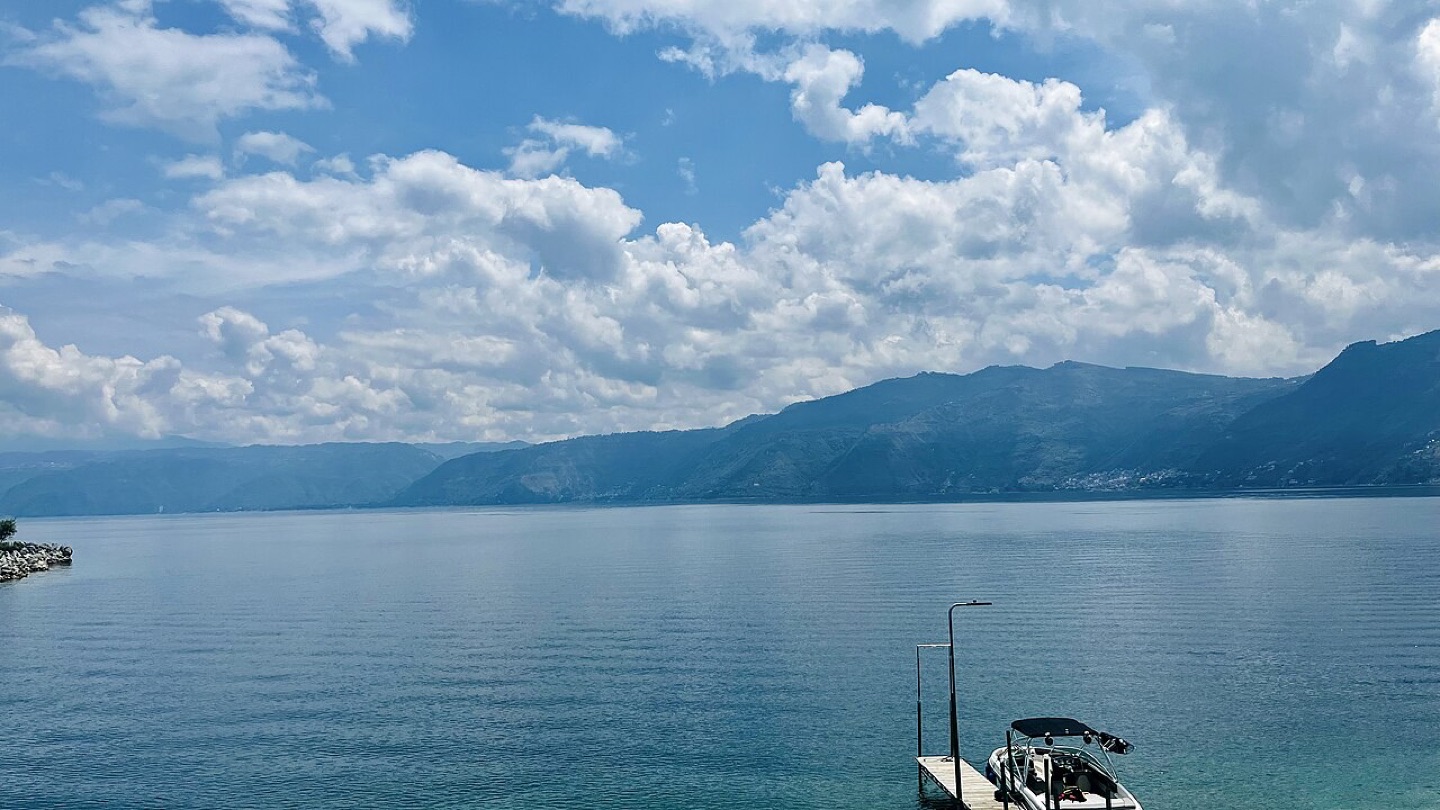
The country has 22 departments, including a department named Guatemala around the national capital. Lake Atitlán sits among highland volcanoes in Sololá; Lake Izabal, farther east, is Guatemala’s largest lake, rather than the largest in Central America. Lake Petén Itzá lies near Flores in the north. The Motagua drains east towards the Caribbean, while the Usumacinta system connects northern Guatemala with Mexico.
History of Guatemala
Maya kingdoms, Spanish colonial rule, independence and the long road to the 1996 peace accords.
- Did the Maya disappear?
- No. Some ancient cities declined, but Maya peoples, languages and cultural practices continue in Guatemala and neighbouring countries.
- When did Guatemala gain independence from Spain?
- Independence was declared in 1821 as part of the wider Central American break from Spanish rule.
- When did Guatemala’s internal armed conflict end?
- The final peace agreement was signed on 29 December 1996, ending a conflict generally dated from 1960.
More about Guatemala: history
Maya societies built cities, cultivated crops and developed writing, mathematics and calendars across a region extending beyond modern Guatemala. Tikal became a powerful city during the Classic period. The Popol Vuh preserves K’iche’ Maya accounts of creation and ancestry. The decline of some ancient cities did not mean the disappearance of Maya peoples: their languages and communities remain central to Guatemala today.
Spanish forces under Pedro de Alvarado invaded the highlands in 1524. Central American independence from Spain was declared in 1821, followed by changing regional political arrangements. A United States-backed operation overthrew President Jacobo Árbenz in 1954. The internal armed conflict of 1960–1996 brought massacres, displacement and grave abuses, especially against Indigenous communities. The government and the URNG signed the Agreement on a Firm and Lasting Peace on 29 December 1996.
Spanish, Maya languages, Garífuna and Xinka
Spanish is official, alongside a living national heritage of 22 Maya languages, Garífuna and Xinka.
- What language is official in Guatemala?
- Spanish. National law also recognises and supports the languages of the Maya, Garífuna and Xinka peoples.
- How many Maya languages are recognised in Guatemala?
- Twenty-two. K’iche’, Q’eqchi’, Kaqchikel and Mam are examples of distinct Maya languages.
- Do these lessons teach Guatemalan languages?
- The linked course teaches general Spanish for everyday situations. The reading introduces Guatemala’s wider linguistic diversity.
More about Guatemala: language
Spanish is Guatemala’s official language. The national languages law recognises, promotes and respects the languages of the Maya, Garífuna and Xinka peoples. The 22 Maya languages include K’iche’, Q’eqchi’, Kaqchikel and Mam. These are distinct languages, not different names for a single language called “Mayan”. Their distribution crosses departmental boundaries and reflects long community histories.
Garífuna, associated with communities including Livingston on the Caribbean coast, belongs to the Arawakan language family and has a history shaped by Indigenous Caribbean and African peoples. Xinka is a separate Indigenous linguistic heritage of southeastern Guatemala. Speakers may use several languages across home, school, work and public life. The linked lessons introduce general everyday Spanish; they do not teach Guatemala’s Indigenous languages or represent every local accent.
Textiles, music and celebrations in Guatemala
Weaving, marimba music, Holy Week carpets and giant kites connect craft with community life.
- What are Guatemala’s Holy Week alfombras?
- They are temporary decorative carpets laid along procession routes, often using coloured sawdust, flowers and other materials.
- Where are Guatemala’s giant kites made?
- Santiago Sacatepéquez and Sumpango are especially known for the tradition. UNESCO recognised their kite-making technique in 2024.
- What is a huipil?
- A woven blouse or tunic worn in many Indigenous communities. Materials, patterns and meanings vary by community and maker.
More about Guatemala: culture
Textiles carry knowledge of technique, place and personal identity. A huipil is a woven blouse or tunic, and designs vary among communities and makers. Backstrap weaving connects the loom to the weaver’s body, allowing careful control of the cloth. Marimba ensembles bring wooden-key percussion into celebrations and public performances. Neither a garment nor an instrument can stand for every person’s cultural identity.
During Holy Week, processions pass over alfombras made with coloured sawdust, flowers and other materials. UNESCO recognised Holy Week in Guatemala in 2022. Santiago Sacatepéquez and Sumpango are known for giant kites associated with the early November remembrance of the dead; their making technique was inscribed in 2024. Maya spiritual practices, Catholic traditions and other faiths coexist, with different forms in different communities.
Work, farming and the economy of Guatemala
Coffee, cardamom, manufacturing, commerce and remittances connect rural and urban livelihoods.
- What crops does Guatemala produce?
- Coffee, cardamom, sugar cane and bananas are important commercial crops, alongside maize, beans and other food grown for local use.
- What are remittances?
- Money sent by people working abroad to households at home. Transfers from Guatemalans in the United States are particularly important.
- Is Guatemala’s economy mainly tourism?
- Tourism matters, but the economy also includes commerce, services, agriculture and manufacturing, including clothing and food processing.
More about Guatemala: economy
Guatemala City is a major centre of commerce, finance and services. Manufacturing includes clothing and textiles, food processing and other goods. Agriculture links highland coffee farms, cardamom-growing districts and Pacific lowland sugar production with domestic and overseas markets. Bananas and other crops also matter. The value of any one export changes with harvests, prices and demand, so a fixed ranking can quickly mislead.
Money sent home by Guatemalans abroad, particularly from the United States, supports many households and helps fund everyday spending. Tourism connects archaeological sites, colonial towns, lakes and local businesses. The World Bank describes Guatemala as Central America’s largest economy, while also documenting persistent poverty and unequal opportunity. Access to education, infrastructure and secure work varies substantially between communities.
Government and departments of Guatemala
A presidential republic with a single-chamber Congress and 22 departments.
- What type of government does Guatemala have?
- A presidential republic with a single-chamber national legislature, the Congress of the Republic.
- How long is Guatemala’s presidential term?
- Four years. The constitution prohibits presidential re-election.
- Is Guatemala City the same as Guatemala department?
- No. The city is the national capital and lies within Guatemala department, which also contains other municipalities.
More about Guatemala: politics
Guatemala is a republic with a president who serves as both head of state and head of government. The constitution establishes a four-year presidential term and prohibits presidential re-election. Legislative power belongs to the single-chamber Congress of the Republic. The judiciary and Constitutional Court have distinct roles within the institutional system.
The territory is divided into 22 departments, with municipalities below that level. Guatemala department contains Guatemala City but is larger than the city itself. Departmental governors and elected municipal authorities have different responsibilities. Political debate includes public services, corruption, land, Indigenous rights and accountability for the armed conflict. The peace accords remain a reference point for debates about participation and equal treatment.
Forests and wildlife of Guatemala
Petén’s tropical forests, highland cloud forests and coastal wetlands support very different wildlife.
- Where is Guatemala’s Maya Biosphere Reserve?
- In northern Petén. It includes Tikal and forms part of the wider Maya Forest extending into Mexico and Belize.
- What is Guatemala’s national bird?
- The resplendent quetzal, a bird associated with moist mountain and cloud forests.
- Is all of Guatemala tropical lowland forest?
- No. The country also has volcanic highlands, cloud forests, drier valleys, coastal plains, mangroves and wetlands.
More about Guatemala: nature & wildlife
The Maya Biosphere Reserve protects a large area of northern Petén, including Tikal and other protected areas. Its forests form part of the wider Maya Forest extending into Mexico and Belize. Jaguars, monkeys and many bird species inhabit this landscape. Protection also involves communities and forest management; it is not simply an empty wilderness surrounding archaeological monuments.
In the highlands, moist cloud forests provide habitat for the resplendent quetzal, Guatemala’s national bird. Mangroves and wetlands occupy parts of both coastal regions. Changes in elevation and rainfall help explain why habitats differ so much across a relatively small country. Forest clearing, fires and pressures on water affect biodiversity and livelihoods, while community conservation and protected areas help care for these landscapes.
Guatemalan food and cooking
Maize, beans, rich recados, tamales and turkey soup, with recipes shaped by households and regions.
- What is pepián?
- A Guatemalan stew with a rich recado, commonly using toasted seeds, vegetables and meat. Household recipes differ.
- Which Maya tradition is kak’ik associated with?
- Q’eqchi’ Maya cooking, especially in the Verapaces. It is a turkey soup, rather than a K’iche’ dish by definition.
- What are rellenitos?
- Sweets made with ripe plantain around a sweetened bean filling, often served with sugar.
More about Guatemala: food & cuisine
Maize is central to tortillas, tamales and many drinks, with beans and other crops completing everyday meals. Pepián is a stew with a rich sauce, or recado, often thickened with toasted seeds and served with meat and vegetables. Jocón commonly combines chicken with a green sauce. Recipes vary, and the idea of one national dish leaves out much of the country’s cooking.
Kak’ik, also written kaq ik, is a turkey soup associated with Q’eqchi’ Maya traditions, especially in the Verapaces. Chuchitos are small wrapped maize preparations with savoury fillings. Fiambre brings many ingredients into a cold dish associated with early November remembrance. Rellenitos combine ripe plantain with a sweet bean filling, while atol names a family of warm drinks, often based on maize.
Tikal, Antigua and Guatemala’s heritage
Maya temples and carved monuments, a colonial city and a Pacific foothill site with a much earlier history.
- Where is Tikal?
- In Petén, northern Guatemala. Its Maya remains and forest are protected together in Tikal National Park.
- What is Quiriguá known for?
- Its carved Maya stone monuments, including tall stelae with inscriptions about rulers and events.
- Why is Tak’alik Ab’aj important?
- The site in the Pacific foothills preserves evidence of connections and change between Olmec and early Maya traditions. UNESCO inscribed it in 2023.
More about Guatemala: landmarks
Tikal in Petén preserves monumental temples, plazas and traces of a much wider Maya city within a protected forest. UNESCO recognises both its cultural and natural importance. Quiriguá, in Izabal, is known for carved stone monuments recording royal history. Tak’alik Ab’aj, near El Asintal in Retalhuleu, adds an earlier Pacific foothill perspective on connections between Olmec and early Maya traditions.
Antigua Guatemala was an important colonial capital. Earthquakes in 1773 preceded the transfer of the capital to the present Guatemala City. Antigua’s street grid, churches, ruins and Santa Catalina Arch preserve layers of that history. Lake Atitlán and its towns offer a different relationship between landscape and living culture. Archaeological sites and historic buildings are parts of present-day communities, as well as places to visit.
People and communities of Guatemala
Maya, Xinka, Garífuna, Ladino and other identities, with lives connecting towns, countryside and diaspora.
- Who is Rigoberta Menchú Tum?
- A K’iche’ Guatemalan advocate for Indigenous rights and reconciliation who received the Nobel Peace Prize in 1992.
- Which Guatemalan writer won the Nobel Prize in Literature?
- Miguel Ángel Asturias, in 1967. His works include El Señor Presidente and Hombres de maíz.
- Are all Indigenous Guatemalans Maya?
- No. Xinka and Garífuna communities also have distinct histories and identities. Maya itself includes many peoples and languages.
More about Guatemala: people & society
Guatemala’s population includes many Maya peoples, Xinka and Garífuna communities, people identifying as Ladino or mestizo, and other groups. These identities cannot be inferred reliably from clothing, surname or the language used in one conversation. Markets, schools, farms, neighbourhoods and migration connect communities while allowing distinct histories and local identities to continue.
Rigoberta Menchú Tum, a K’iche’ advocate for Indigenous rights and reconciliation, received the Nobel Peace Prize in 1992. Writer Miguel Ángel Asturias received the Nobel Prize in Literature in 1967. Their work offers two starting points for exploring Guatemala’s intellectual and public life. Family and community stories, including those of Guatemalans abroad, reveal many more perspectives than a list of famous names can hold.
More countries in North America