The Pearl River Delta in 16 days
From the Star Ferry in Hong Kong through Shenzhen and old Canton to Macau, then home over the sea. A first trip around the delta by train, bus and ferry, with a question at every stop and your score at the end.
Some 86 million people live around the mouth of the Pearl River, in cities that have grown into each other. Fifty years ago most of it was rice paddies and fish ponds. Today it builds a large share of the world’s electronics, and fast trains and ferries tie the whole of it together. You never need a car here.
This is a first trip you could book as it stands: 16 days in a loop around the delta. It starts in Hong Kong, takes the ferry to Shenzhen and spends four days in the city that grew fastest in history. Then it climbs to Guangzhou, comes down the west bank through Zhuhai to Macau, and rides the bridge back over the sea. Each stop ends with a question, and your score is waiting at the end.
Britain took Hong Kong Island in 1842 and leased the New Territories in 1898 for 99 years. When the lease ran out in 1997, the whole territory went back to China under one country, two systems, which lets it keep its own courts and its own currency until 2047. That blend of Chinese and British ways is what makes the city so easy to land in, and around 170 nationalities can visit without a visa.
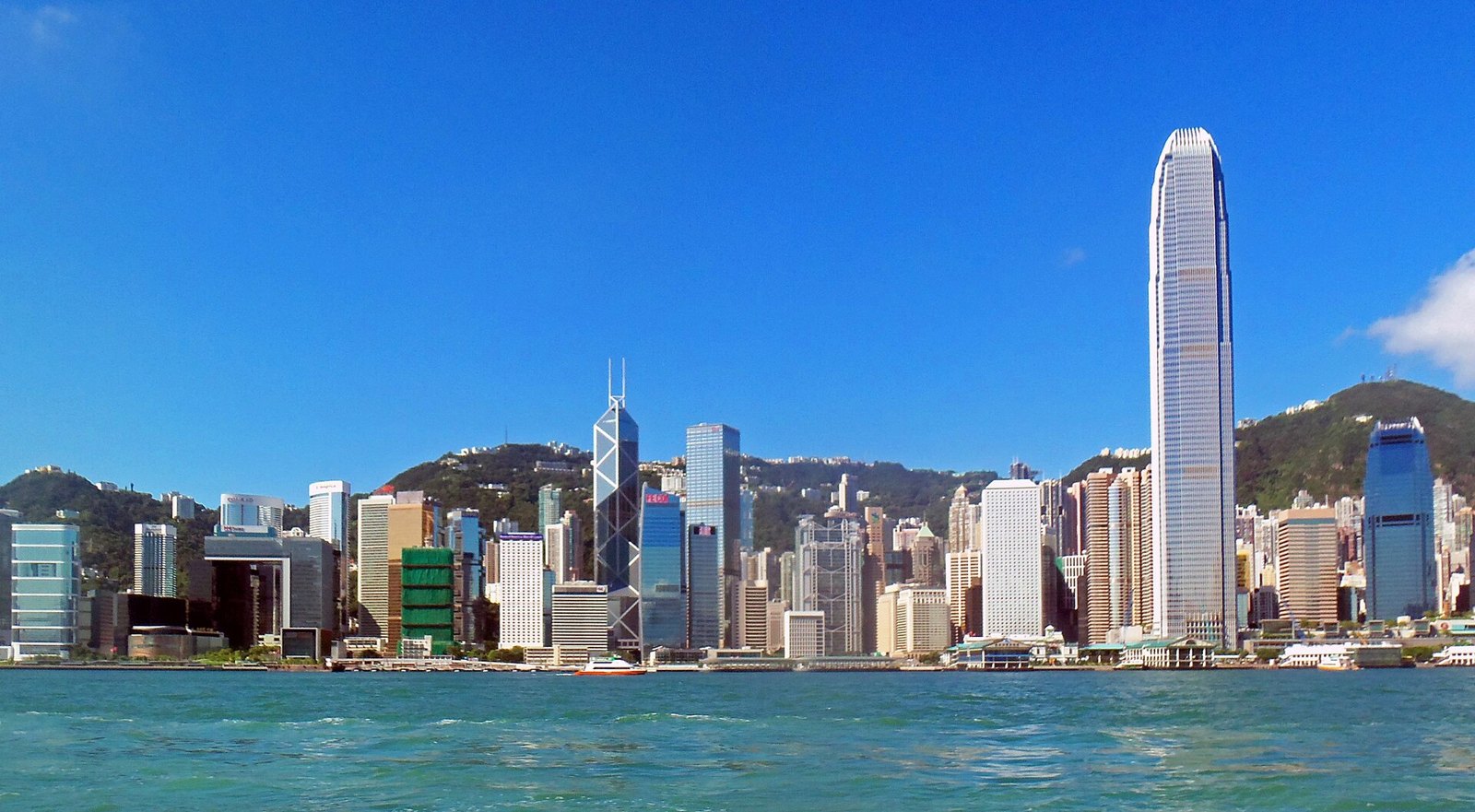
Buy an Octopus card at the airport, one of the first contactless cards in the world when it launched in 1997. Ride the Star Ferry, which has crossed Victoria Harbour since 1888, then take the Peak Tram, as old as the ferry, up to the view over one of the densest skylines on Earth. At 8 pm the towers on both shores light up together over the water.
Question 1 of 12
When Britain handed Hong Kong back in 1997, how long was its own way of life promised to last?
Pick an answer to see how you did.
In 1945 about 600,000 people lived in Hong Kong, and by 1950 it was over two million, as families arrived from across the mainland after the civil war. Shanghai brought its tailors and textile mills, and Guangdong brought its cooks and its Cantonese opera. The newcomers and their children built the city of factories and film studios that Hong Kong became.

Hong Kong’s old temples are still busy every day. Man Mo Temple, built in 1847, still fills with smoke from incense coils that burn for weeks, and at Wong Tai Sin people shake bamboo sticks to read their fortunes. Ride the Mid-Levels Escalator up past the cafés of SoHo, then stop at a cha chaan teng for milk tea and a pineapple bun.
Question 2 of 12
Hong Kong writes Chinese differently from the mainland. How?
Pick an answer to see how you did.
Hong Kong has some 260 islands, and around 40 percent of its land is protected country park. The ferry from Central runs out to Cheung Chau, an island of fishing boats and no cars. Swim at Tung Wan Beach, then eat fish balls on the waterfront.

Stay on Cheung Chau and follow the waterfront past the fishing boats to Pak Tai Temple. The narrow lanes lead across the island to the sand at Tung Wan Beach. Spend the afternoon between the harbor and the beach, then take the ferry back to Central.
Question 3 of 12
Every spring, Cheung Chau holds its Bun Festival. What do the climbers race up?
Pick an answer to see how you did.
Take the ferry across the bay into the mainland at Shekou. In 1979 China was poor and closed, and its new leader Deng Xiaoping picked this strip of land facing Hong Kong to test markets and foreign money. Shekou opened to outside investors that year, and in 1980 the whole of Shenzhen became China’s first special economic zone.
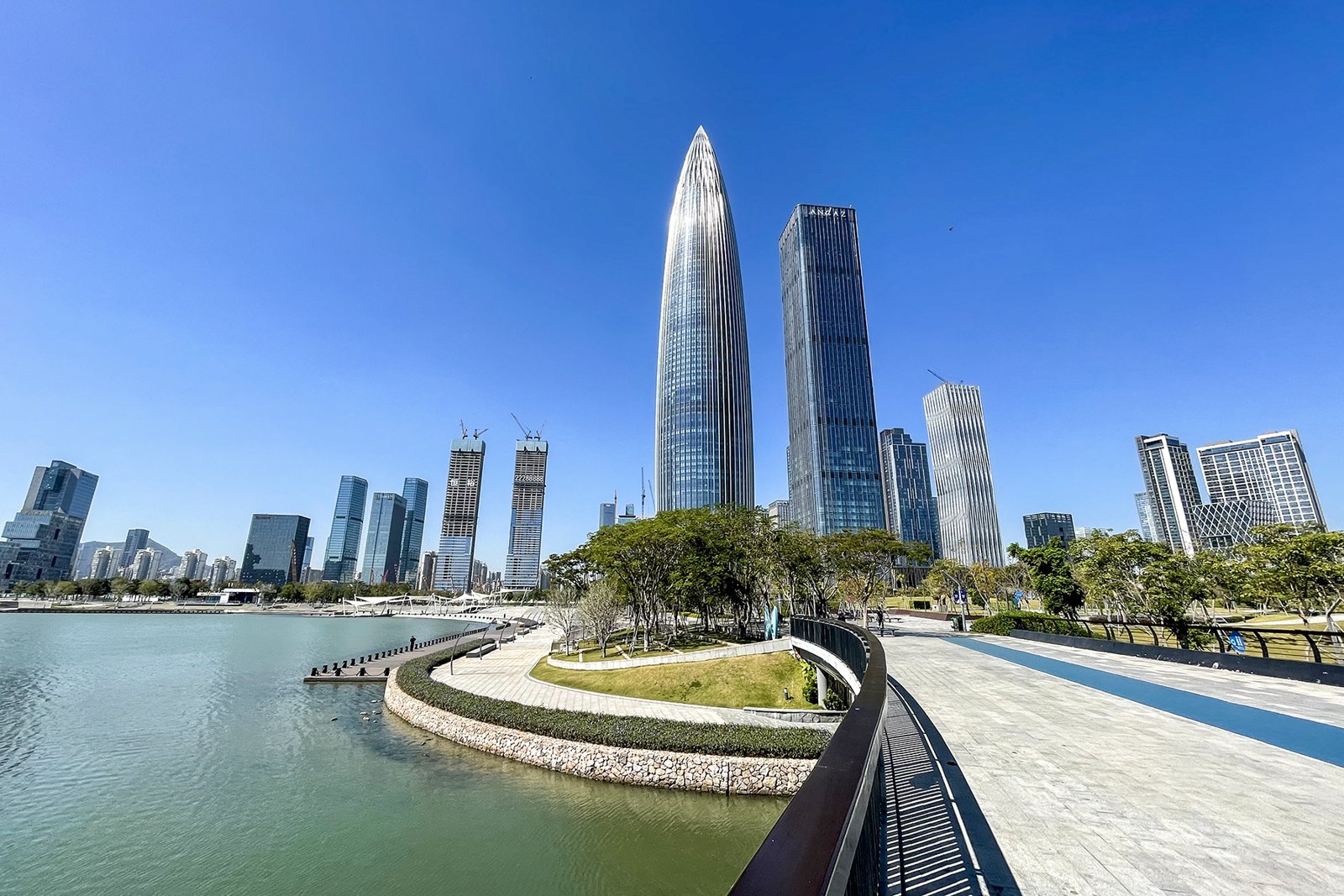
In 1979 about 30,000 people lived in the market town, and today the city has over 18 million, with an economy that passed Hong Kong’s in 2018. Walk Shenzhen Bay Park, with Hong Kong’s hills across the water, past the glass headquarters of Tencent in Nanshan. In the evening, eat seafood by the old ship moored at Sea World, the heart of Shekou’s restaurant quarter.
Question 4 of 12
A billboard put up in Shekou in the early 1980s shocked the country. What did it say?
Pick an answer to see how you did.
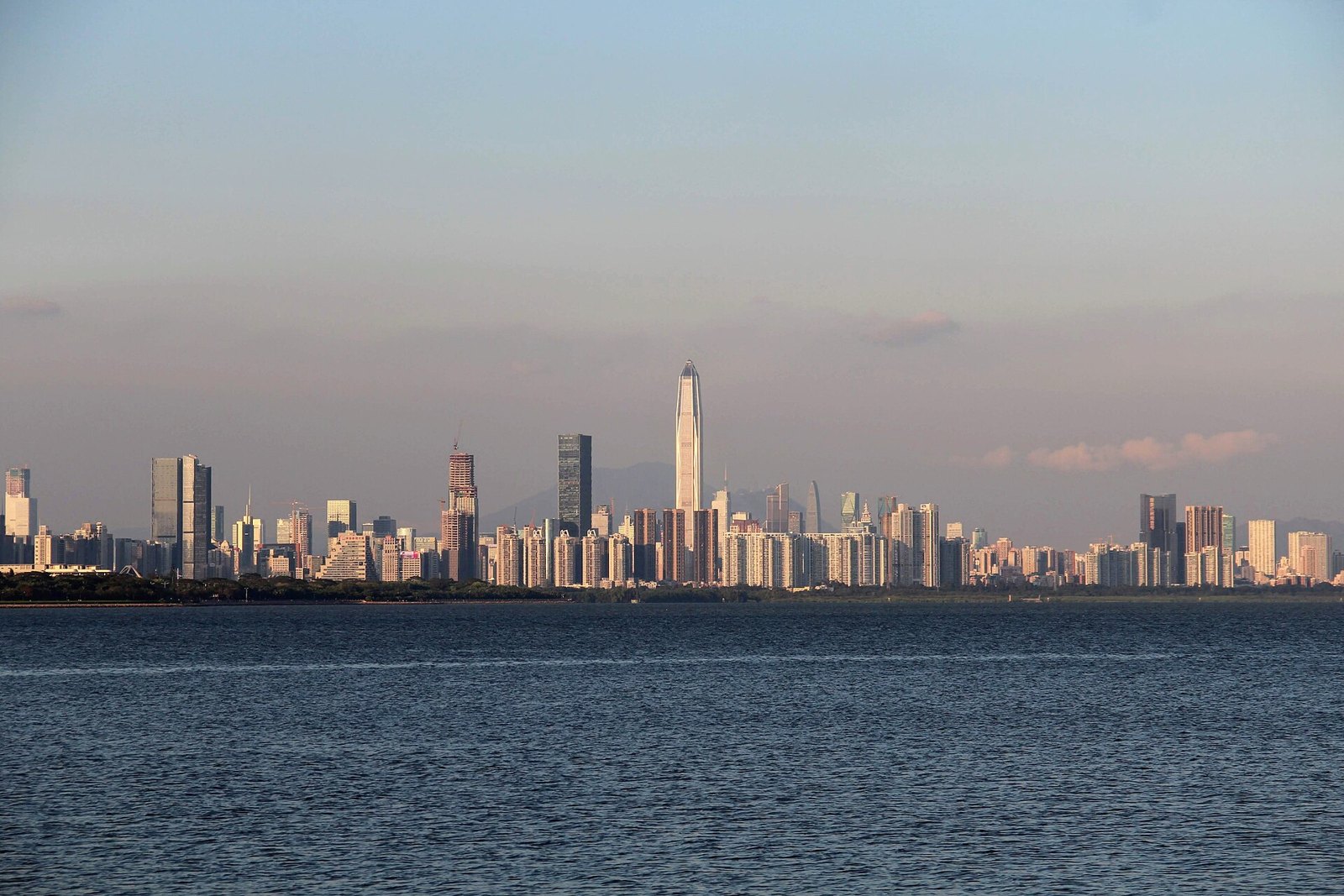
Futian is the new center the city built from scratch, and for years Shenzhen finished more skyscrapers than any other city on Earth. The tallest is the Ping An Finance Centre, with a deck on the 116th floor. Climb Lianhuashan Park at dusk to watch the towers light up, past the statue of Deng striding forward. For dinner, find a Chaoshan beef hotpot, where the beef is sliced to order and cooked in seconds.
At the feet of the towers sit the urban villages, old farming villages whose families kept their plots and built up, floor after floor, to rent rooms to the millions who came to work. Their lanes are narrow and loud, full of noodle shops and fruit stands. Step out of one into the glossy MixC mall, then spend an afternoon in Huaqiangbei, whole towers of phone parts and gadgets known to makers around the world.
Question 5 of 12
The towers in Shenzhen's urban villages are called "handshake buildings". Why?
Pick an answer to see how you did.
Shenzhen has a coast most visitors never see. Metro Line 8 tunnels under the mountains past Dameisha and Xiaomeisha, two long beaches that fill up with families on weekends. Since December 2025 it runs on to Xichong station, near the beach at Xichong Resort, a different place from Xichong Beach farther down the Dapeng peninsula. Continue by bus to the old fort and have a seafood lunch by the fishing harbor.

Long before the skyscrapers, this coast was guarded by Dapeng Fortress, a walled town built in 1394 to hold off pirates. Its stone gates and lanes of courtyard houses still stand, and families live in them today. In 1839 its commander fought off British warships at the Battle of Kowloon, the opening clash of the First Opium War.
Question 6 of 12
Shenzhen has an old nickname, Pengcheng. Where does it come from?
Pick an answer to see how you did.
The first zone ran only along the coast, behind a fence in the hills with checkpoints on every road. Outside that line, in Bao’an and Longgang, the factories went up, and millions of young workers came from the inland provinces to assemble the shoes and phones the world bought. Today the factories build robots and electric cars, and BYD, the biggest maker of electric cars in the world, has its home next door in Pingshan.
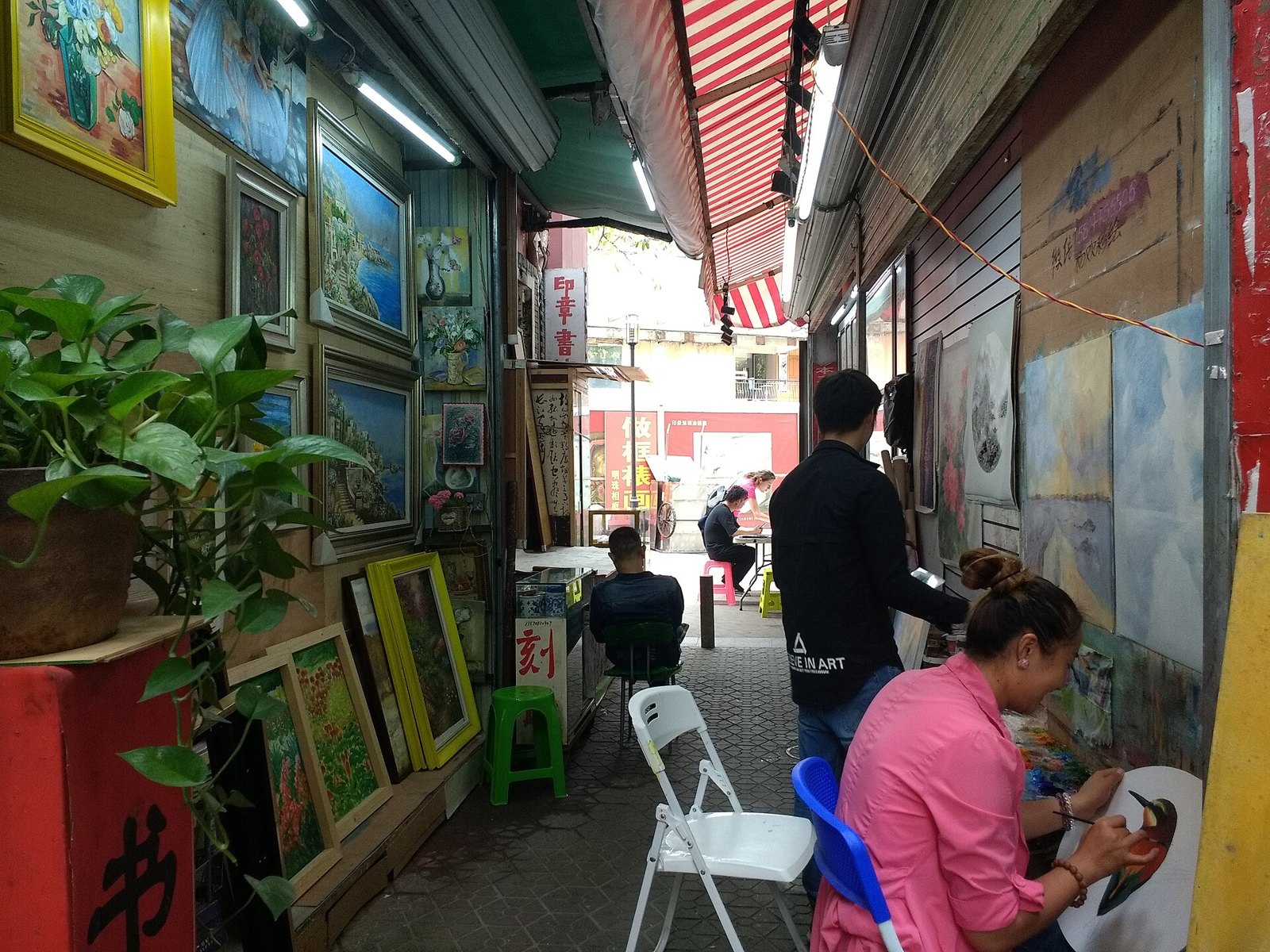
In Dafen Oil Painting Village, thousands of painters once turned out copies of Van Gogh and Monet for hotels around the world, and many now sell their own work. Nearby, the Hakka Heritage Museum fills Crane Lake, a walled village that Hakka families finished in 1817. Stay for a Hakka lunch of salt-baked chicken, made the way these families have cooked it for generations.
Question 7 of 12
In 2017 Shenzhen became the first city in the world to run every one of its 16,000 city buses on what?
Pick an answer to see how you did.
The train runs through Dongguan, past Humen, where in 1839 the official Lin Zexu destroyed more than 20,000 chests of British opium and set off the First Opium War. A century and a half later Dongguan became a factory floor of the world, and Huawei now runs a research campus there with its own little train. The line ends at Guangzhou South, and Metro Line 2 takes you into the old city.
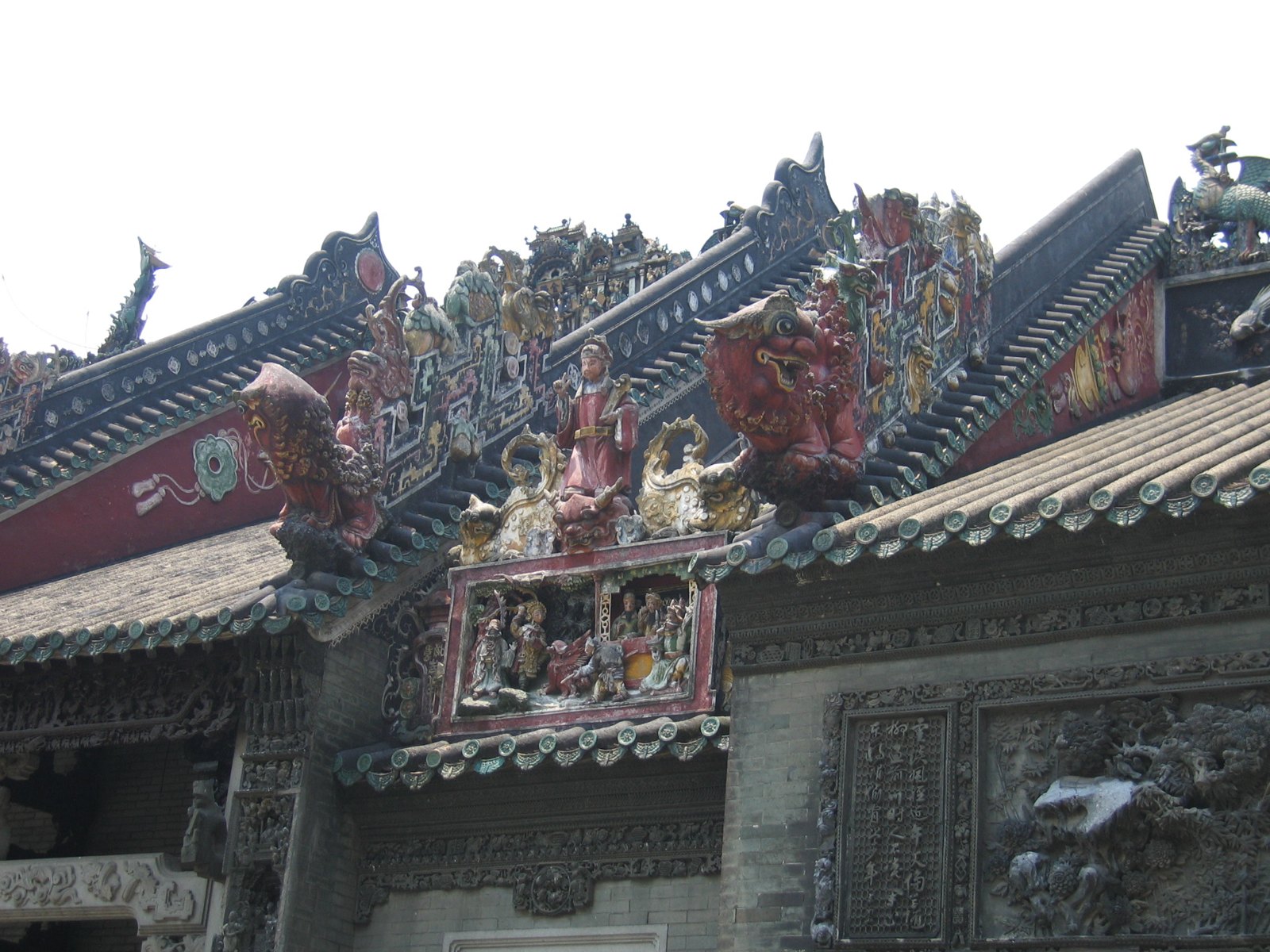
For more than 2,000 years Guangzhou was Canton, the port where China traded with the world. After the Opium Wars, Britain and France were given Shamian Island as a concession, and its banyan avenues are still lined with their old banks and consulates. Start each morning with yum cha, tea and dim sum, and stop at the Chen Clan Ancestral Hall, whose roofs are crowded with carved and painted figures.
Question 8 of 12
Guangzhou has a nickname, and a statue in Yuexiu Park to go with it. It is the City of what?
Pick an answer to see how you did.
South of the old city, Zhujiang New Town rose on the riverbank in the 2000s, with a long green square running between its towers to the water. At its foot sits the Guangzhou Opera House by Zaha Hadid, two smooth gray stones on the bank. Across the river stands the Canton Tower, slim and twisted at the waist.
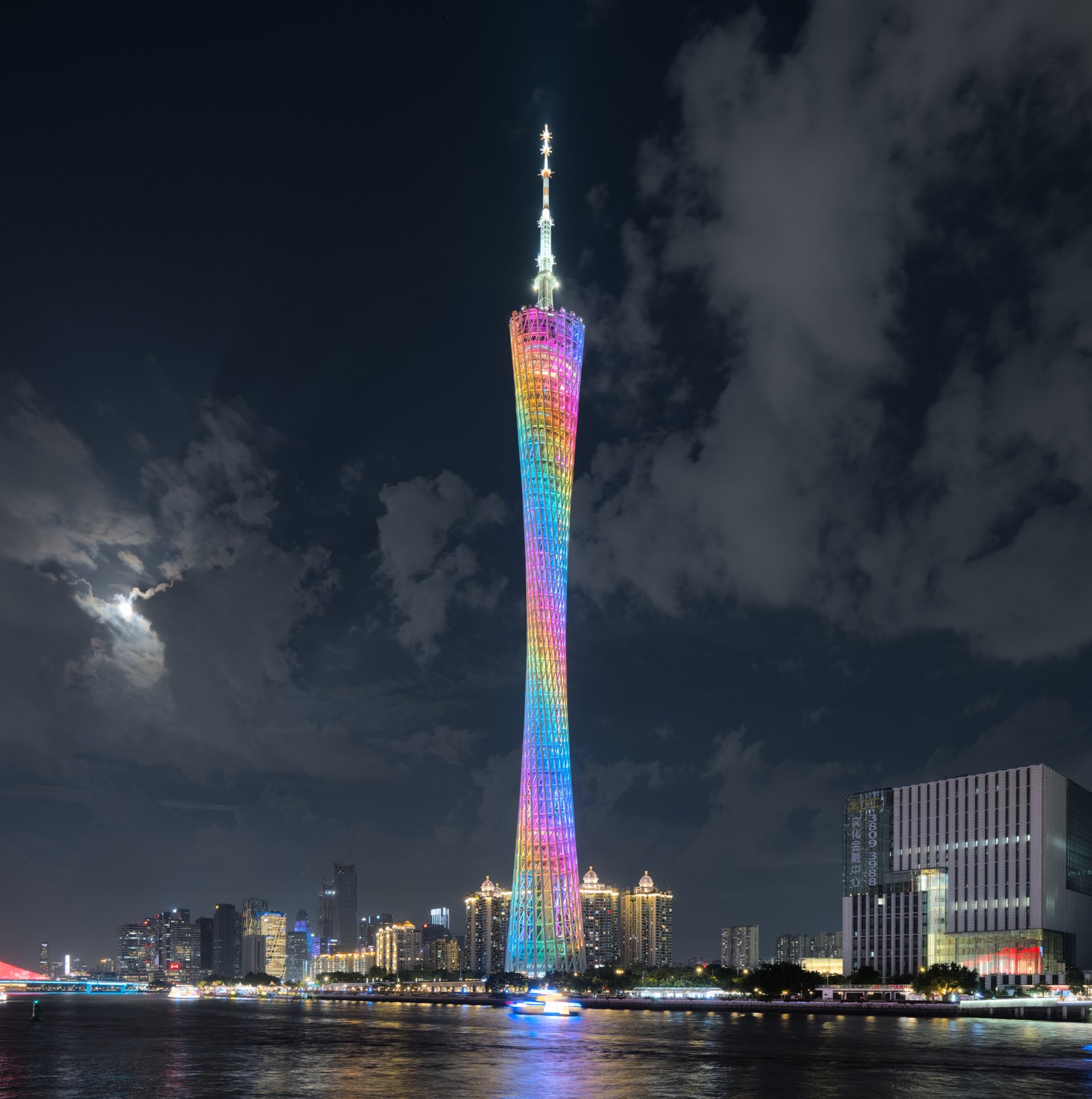
At night, take a cruise on the Pearl River and watch the tower and both banks change color as you pass. Ride the tower’s glass pods around the top for the view over a city of almost 19 million. For a last dinner, order roast goose with crackling skin, one of the proudest dishes of Cantonese cooking.
Question 9 of 12
For decades, while China was closed to most of the world, how did foreign buyers order its goods?
Pick an answer to see how you did.
Zhuhai is the same experiment as Shenzhen on a calmer scale, a special economic zone since 1980 facing Macau the way Shenzhen faces Hong Kong. Foreign money and open markets, backed by huge state spending on rail and ports, turned a coast of fishing villages into a city of over two million. It is home to Gree, one of the world’s biggest makers of air conditioners, and it often ranks among the most livable cities in China.
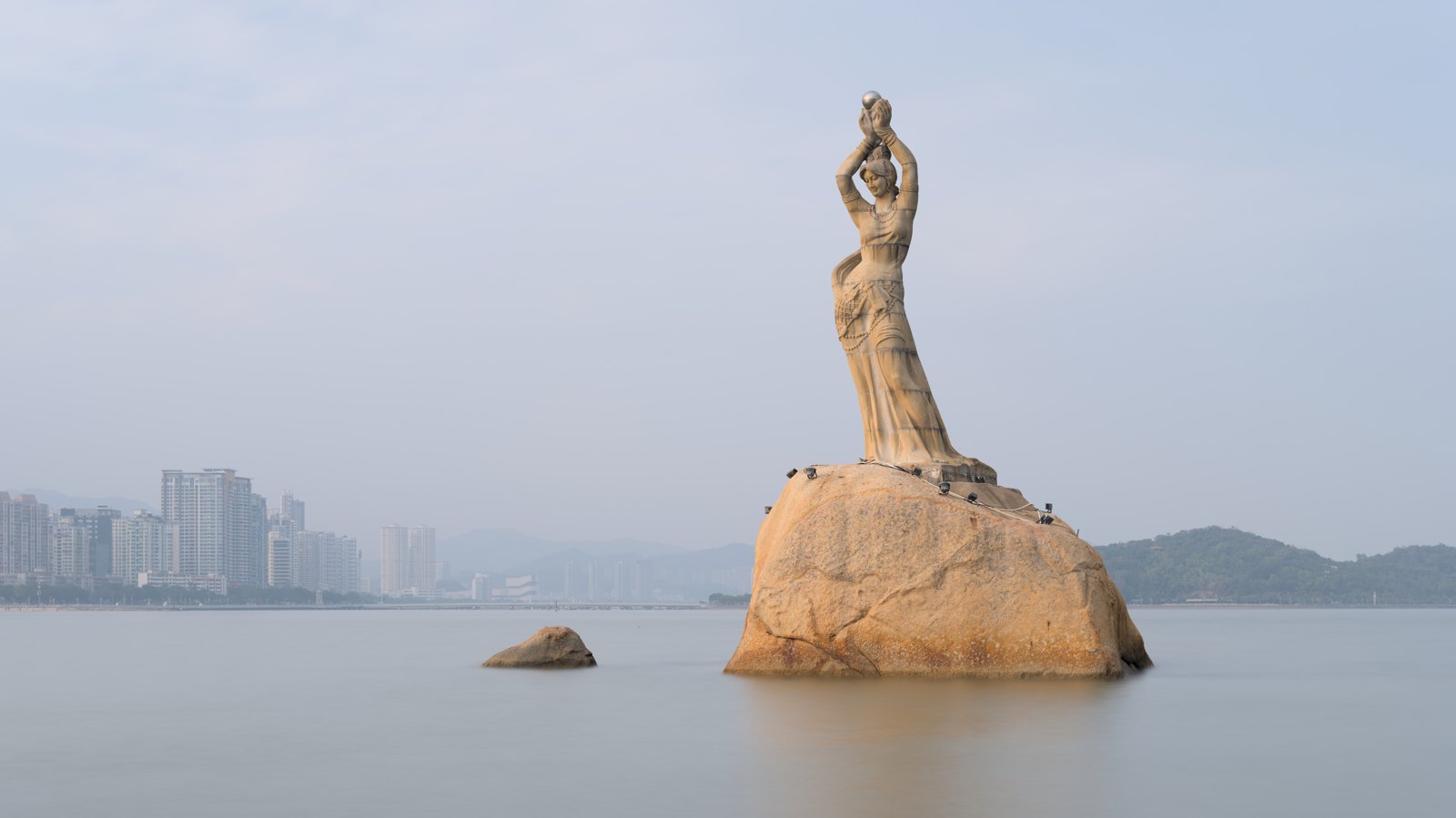
Rent a bike along Lovers’ Road, the seafront promenade past palm trees and small beaches, to the Fisher Girl, who stands on her rock in the bay raising a pearl to the sky. The last station on the line sits right beside the Gongbei border. Across a narrow channel lies Hengqin, an island China has opened up to Macau’s businesses and families.
Question 10 of 12
The University of Macau has its campus on Hengqin, in mainland Zhuhai. What is unusual about it?
Pick an answer to see how you did.
Portuguese traders settled in Macau in 1557, and Portugal only handed it back on December 20, 1999. Portuguese is still an official language, so street signs carry both scripts, and the money is the pataca, though Hong Kong dollars are taken almost everywhere. Eat Macanese food, which mixes Portugal and China with spices from the old empire. Macau dropped its tax on wine in 2008, so the shops stock long shelves of Portuguese bottles at prices hard to find elsewhere in Asia.

Walk the wavy black and white tiles of Senado Square up to the Ruins of St. Paul’s, the façade of a church that burned in 1835 and was left standing on its own. Then cross to the Cotai Strip, where the casinos dwarf those of Las Vegas. In 2025 they took in about three and a half times as much as the Las Vegas Strip, and they have given Macau the second highest income per person in Asia, after Singapore. Save a day for Taipa Village, a short walk from the Light Rapid Transit, where pastel Portuguese houses sit beside bakeries selling almond cookies and pork chop buns.
Question 11 of 12
Where does the name Macau come from?
Pick an answer to see how you did.
Gold shuttle buses leave Macau for Hong Kong around the clock over the Hong Kong-Zhuhai-Macao Bridge, opened in 2018 as the longest sea crossing in the world. Halfway across, the road drops into a tunnel between two artificial islands, so the biggest ships can sail over it and no towers stand in the way of planes landing at Hong Kong.

Book the airport direct coach in Macau and it drives straight into the departures side of Hong Kong International Airport, the same place this trip began, without a stop at Hong Kong immigration. The airport sits on the old island of Chek Lap Kok, flattened and widened into the sea, and it opened in 1998, a year after the handover. From the coach you walk to your gate, in time for an afternoon flight home.
Question 12 of 12
Cars drive on the left in Hong Kong and Macau, and on the right in the mainland. What happens on the bridge?
Pick an answer to see how you did.
That was 16 days around the Pearl River Delta, out from Hong Kong’s airport and back to it over the sea, without getting in a car. In two weeks you saw what forty years can do to a coast. The karst peaks of Guilin are three hours away by fast train for the next trip.
Time to see how you did.
0 of 12
You have not answered any questions yet. Scroll back up, and there is one waiting at every stop.
- The colony that came backDays 1–2 · Hong KongNot answered yet
- Temples and refugeesDay 3 · Hong KongNot answered yet
- Islands and trailsDay 4 · Hong KongNot answered yet
- Where the reforms beganDay 5 · ShenzhenNot answered yet
- Towers and villagesDay 6 · ShenzhenNot answered yet
- Beaches and the old fortDay 7 · ShenzhenNot answered yet
- The factory sideDay 8 · ShenzhenNot answered yet
- Old CantonDays 9–10 · GuangzhouNot answered yet
- Canton TowerDay 11 · GuangzhouNot answered yet
- Lovers' RoadDay 12 · ZhuhaiNot answered yet
- The Portuguese enclaveDays 13–15 · MacauNot answered yet
- Over the seaDay 16 · Hong KongNot answered yet
Day by day
The whole trip on one page, with the ride to each stop and how you get home. Hong Kong and Macau have Worldly city guides to go deeper, and so does Shenzhen.
- Days 1–2Hong KongThe colony that came backFly into Hong Kong, then the Airport Express, 24 minCity guide
- Day 3Hong KongTemples and refugeesMTR to Sheung Wan, 5 minCity guide
- Day 4Hong KongIslands and trailsFerry from Central to Cheung Chau, 35 minCity guide
- Day 5ShenzhenWhere the reforms beganFerry from Sheung Wan to Shekou, 50 minCity guide
- Day 6ShenzhenTowers and villagesMetro Line 2 to Futian, 30 minCity guide
- Day 7ShenzhenBeaches and the old fortMetro Lines 2 and 8 to Xichong, about 1 h, then bus to Dapeng FortressCity guide
- Day 8ShenzhenThe factory sideBus back to the metro, then Lines 8 and 3 to Dafen, about 2 hCity guide
- Days 9–10GuangzhouOld CantonFast train from Shenzhen North to Guangzhou South, 35 min
- Day 11GuangzhouCanton TowerMetro Line 3 to Zhujiang New Town, 15 min
- Day 12ZhuhaiLovers' RoadIntercity train from Guangzhou South to Zhuhai, 1 h 10 min
- Days 13–15MacauThe Portuguese enclaveA walk through Gongbei to the Border Gate, 30 minCity guide
- Day 16Hong KongOver the seaAirport coach over the Hong Kong-Zhuhai-Macao Bridge, 45 min, then fly homeCity guide
Before you go
- VisasHong Kong and Macau have separate entry rules from the mainland. Many passport holders can visit mainland China for 30 days without a visa under arrangements currently due to end on December 31, 2026. The 240-hour transit scheme has different passport, port and onward-ticket requirements: do not assume that walking through Gongbei qualifies. Check the official entry rules for your passport and this exact route before booking.
- One entry is enoughThe trip enters the mainland once, at Shekou, and leaves once, into Macau, so even a single-entry visa covers it.
- Set up your phoneCash and foreign cards are hard to use in the mainland. Link a card to Alipay or WeChat Pay before you leave home, and its transport QR code opens the metro gates in Shenzhen and Guangzhou. In Hong Kong, the Octopus card does the same job.
- Book trains on 12306The China Railway app has an English mode and takes foreign cards. Your passport is your ticket at the gates, so keep it on you for every ride.
- Maps and appsGoogle and WhatsApp are blocked in the mainland but work in Hong Kong and Macau. Apple Maps works well everywhere on the route, and a roaming eSIM from home keeps your usual apps running.
- The airport coachAny traveler with a flight out of Hong Kong that day can ride the Macau HK Airport Direct coach over the bridge, straight to the departure gates. Book it ahead and reach the Macau bridge port 90 minutes before it leaves. With many airlines, Cathay Pacific and HK Express among them, you can check in for your flight right there in Macau.
- When to goOctober to December is dry and clear. Typhoons can stop the ferries and the bridge buses for a day or two between July and September.
- An extra hike in Hong KongWith another day on Hong Kong Island, follow the Dragon’s Back ridge toward Big Wave Bay. This is a separate outing from the Cheung Chau visit on Day 4. The Hong Kong city guide shows where to go.